


Dutch Glazed Cupboard
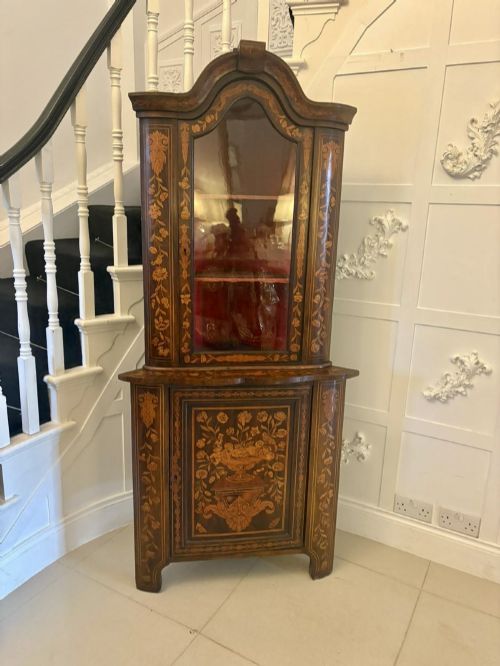
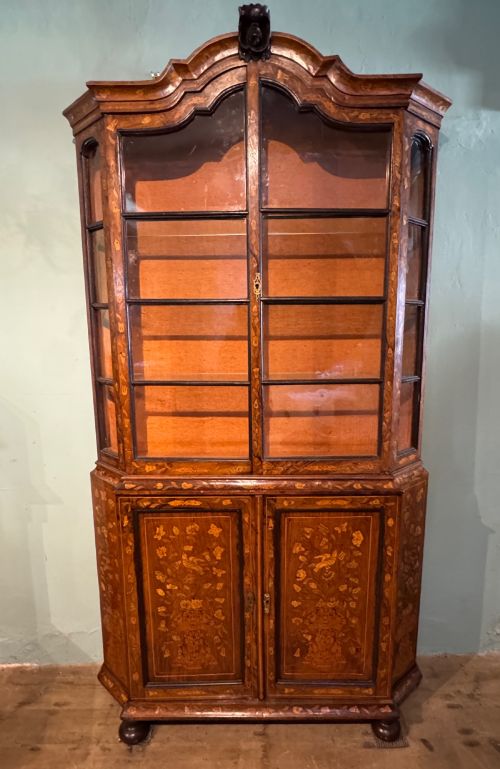
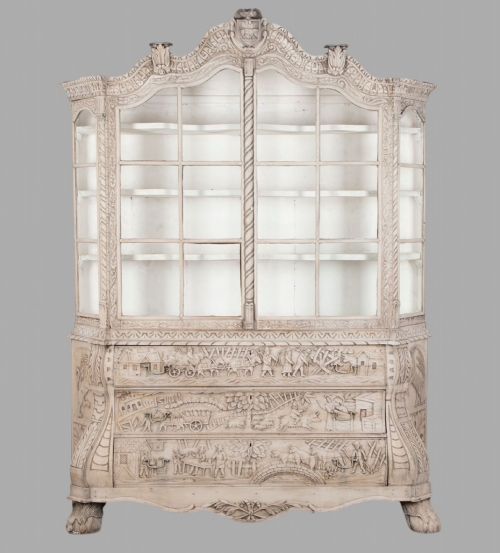
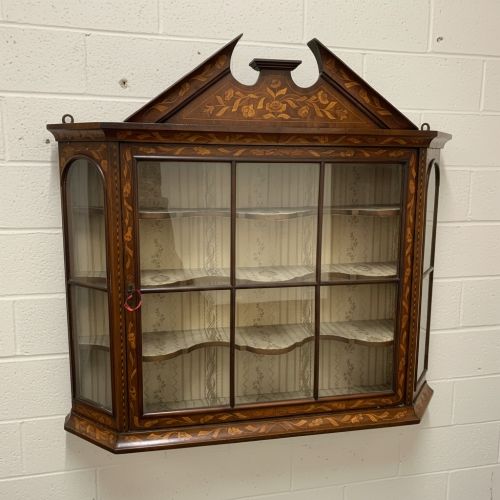
These dutch glazed cupboard pieces provide grand timber storage and display, bringing distinctive continental style and craftsmanship to any room.
Dutch Glazed Cupboard
A dutch glazed cupboard is a substantial cabinet designed for storage and display, appearing frequently in forms such as corner cabinets, wall cabinets, and display cabinets. Buyers seeking these items encounter pieces originating from periods including the eighteenth century, nineteenth century, and early twentieth century.
What varies in quality
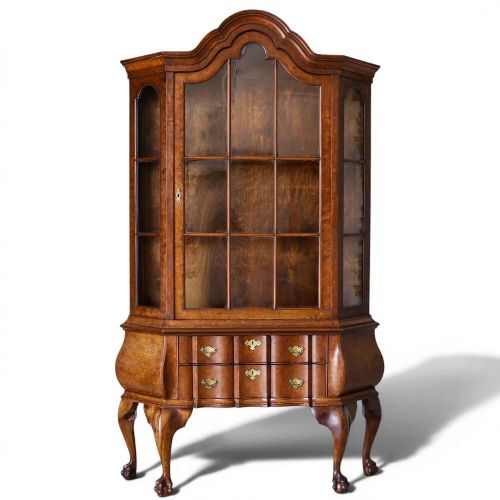
Quality rests upon the precision of the marquetry inlay and the selection of figured veneers such as burr walnut. Finer examples display harmonious proportions, particularly in complex forms like serpentine or bombe bases.
The crispness of carved wooden ornamentation and the preservation of original painted or polished surfaces distinguish superior cabinet work from simpler utilitarian storage.
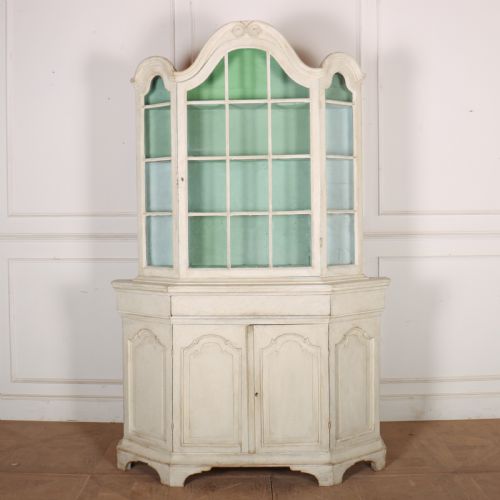
Listings span the eighteenth to twentieth centuries, featuring walnut, oak, fruitwood, and painted wood in styles from Baroque to Colonial.
The Dutch Glazed Cupboard Glossary
- Marquetry
- Decorative inlay work using various coloured woods to create pictorial floral or geometric patterns. This technique covers the primary surfaces of many finer cabinets.
- Bombe
- A swelling, outward-curving contour found on the lower chests and cabinets of certain periods. It requires advanced woodworking skill to execute properly.
- Vitrine
- A glass-fronted display cabinet specifically built for exhibiting precious objects and ceramics. The listings include both freestanding and wall-hanging variants.
- Satinwood
- A durable, yellowish exotic timber utilised for its lustrous grain in fine cabinet making. It appears on select nineteenth-century display pieces.
Dutch Glazed Cupboard: Frequently Asked Questions
What is a Dutch glazed cupboard?
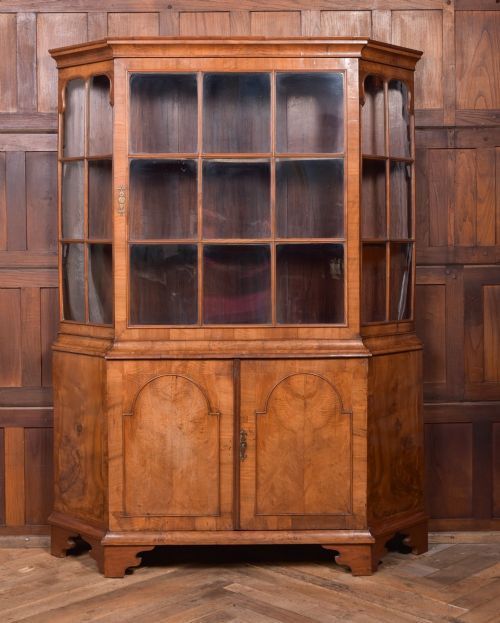
A Dutch glazed cupboard is a wooden display piece featuring glass doors for showing contents, frequently decorated with floral marquetry or veneers.
These cabinets serve as both practical storage units and decorative focal points within a room.
How do I date these cabinets?
Dating relies on stylistic markers such as Baroque revival motifs, marquetry patterns, and the choice of walnut or fruitwood veneers.
Construction methods and timber selection also indicate whether a piece originates from the eighteenth, nineteenth, or early twentieth century.
Where should I place a corner cabinet?
Corner cabinets fit neatly into room angles, making efficient use of space while displaying items behind glass doors.
They work well in dining rooms or living spaces to exhibit ceramics and glassware.
What woods were used?
Cabinet makers built these pieces using oak, walnut, fruitwood, satinwood, and ebony.
Many examples feature decorative veneers and contrasting marquetry inlays over a supportive timber carcase.