




Antique Dutch Bookcase
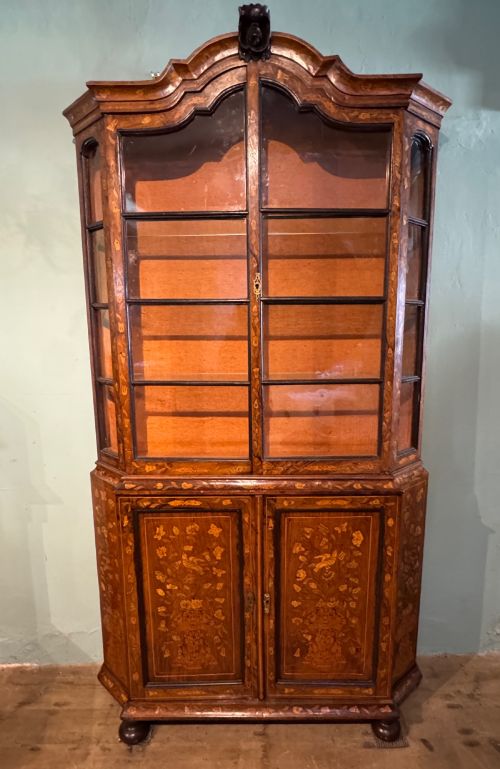
An antique dutch bookcase brings together serpentine bombé forms and intricate floral marquetry to hold a library.
Antique Dutch Bookcase
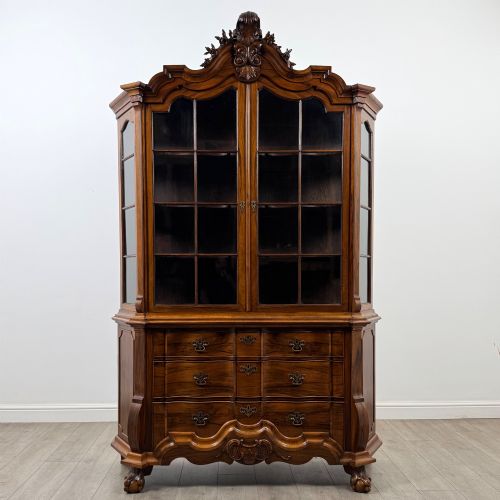
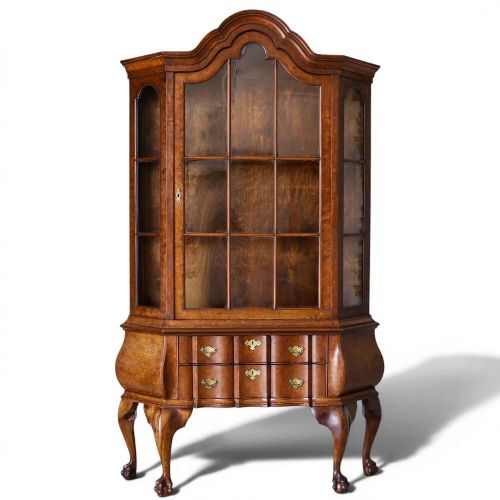
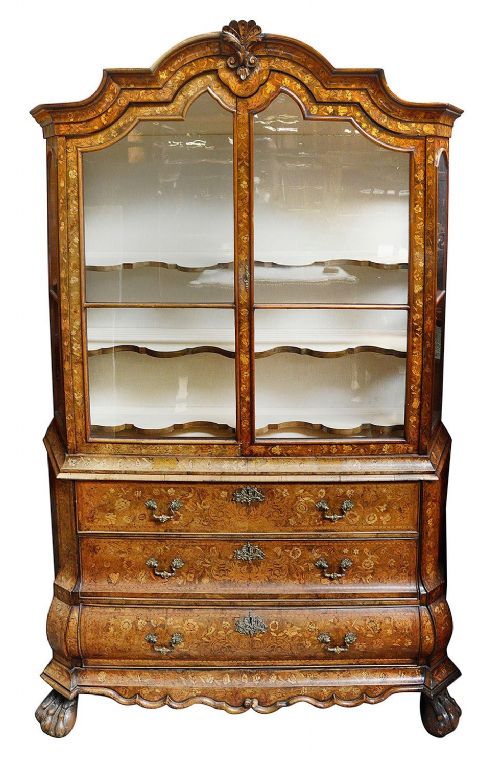
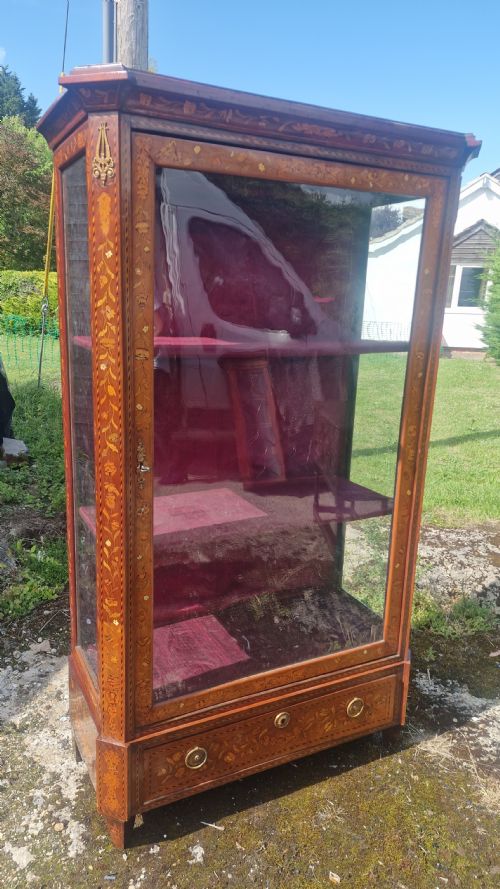
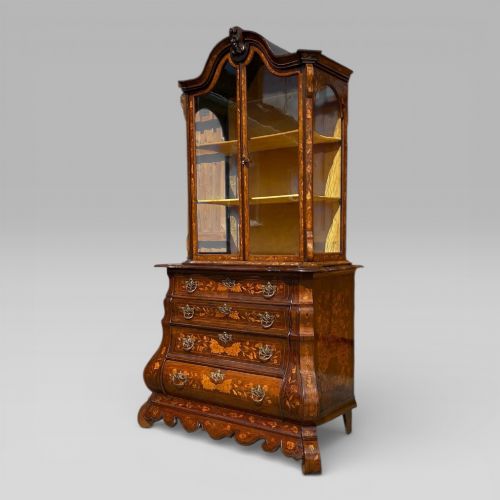
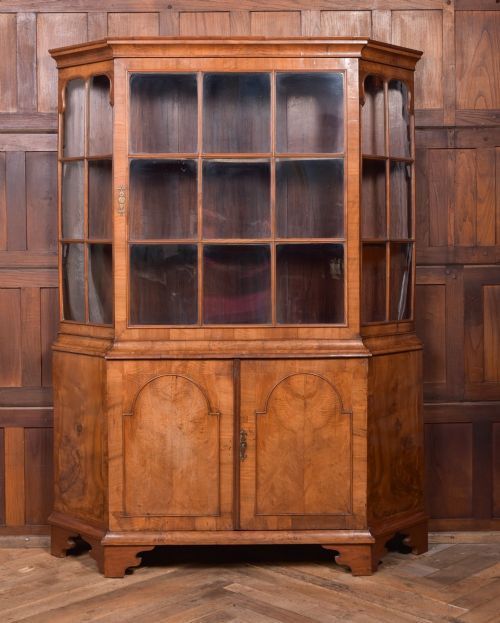
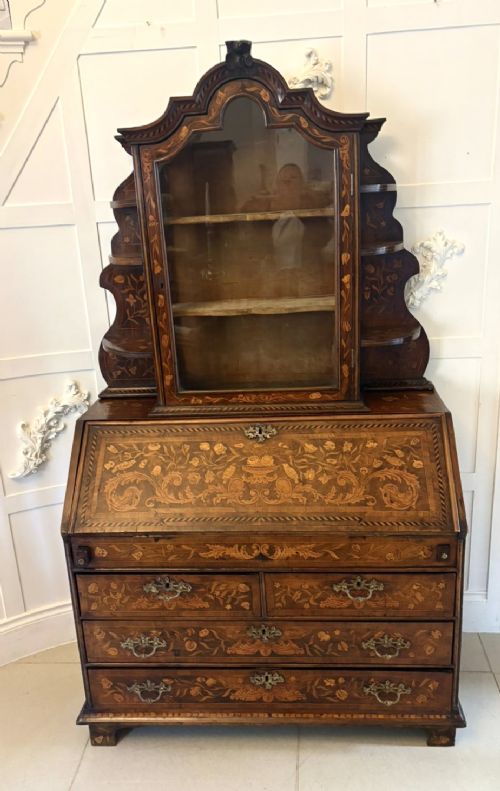
An antique dutch bookcase typically appears as a tall bureau bookcase, a glazed display cabinet on chest, or a vitrine standing upon substantial cabriole legs or bombé bases. These pieces emerge from the eighteenth and nineteenth centuries, with later revivals appearing into the twentieth century. The selections available range from glazed upper cabinets fitted for books to elaborate slope-front bureau bookcases with fitted interior compartments.
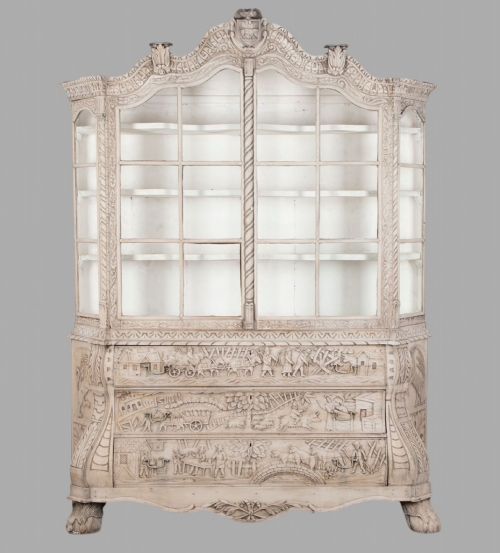
The dominant aesthetic draws upon Dutch Baroque and Rococo traditions, executed in rich walnut veneers or painted finishes. Bureau bookcases combine a slant-front writing desk below with shelving enclosed by glass doors above. Vitrines and display cabinets focus on visibility, featuring glazed panels to showcase collections.
Makers working within these styles utilise characteristic serpentine or bombé contours that swell outward toward the base. Canted sides and arched pediments frequently cap the upper sections, giving these pieces their distinctive silhouette.
Materials and Construction
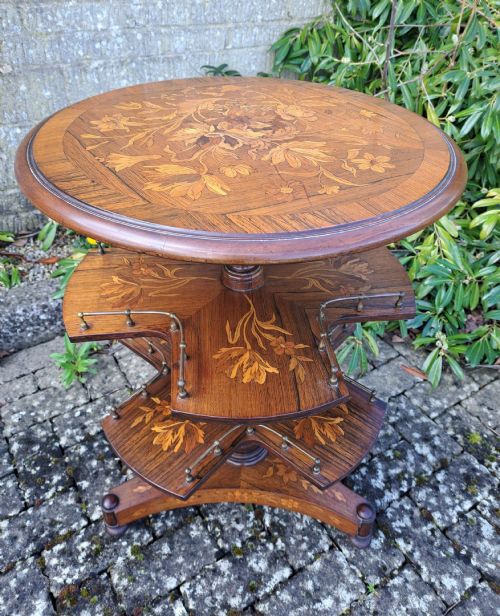
Makers constructed these cabinets using carcases of oak or fruitwood, overlaid with figured walnut or burr walnut veneers. Marquetry panels incorporate lighter fruitwoods and exotic timbers to form elaborate floral and bird motifs across the surfaces.
Glazing bars divide the upper cabinet doors into geometric panes of glass, whilst brass hardware secures the drawers and cupboard doors. Painted wood variations apply polychrome pigments directly to the timber substrates.
Secret compartments inside bureau bookcases often hide behind dummy pigeonholes for private letters.
Evaluating Execution
The distinction between ordinary and exceptional examples rests in the depth and precision of the marquetry inlay. Superior pieces display finely detailed floral motifs with crisp shading created by hot sand burning, whereas lesser examples rely on repetitive, simplified patterns.
Cabinet construction reveals itself in the handling of the bombé curves and veneer alignment. Master makers matched burr walnut grains symmetrically across drawer fronts and maintained smooth, continuous swells without distortion.
Edwards & Roberts
The Antique Dutch Bookcase Glossary
- Bombé
- A swelling, outward-curving contour found on the lower chests and bases of cabinets. This silhouette requires advanced joinery to shape the timber frames.
- Marquetry
- Decorative veneer work forming pictures and patterns using thin pieces of wood. Floral and bird designs are particularly prevalent on these cabinets.
- Vitrine
- A glass-fronted cabinet designed for displaying porcelain and curiosities. These pieces often feature glazed side panels for maximum light.
- Bureau
- A desk featuring a sloping hinged lid that drops to reveal a writing surface and pigeonholes. When combined with a bookcase top, it forms a bureau bookcase.
- Canted
- Beveled or cut away at an angle, typically referring to the vertical corners of a cabinet. This detail softens the rectangular profile.
Antique Dutch Bookcase: Frequently Asked Questions
How do I spot a true bombé base?
A genuine bombé base swells outward on the sides as well as the front, requiring complex curved drawer construction.
Inspect the internal framing to confirm that the compound curves are built into the solid wood carcase rather than formed by applied surface mouldings.
What is the difference between a vitrine and a bookcase?
A vitrine prioritises the display of ornamental objects with glass panels on the front and frequently the sides. Bookcases focus primarily on housing library volumes behind glazed doors.
Many antique examples combine both functions, providing adjustable shelving behind glass alongside lower drawer storage.
How do I care for walnut veneer?
Keep antique walnut away from direct sunlight and steady heat sources to prevent the veneers from drying and lifting. Maintain stable room humidity to protect the underlying timber.
Apply traditional beeswax sparingly and buff with a soft cloth to nourish the grain without building up heavy chemical residues.
Are bureau bookcases practical for daily writing?
The drop-front writing flap provides a functional surface when opened, supported by wooden pull-out slides. Internal pigeonholes and small drawers organise correspondence effectively.
Ensure the hinges and support lopers are sound before resting significant weight upon the fold-down writing surface.