



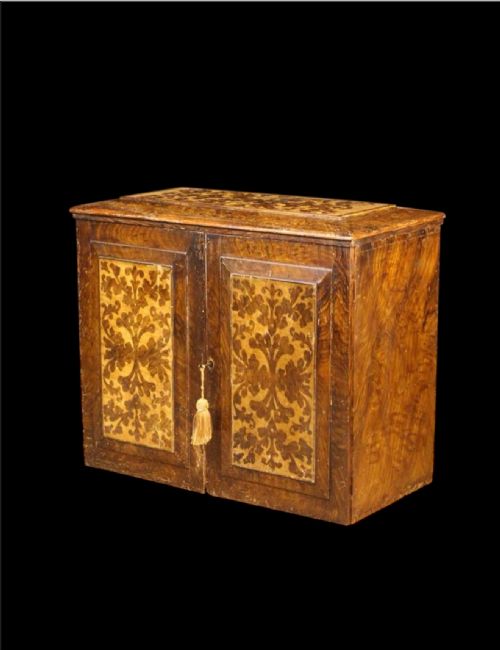


Dutch Walnut Cupboard
A Dutch walnut cupboard brings centuries of cabinetry skill into a room, offering rich timber grain and intricate marquetry.
Dutch Walnut Cupboard
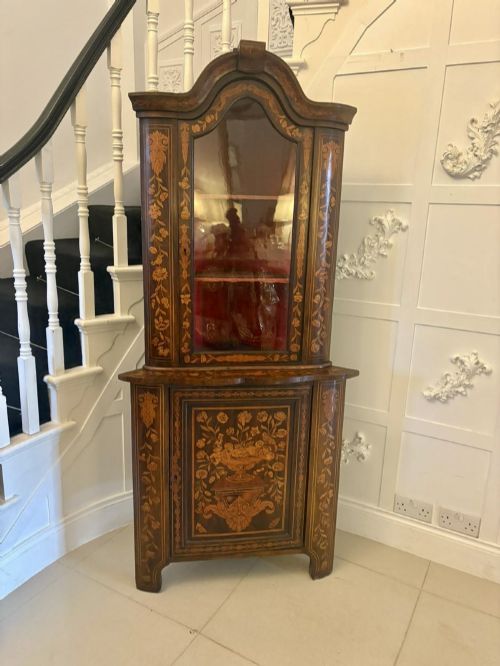
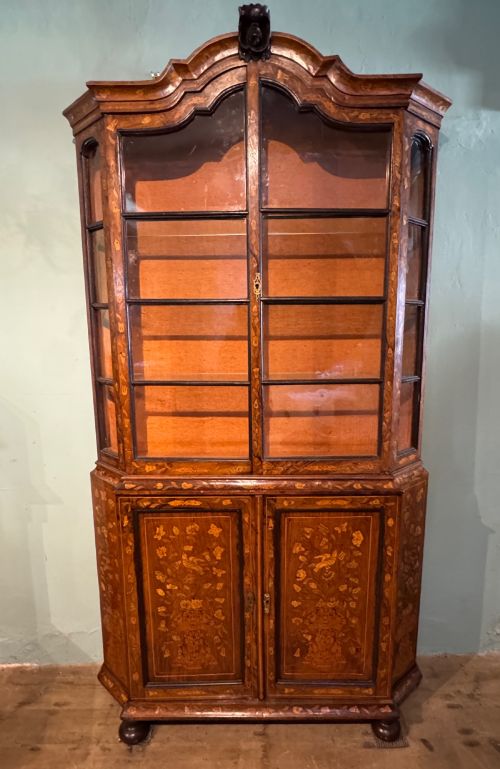
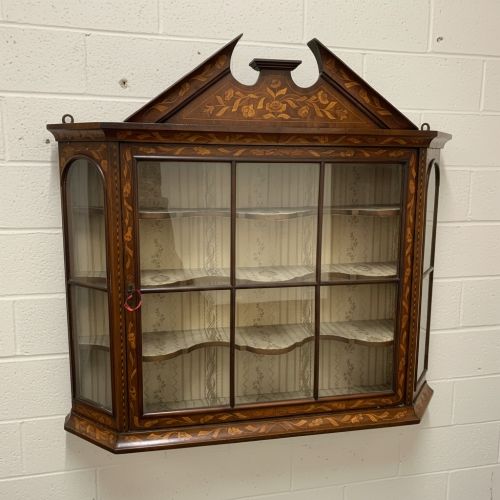
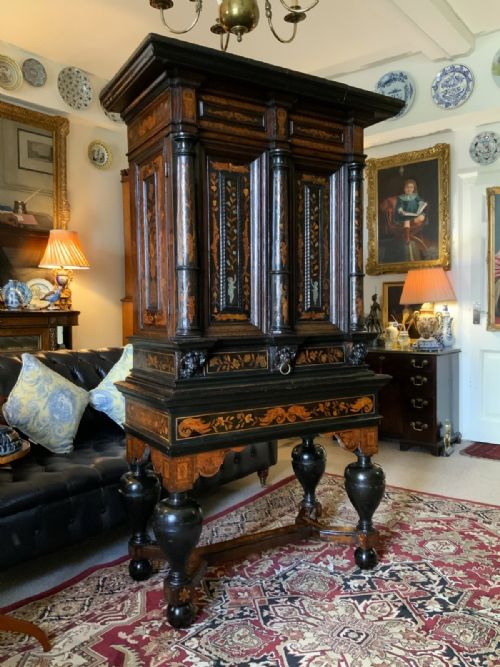
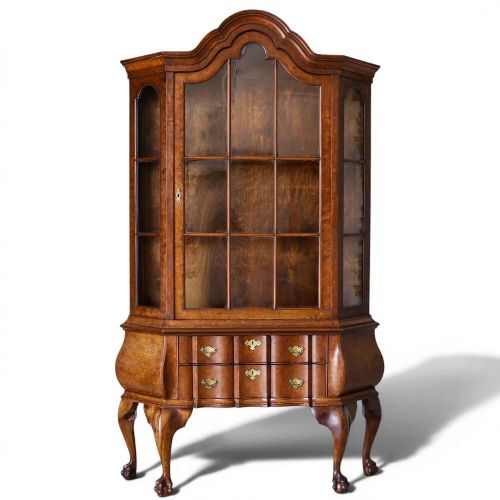
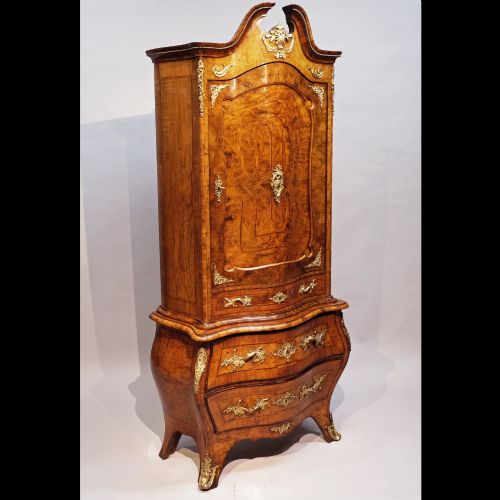
A dutch walnut cupboard encompasses a wide array of storage furniture, ranging from tall linen presses and bureau bookcases to floor standing corner cabinets and wall hanging displays. These pieces date across several periods, including the seventeenth and eighteenth centuries, alongside nineteenth century revivals and early twentieth century interpretations.
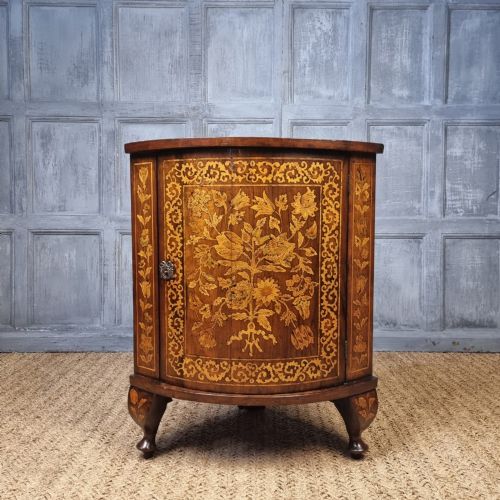
The most common examples encountered on this page feature elaborate floral marquetry, often combining fruitwood inlay on a walnut ground. Buyers will find both grand floor standing storage units and smaller wall cabinets designed for corners or compact spaces.
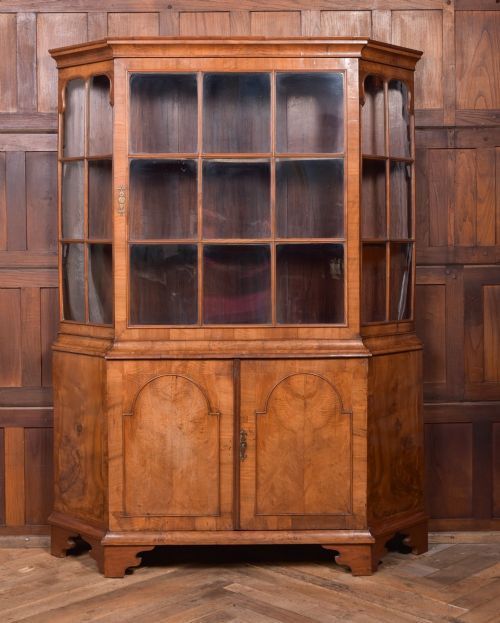
Forms vary significantly, from serpentine double corner cabinets and cabinets on stand to glazed display cases and travelling compartments. Many retain original brass hardware and structural timbers such as oak.
How they were made
Cabinet makers utilised solid walnut, burr walnut, and fruitwood veneers applied over secondary woods like oak. Surfaces frequently display detailed marquetry floral inlay, occasionally accented with pewter.
Glazing bars, brass fittings, and fabric linings appear on display cabinets and linen presses. Structural joinery reflects traditional workshop methods suited to seventeenth, eighteenth, and nineteenth century production.
Listings span the seventeenth century through to the 1930s, incorporating oak, fruitwood inlay, and brass hardware.
What varies in quality
The precision and complexity of the floral marquetry dictate much of the visual merit, with finer pieces exhibiting detailed fruitwood inlay across expansive walnut surfaces. The choice between plain walnut veneer, burr walnut, and elaborate marquetry creates a clear hierarchy in visual impact.
Proportion and architectural integrity also separate standard regional work from master cabinet making. The preservation of original hardware, glass, and secondary timbers like oak influences the overall integrity of the piece.
The Dutch Walnut Cupboard Glossary
- Marquetry
- Decorative veneer work forming pictures or patterns using various wood types. In these pieces, floral motifs are common.
- Linen press
- A tall storage cupboard originally designed for folded garments and linens. They often feature upper display or storage sections above drawer bases.
- Burr walnut
- Timber taken from a tree growth, producing intricate and swirling grain patterns. It is highly prized for cabinet fronts.
- Serpentine
- A furniture front or surface curved with a convex centre flanked by concave ends. This contour adds movement to eighteenth and nineteenth century designs.
Dutch Walnut Cupboard: Frequently Asked Questions
How do I date a Dutch walnut cupboard?
Dating relies on stylistic shifts between the seventeenth century baroque period, eighteenth century rococo forms, and later nineteenth century revivals. Construction methods and secondary woods like oak also provide clear chronological clues.
Hardware changes and the complexity of the marquetry help narrow down the decade of manufacture. Comparing piece forms against documented examples ensures accurate attribution.
Where should I place a corner cabinet?
Floor standing and wall hanging corner cabinets utilise unused room junctions effectively. They suit dining rooms, hallways, or living spaces.
Ensure the wall angles match the cabinet backboards for a flush fit. Adequate clearance is necessary for opening doors without obstruction.
How do I care for walnut veneer?
Keep walnut furniture away from direct sunlight and steady heat sources to prevent veneer lifting. Dust regularly with a soft, dry cloth.
Occasional application of appropriate wax maintains the sheen of the timber. Avoid excessive moisture during cleaning.
What is the difference between a display cabinet and a linen press?
Display cabinets feature glazed doors designed to showcase porcelain and decorative objects. Linen presses are deeper storage units built for textiles and clothing.
Presses often combine upper cupboard space with lower chest drawers, whereas display cabinets focus on visibility.