





Dutch Baroque Display Cabinet
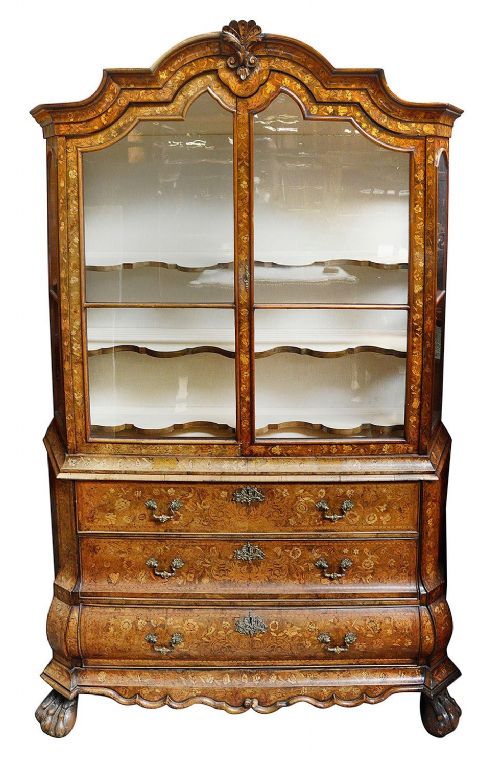
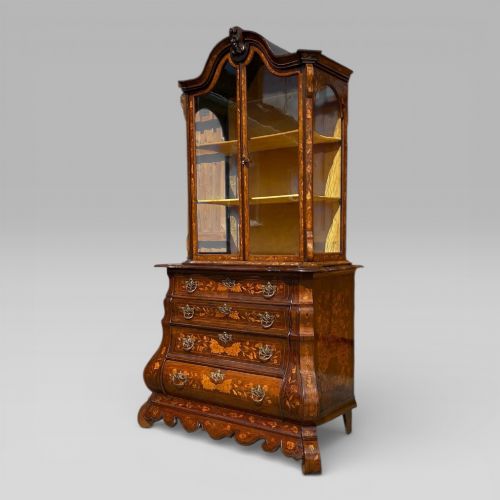
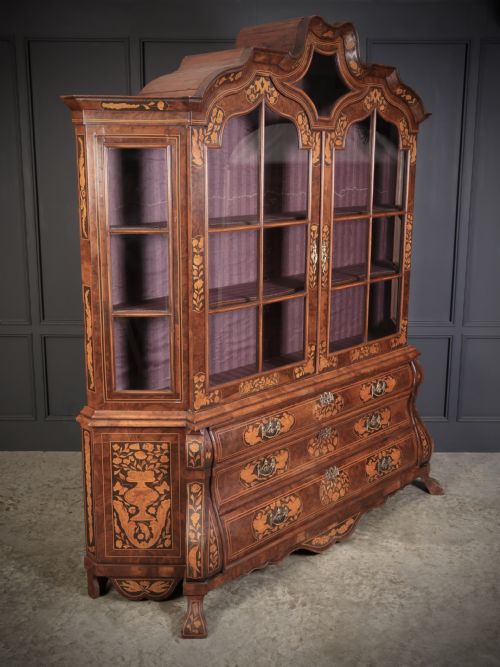
These Dutch baroque display cabinet examples combine rich floral marquetry and generous proportions to hold your collection securely behind glazed doors.
Dutch Baroque Display Cabinet
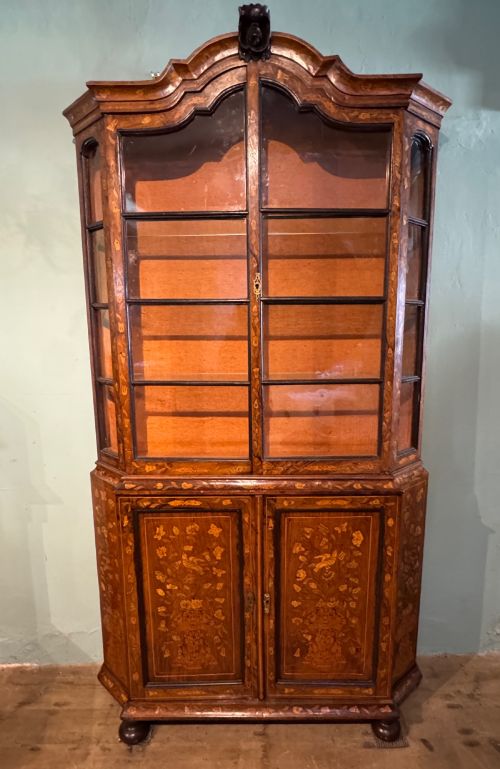
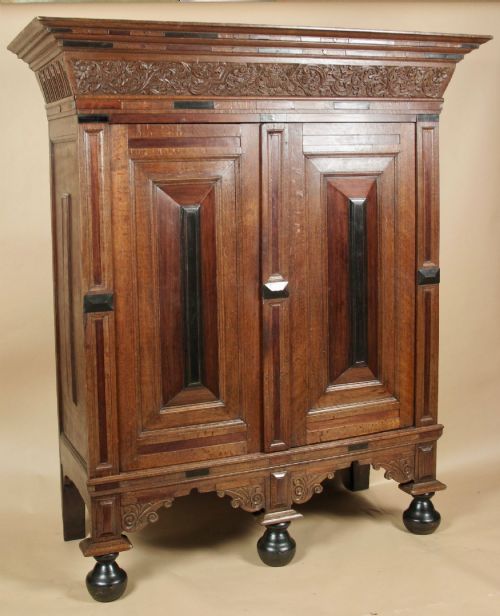
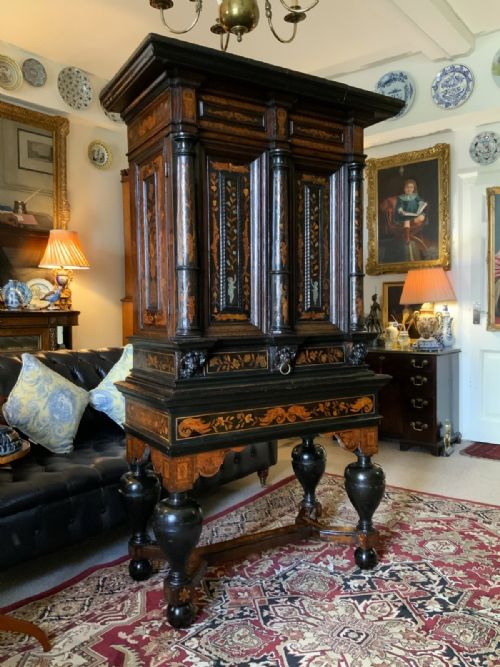
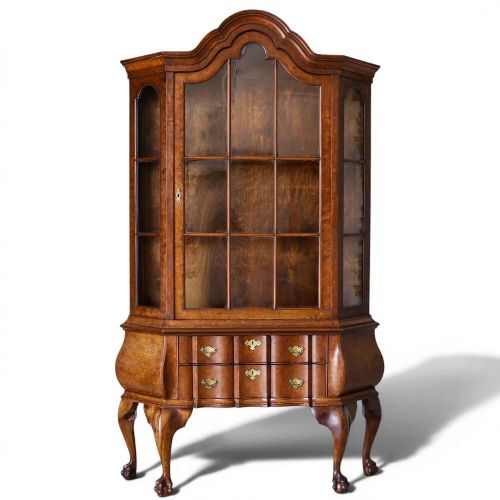
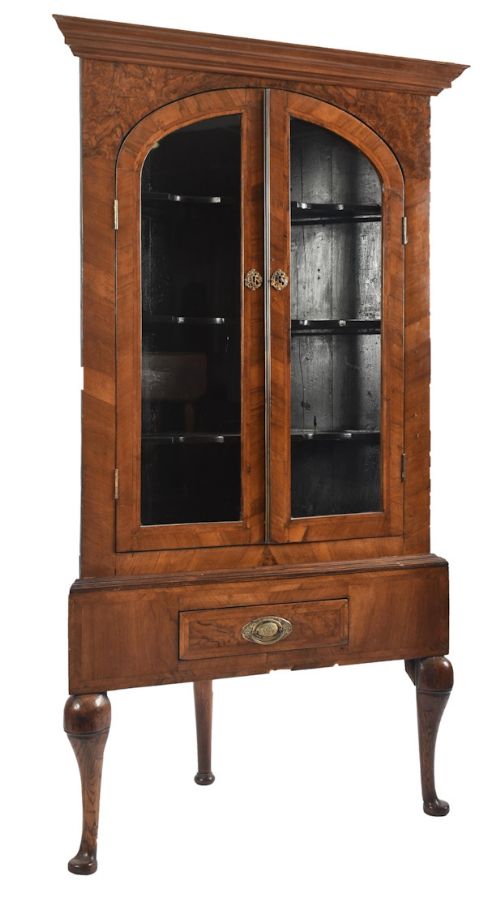
A Dutch baroque display cabinet brings together substantial timber forms and intricate inlaid surfaces that define domestic storage from this regional tradition. Buyers searching for a Dutch baroque display cabinet encounter bureau bookcases, linen presses, cabinets on stand, and corner cupboards alongside dedicated vitrines.
The objects appearing on this page span the seventeenth, eighteenth, and nineteenth centuries, with later revivals also represented. Walnut, oak, and fruitwood form the primary bodies, frequently enriched with elaborate marquetry floral work and pewter inlay.
Materials and construction methods
Cabinetmakers constructed the foundational carcasses using native and imported timbers such as oak, walnut, and fruitwood, often applying burr walnut veneers to achieve deep figuring. Marquetry panels incorporate contrasting woods and fruitwood marquetry to create botanical motifs across the doors and fall fronts.
Glazing bars segment the upper cabinet doors to frame collections, while brass hardware secures the heavy timber doors and drawers. Certain examples utilise ebony and rosewood details, alongside pewter inlay, to punctuate the dark timber surfaces.
Listings feature walnut, oak, fruitwood, and burr walnut timbers across seventeenth, eighteenth, and nineteenth-century periods.
Distinguishing quality across the range
The refinement of the floral marquetry and the crispness of the inlaid pewter work set exceptional examples apart from simpler utilitarian cupboards. Detailed botanical execution across curved bombé drawer fronts requires considerable joinery skill compared to flat panel construction.
Proportion and the handling of walnut veneers also determine the stature of a piece, with balanced glazed upper sections resting harmoniously upon bombe chests or sturdy stands. Original brass mounts and well-figured timber grain elevate the visual weight of seventeenth and eighteenth-century items.
Edwards & Roberts
The Dutch Baroque Display Cabinet Glossary
- Marquetry
- Decorative patterns formed by the insertion of pieces of wood, veneer, or other materials into a base structure. This technique allows cabinetmakers to create complex floral and pictorial scenes across cabinet doors.
- Bombe
- A swelling, outward-curving contour characteristic of furniture shapes from this period. This convex profile demands advanced woodworking expertise to shape the timber accurately.
- Kussenkast
- A traditional Dutch wardrobe or press cupboard featuring cushion-moulded panels. These architectural pieces often utilise heavy oak and ebony details.
- Vitrine
- A glass-fronted cabinet designed specifically for the display of curiosities or fine porcelain. The glazed upper section protects contents while maintaining visibility.
- Bureau bookcase
- A dual-purpose form combining a sloping writing desk below with shelving enclosed by doors above. This hybrid provides both working space and upper display capacity.
Dutch Baroque Display Cabinet: Frequently Asked Questions
How do I date a marquetry cabinet?
Dating relies on examining the timber species, the complexity of the floral marquetry, and underlying construction methods. Seventeenth-century examples often incorporate oak, rosewood, and ebony, while eighteenth-century pieces favour walnut and fruitwood.
Revival items from the later nineteenth and early twentieth centuries show different secondary woods and machine-cut veneers. Comparing the style of the marquetry against established period motifs clarifies the age.
Were these cabinets used for books?
Many examples with glazed upper sections served as bookcases or libraries to protect valuable leather-bound volumes. The upper display space kept contents free from dust while remaining clearly visible.
Lower sections frequently incorporated bureau desks or deep drawer chests for correspondence and storage. This multi-functional layout suited the domestic requirements of prosperous households.
How do I care for walnut veneer?
Walnut veneer requires stable indoor humidity and protection from direct sunlight to prevent timber drying and lifting. Regular dusting with a soft, dry cloth preserves the polished surface without moisture damage.
Avoiding placement near heat sources protects the fragile fruitwood and pewter inlay from shifting. Natural wax applied sparingly maintains the lustre of the timber grain.