
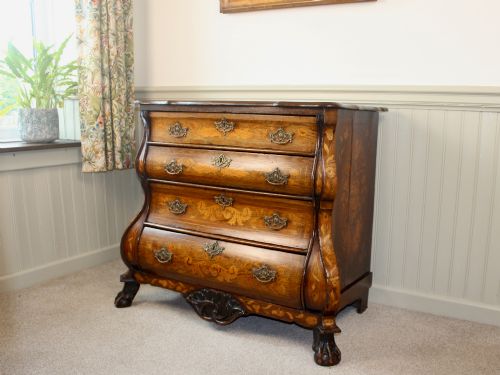


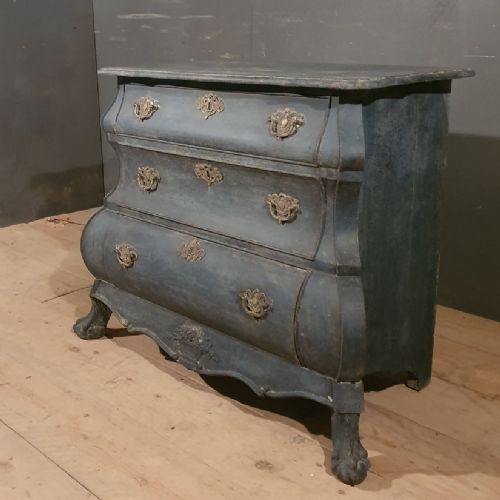


Dutch Baroque Commode
A dutch baroque commode is a substantial statement piece built for storage, prized for its dramatic bombé profile and rich timber figuring.
Dutch Baroque Commode
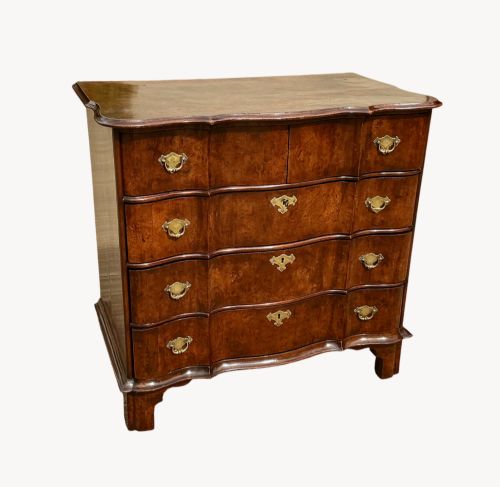
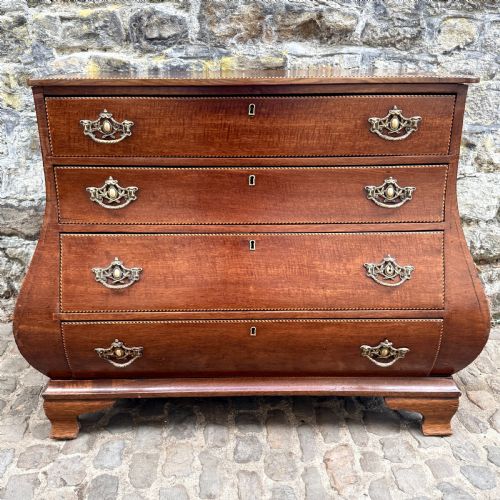
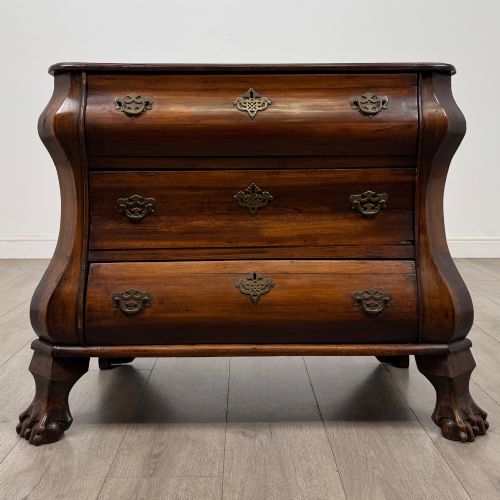
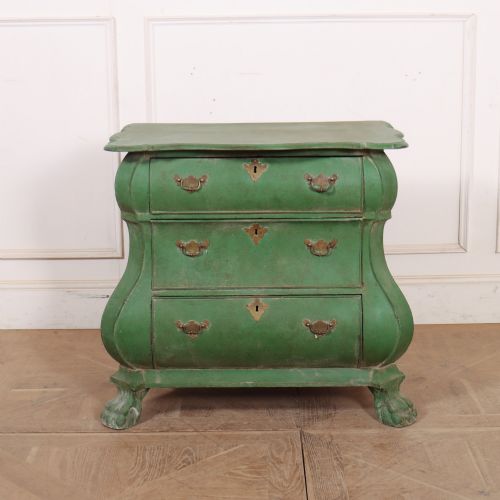
A dutch baroque commode presents a distinctive bombé or shaped front designed to anchor a room with heavy visual presence. Most examples you meet here date from the eighteenth century, though later revivals also appear.
Makers shaped these chests of drawers from substantial timbers, frequently applying decorative veneers. You will encounter pieces rendered in burr walnut, burr elm, rosewood, oak, and painted wood.
The form functions primarily as a chest of drawers, balancing practical storage with elaborate cabinetwork. These pieces carry the characteristic proportions and decorative restraint or flourish typical of Dutch cabinetmaking.
How They Were Made
Joiners constructed the carcasses of these commodes using sturdy foundational woods like oak, providing a stable frame for the curved fronts. The technique required precise woodworking to achieve the characteristic swelling bombé contour without compromising structural integrity.
Craftsmen applied decorative veneers including burr walnut, burr elm, and rosewood across the exterior surfaces, often highlighting the natural grain patterns. Fruitwood inlay and painted finishes further decorated the exteriors of specific pieces.
The listings here feature pieces spanning the eighteenth century, the nineteenth century, and the Edwardian period, built in oak, rosewood, and burr walnut.
What Varies in Quality
The distinction between a standard piece and a finer example lies in the selection of veneer and the execution of the timber figuring. Richly patterned burr walnut or burr elm displays superior decorative ambition compared to plain painted surfaces.
The fluidity of the bombé shape and the crispness of any fruitwood inlay define the upper tier of craftsmanship. Cabinetmakers who achieved harmonious proportions across curved drawer fronts demonstrated greater skill than those producing rigid forms.
The Dutch Baroque Commode Glossary
- Bombe
- A swelling or bulging outline characteristic of certain continental furniture forms. This profile gives the chest a rounded, volumetric appearance.
- Marquetry
- The art of applying pieces of veneer to a structure to form decorative patterns. Craftsmen utilised various woods to create intricate pictorial designs on the drawer fronts.
- Burr walnut
- A prized timber harvested from the irregular growths on walnut trees. It yields highly figured wood grain patterns valued for decorative veneer.
- Fruitwood
- Dense timber sourced from fruit-bearing trees such as pear or apple. Makers often utilised these woods for contrasting inlay work.
- Commode
- A decorative chest of drawers standing on relatively short legs. The term denotes a specific form of low storage furniture developed in the seventeenth century.
Dutch Baroque Commode: Frequently Asked Questions
What is a Dutch bombé commode?
A Dutch bombé commode is a chest of drawers featuring a prominent, swelling curved front and sides. These pieces originate primarily from the eighteenth and nineteenth centuries.
Cabinetmakers designed them to serve as grand storage items in domestic interiors. Their distinctive silhouette defines the Dutch baroque and revival styles.
How do I care for a burr walnut commode?
Protect the veneered surfaces by keeping the commode away from direct sunlight and sudden temperature changes. Natural wood finishes respond well to gentle dusting with a dry cloth.
Avoid placing damp items directly onto the timber top. Proper indoor humidity prevents the delicate burr walnut veneers from lifting over time.
What woods were used in these commodes?
Makers constructed the primary frames using sturdy timbers like oak. They then applied decorative veneers over this foundation.
Surfaces frequently feature burr walnut, burr elm, rosewood, or painted finishes. Some examples incorporate fruitwood inlay to accent the primary timber.
Are these chests eighteenth century?
Many examples date directly to the eighteenth century, representing the period of primary production for this form. Later nineteenth-century revival pieces also occur within the selection.
Examining the construction methods and timber usage helps distinguish the eighteenth-century originals from later interpretations. Both periods share the characteristic shaped silhouette.