




Drop Leaf Console Desk
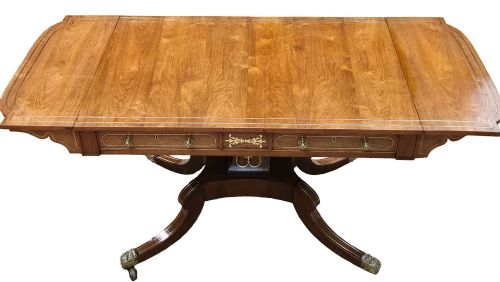
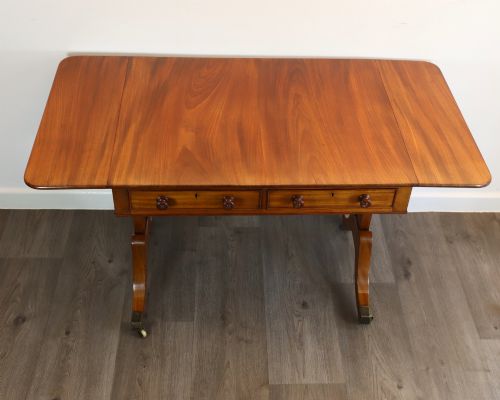
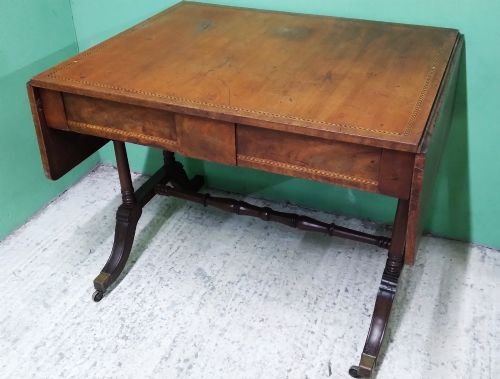
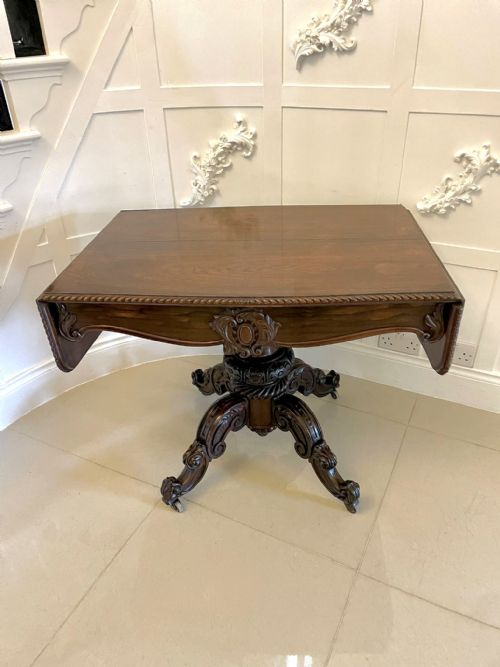
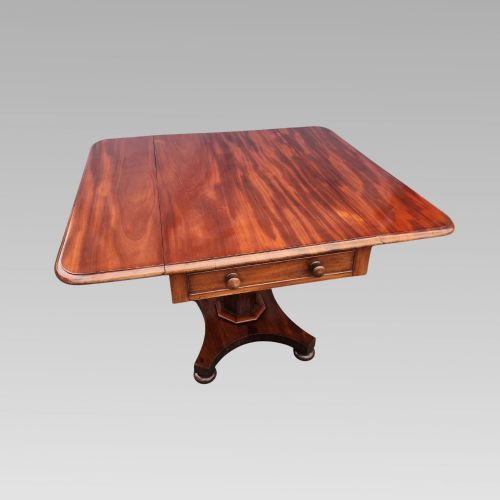
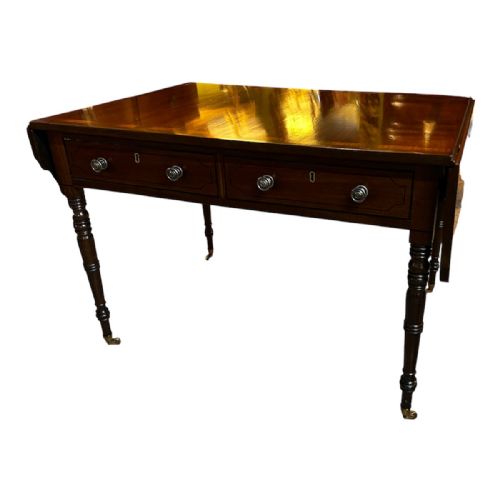
These drop leaf console desk designs, principally appearing as sofa tables and side tables from the Georgian, Regency and Victorian periods, offer versatile surfaces with folding flaps for daily use.
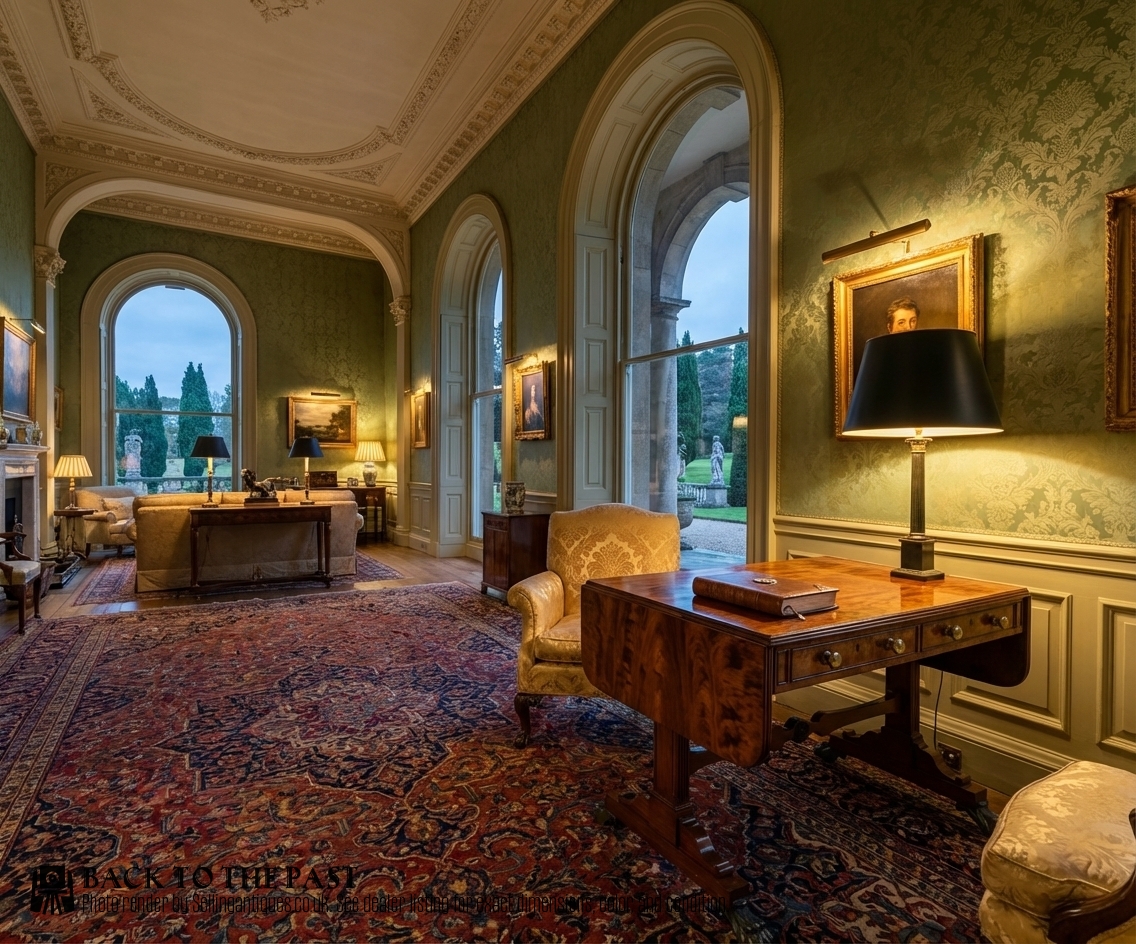
Drop Leaf Console Desk
A drop leaf console desk search brings up versatile tables that double as writing tables and sofa tables, designed with hinged leaves on either side that drop down when space is needed. Most pieces encountered on this page originate from the Georgian, Regency, William IV, and Victorian periods, reflecting a strong preference for freestanding furniture.
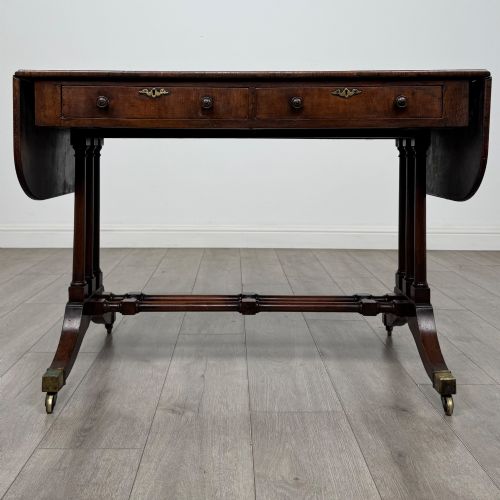
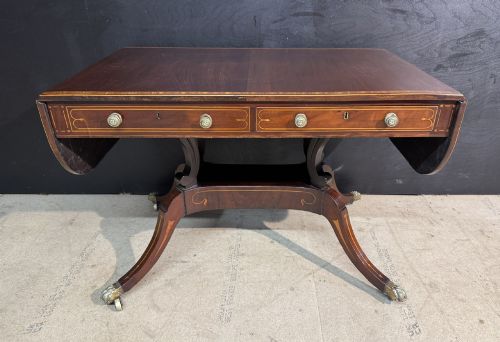
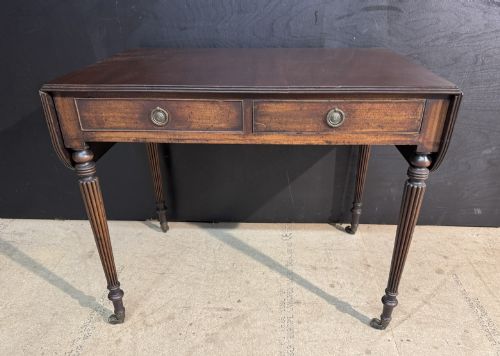
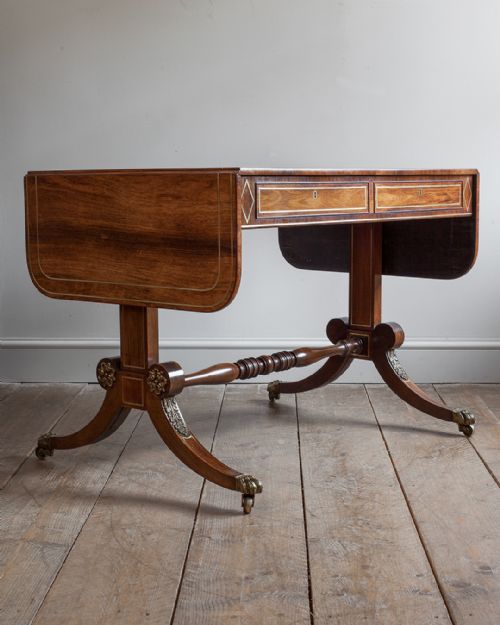
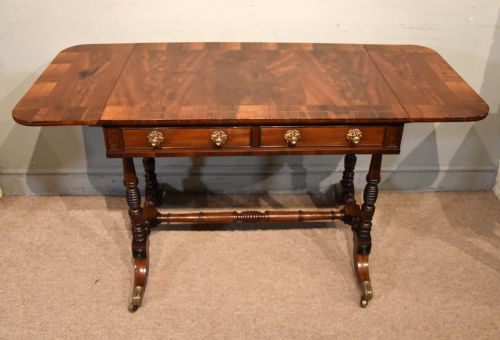
The primary forms on show include sofa tables and side tables equipped with drawers and drop flaps, constructed to stand away from walls behind seating or in the centre of a room. Makers of the 18th and 19th centuries built these pieces in mahogany, rosewood, and yew wood, often incorporating brass mounts, cut brass inlay, or boxwood stringing.
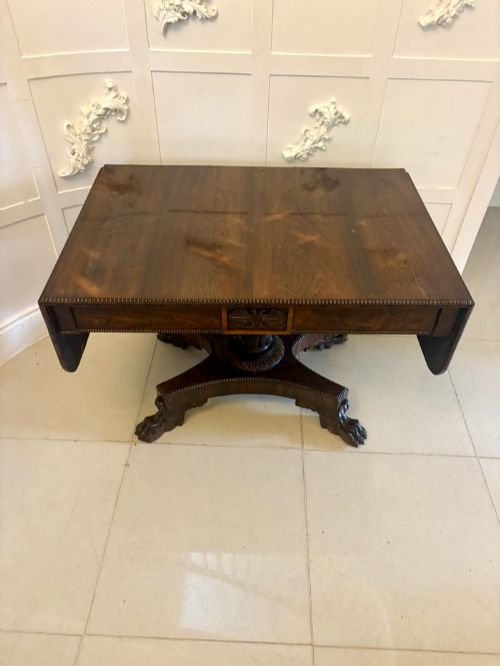
Examples span from George III and Regency periods into the Edwardian era, showing shifts from rectilinear Georgian proportions to the bolder, brass-inlaid rosewood designs of the Regency and the later carved Victorian interpretations.
Materials and construction
Cabinet makers relied heavily on timbers like solid and veneered mahogany, rosewood, flame mahogany, and yew wood, often selecting figured boards for table tops and drawer fronts. Secondary woods provided structural stability within the framework of the drop leaves and underframes.
Decoration relied on contrasting veneers, wood inlay, and boxwood lines, alongside cast brass mounts and cut brass inlay set directly into the rosewood top. Support structures frequently incorporated twin pillars, lyre ends, or turned pedestals resting on splayed legs fitted with brass castors.
Materials appearing across the inventory include brass, mahogany, rosewood, ebony, boxwood, yew wood, wood inlay, and flame mahogany.
What separates the grades
The choice of timber grain dictates much of the visual standard, with highly figured flame mahogany or richly grained rosewood commanding greater visual presence than plainer mahogany or pine. Selection of veneer matching across the folding leaves reveals the original maker's skill and attention to detail.
Detailing such as precision brass inlay, fine boxwood stringing, and solid brass mounts separate standard utilitarian pieces from high-status Regency and Georgian examples. The integration of working drawers with clean internal construction and substantial structural joints marks the upper tiers of craftsmanship.
Jean-Joseph Chapuis
The Drop Leaf Console Desk Glossary
- Sofa table
- A rectangular occasional table designed during the late 18th and early 19th centuries to stand in front of a sofa, typically featuring drop leaves on opposite sides and two small drawers.
- Drop leaf
- A hinged flap attached to the main table top that can be raised to extend the surface area or dropped down when space is constrained.
- Regency
- A British design period spanning roughly from 1811 to 1820, characterised by classical motifs, dark exotic timbers like rosewood, and classical architectural influences.
- Lyre end
- A furniture support shaped in the classical form of a lyre musical instrument, frequently employed on the pedestals of Regency sofa tables.
- Flame mahogany
- A distinct timber grain figure resembling flickering flames, achieved by cutting through the branch junctions of the mahogany tree.
Drop Leaf Console Desk: Frequently Asked Questions
What is a drop leaf console desk?
A drop leaf console desk generally refers to antique sofa tables and side tables that feature folding flaps on the sides. These tables served multiple purposes in period homes, functioning as writing desks, work tables, or serving surfaces.
The design allows the side leaves to drop down to save floor space or rise up to create a larger surface when required. Most examples encountered date from the Georgian, Regency, and Victorian eras.
How were these tables used originally?
Original usage centred on the principal rooms of grand houses, where they stood behind sofas or freestanding in the middle of a room. They provided a convenient movable surface for correspondence, reading, and needlework.
The addition of small drawers allowed owners to store writing materials, letters, and small personal items close at hand. Their freestanding nature meant they could be shifted easily as household needs changed throughout the day.
How do I tell Regency from Georgian pieces?
Georgian pieces from the 18th century tend to display restrained classical proportions, straight lines, and a reliance on figured mahogany with subtle inlay. The craftsmanship emphasises architectural balance and understated elegance.
Regency pieces from the early 19th century embrace bolder contrast, often pairing dark rosewood with bright brass inlay, gilt mounts, and lyre-shaped pedestals. The influence shifts towards heavier classical antiquity, including French Empire styling.
How do I live with an antique sofa table?
Living with these tables involves placing them where their finished backs and sides are fully visible, as many were designed to stand away from walls. Raising and lowering the drop leaves should be done with care to protect the original hinges and rule joints.
Regular polishing with appropriate wax preserves the patina of timbers like mahogany and rosewood. Keeping them out of direct sunlight prevents the exotic veneers from fading over time.