
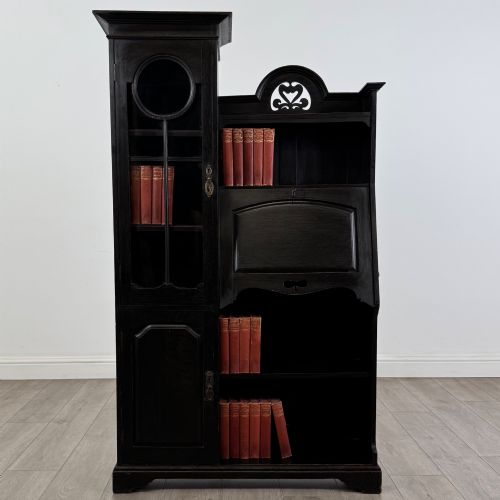
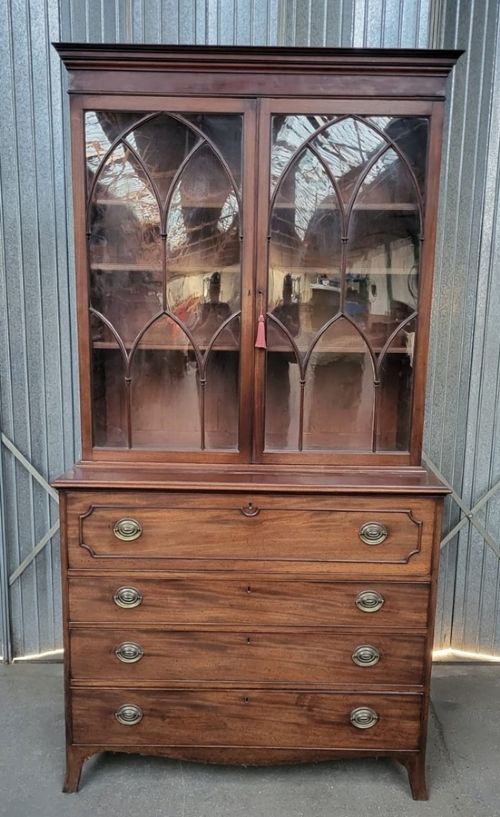

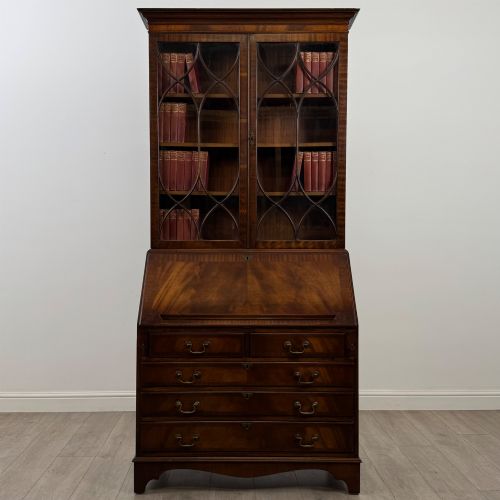
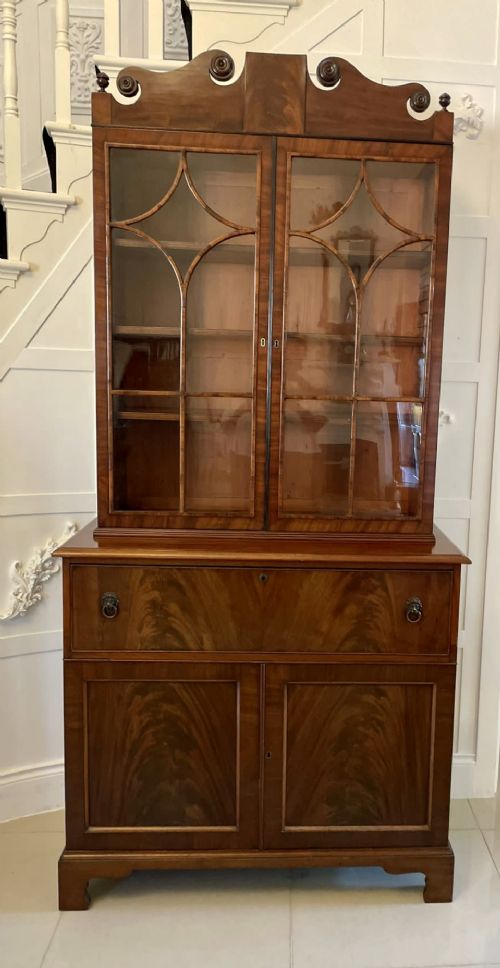


Drop Front Bureau Bookcase
A drop front bureau bookcase combines a writing slope and a shelved cabinet, offering concealed workspace and display storage in one piece.
Drop Front Bureau Bookcase
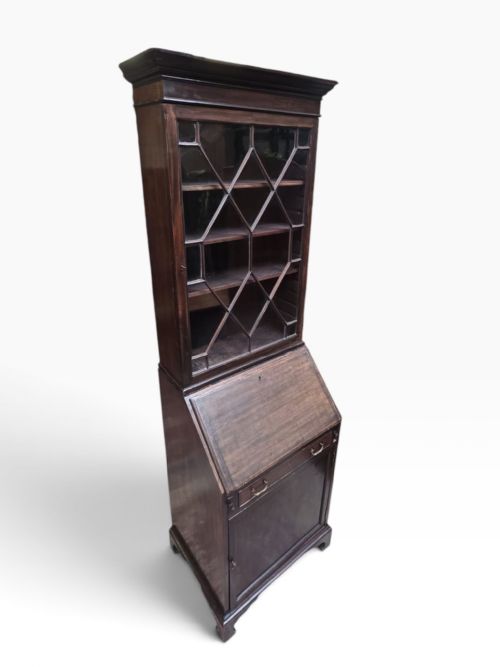
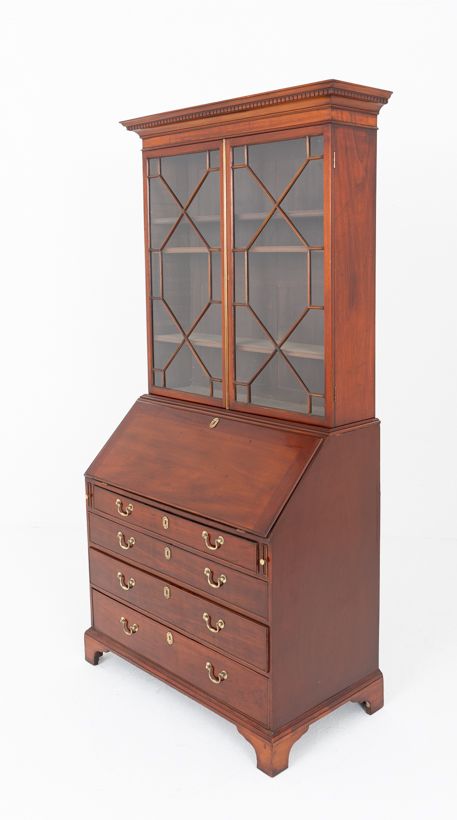
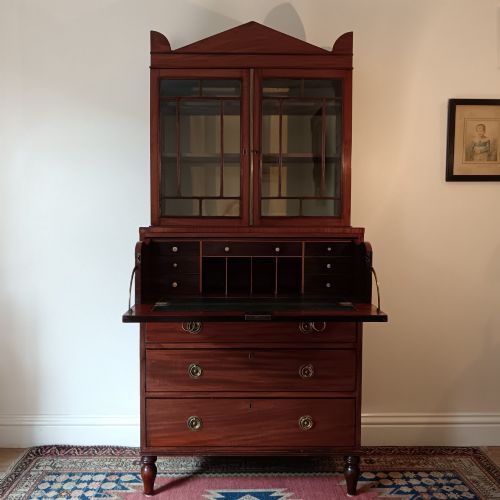
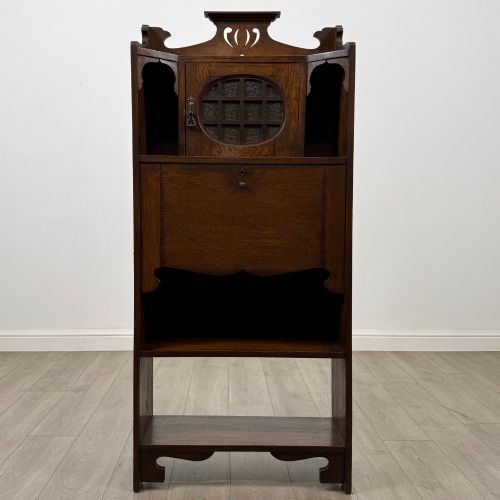
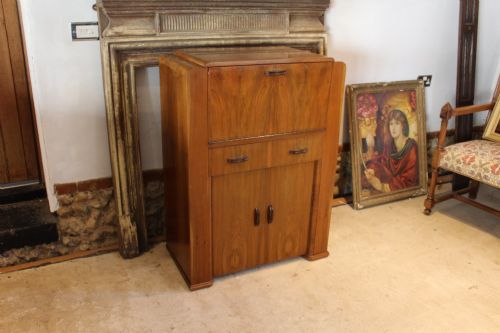
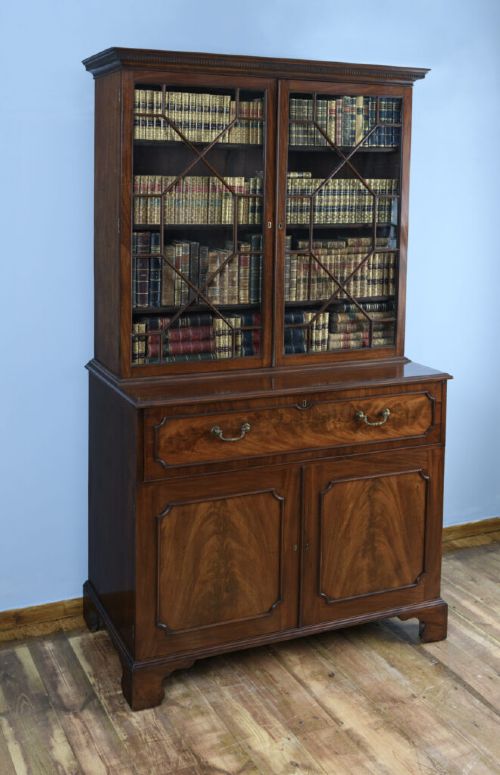
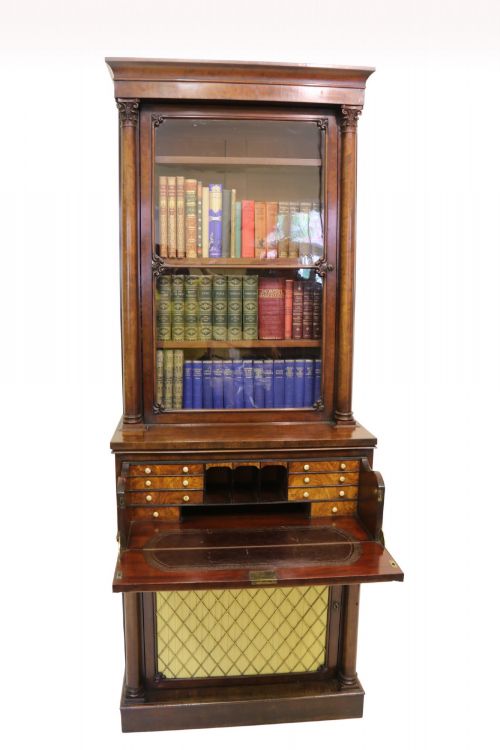
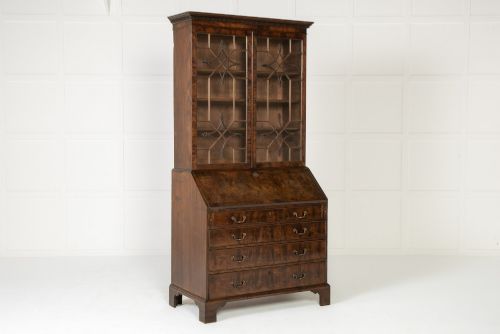
A drop front bureau bookcase brings together a writing desk and a bookcase top into a single tall piece of furniture. When you search for a drop front bureau bookcase, you encounter forms that span from the eighteenth century through the Edwardian period and the 1930s. These pieces provide a hinged writing flap that opens down for correspondence alongside upper shelving enclosed by glazed or solid doors.
The versions met most frequently on this page date from the Georgian era and the nineteenth century, executed primarily in mahogany or walnut. Makers constructed these items to serve as functional libraries and writing centres for homes of status. They range from compact chamber pieces to grand scale examples with double dome tops.
How they were made
Cabinet makers built these pieces using solid timbers and decorative veneers such as mahogany, walnut, oak, and satinwood over supportive foundational woods. They incorporated brass hardware for handles and key escutcheons, alongside fitted interior compartments, small drawers, and pigeonholes within the writing section. Glass is set into the upper cabinet doors to protect volumes while keeping titles visible.
Joinery techniques included dovetailing for drawer construction and careful framing for the fall front writing surface. Artisans added inlaid details and figured veneers to enhance the visual depth of the timber surfaces. Glazed upper doors required precise wooden muntins to hold individual panes securely in place.
Some secretaire drawers hide secret spring-loaded compartments behind innocent-looking pigeonholes, designed for keeping true confidences.
What varies in quality
Quality rests upon the selection of timber grain, such as figured mahogany or burr walnut, and the precision of the cabinetmaker's joinery. Superior pieces display harmonious proportions, carefully matched veneers, and well-executed interior fittings like secret compartments or inlaid banding. Lesser examples rely on plain timber stock and simpler internal arrangements.
The integrity of the structural frame and the original working condition of the fall front hinges and drawer runners dictate the overall merit of a piece. Finer items retain original brass handles, clear glass, and balanced architectural mouldings on the upper bookcase cornices. Subsequent alterations or mismatched hardware diminish the original character.
George Oakley·Gillows of Lancaster·F.H. Marshall & Co Glasgow
The Drop Front Bureau Bookcase Glossary
- Secretaire
- A piece of furniture containing a drawer or compartment designed for writing, often featuring a fall front or a drawer that pulls out to reveal a fitted interior. This term frequently interchanges with bureau in period descriptions.
- Fall front
- A hinged writing flap that drops down to a horizontal position to provide a writing surface. It conceals pigeonholes and small drawers when closed.
- Escutcheon
- A flat plate of brass surrounding a keyhole to protect the surrounding wood from wear. They are often pierced or engraved in period pieces.
- Muntin
- A strip of wood separating panes of glass within a glazed bookcase door. They form the structural grid holding the upper window panels.
- Figured mahogany
- Timber cut to reveal distinctive grain patterns such as flame or feather figures. It was selected for prominent exterior surfaces like drawer fronts and fall flaps.
Drop Front Bureau Bookcase: Frequently Asked Questions
How do I use the drop front desk?
Lower the hinged writing flap until it rests horizontally, supported by internal wooden brackets or pull-out lopers. This action reveals a fitted interior containing pigeonholes and small drawers for stationery.
When writing is finished, return papers to the interior compartments and lift the flap back into its vertical position, securing it with a key. This keeps the work surface concealed and tidy.
What is the difference between a bureau and a secretaire?
In British furniture terminology, a bureau generally refers to a slant-front desk where the entire front folds down. A secretaire often indicates a desk incorporated into a drawer or cabinet structure.
Both forms serve the same primary function of providing a concealed writing surface and storage compartments.
How do I care for the wood surface?
Dust the timber regularly with a soft, dry cloth to prevent grit accumulation. Apply appropriate furniture wax sparingly to nourish the polish and maintain the grain.
Keep these pieces away from direct sunlight and heat sources to prevent the wood from drying out or the veneers from lifting.
How can I tell the period of the piece?
Examine the construction methods, secondary timbers used inside the drawers, and stylistic details like bracket feet or cornice mouldings. Georgian pieces often show hand-cut dovetails and simpler internal oak or pine linings.
Later Victorian and Edwardian examples may feature machine-sawn elements, different brassware styles, or revival ornamentation that hints at their date of manufacture.