

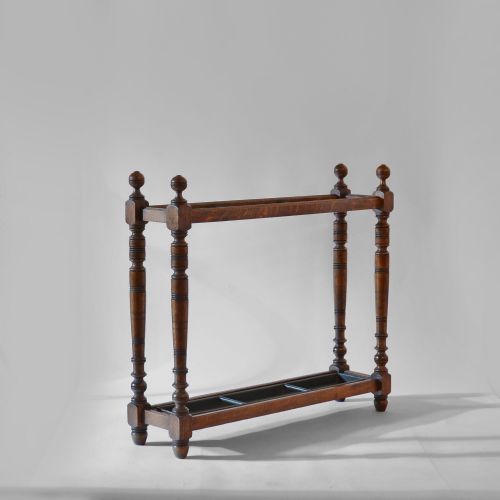
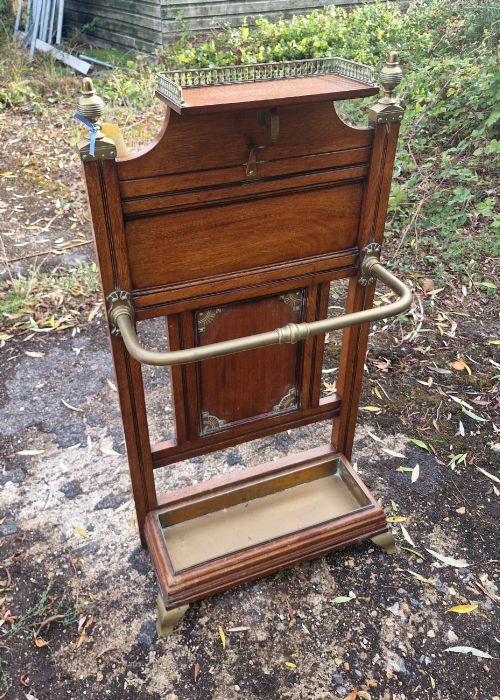
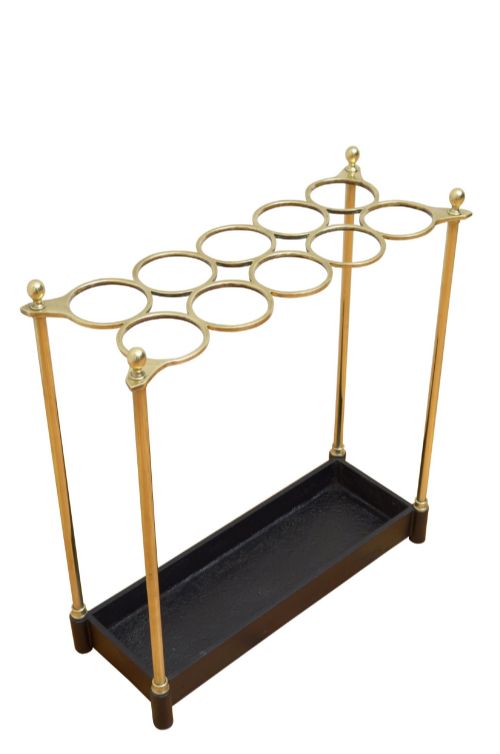
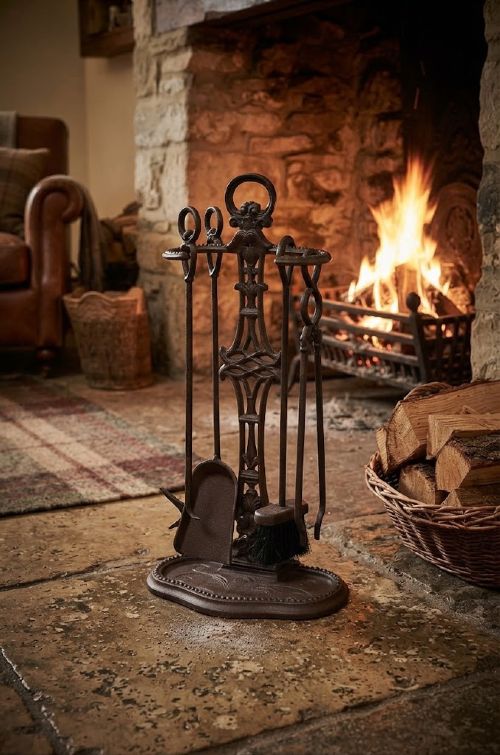
Drip Tray Stick Stand
These drip tray stick stands keep halls tidy while bringing practical utility and period character to an entrance.
Drip Tray Stick Stand
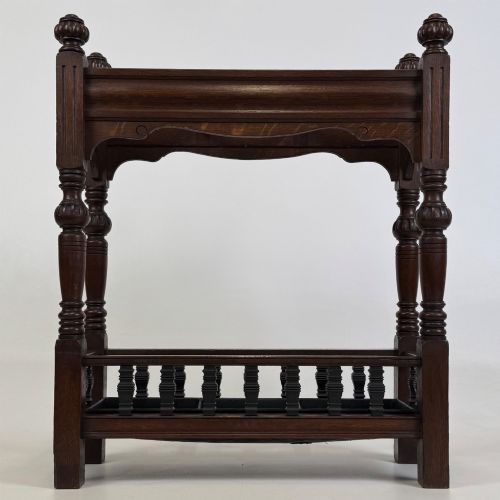
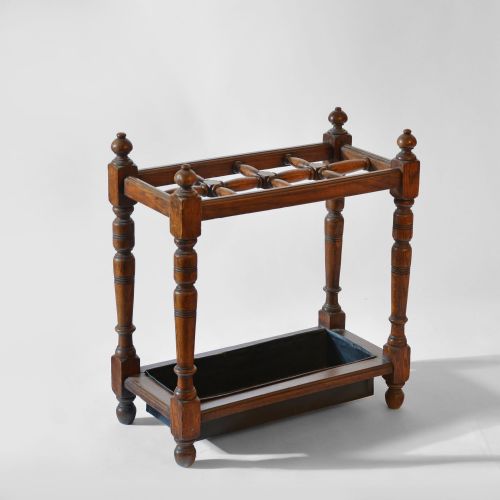
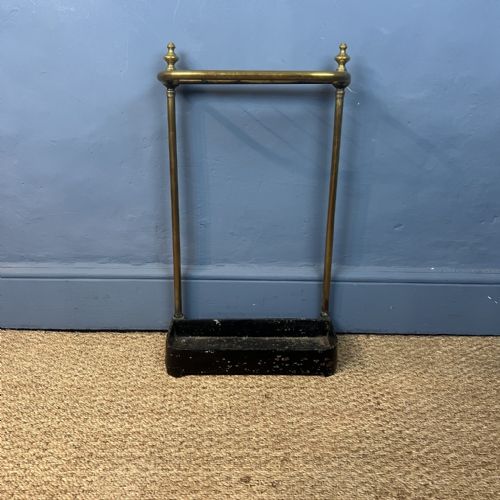
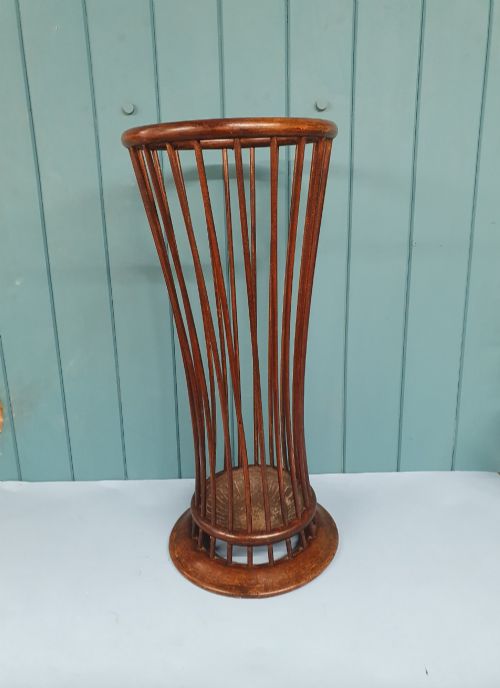
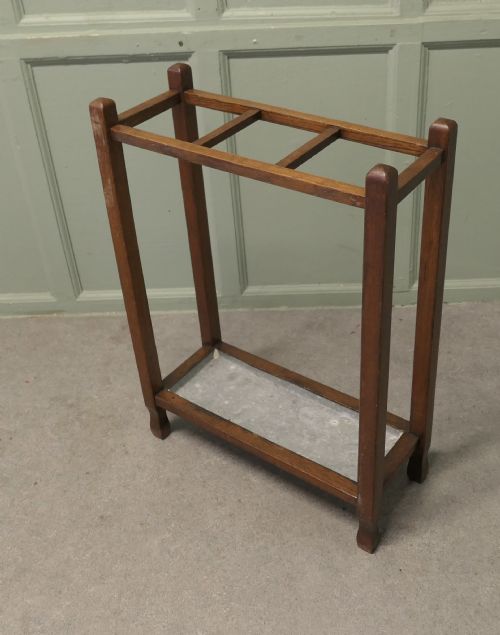
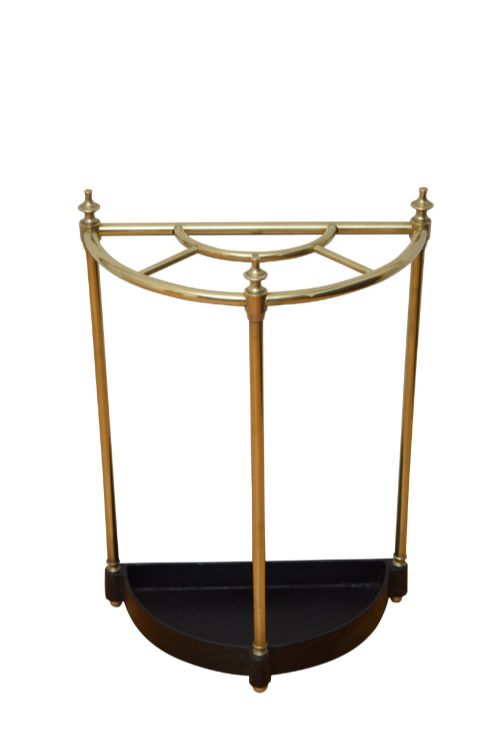
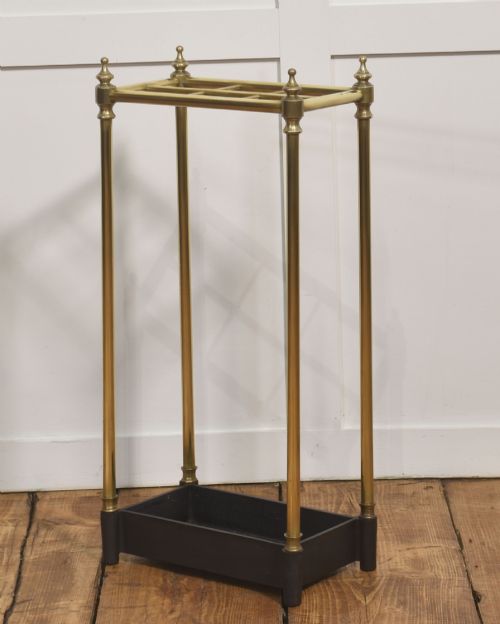
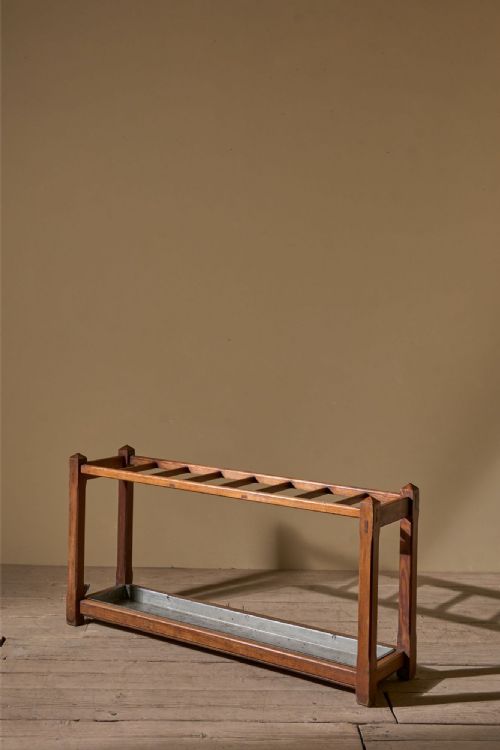
A drip tray stick stand is a hall furnishing designed to hold walking sticks, umbrellas and canes while catching moisture from wet weather in an integrated metal base.
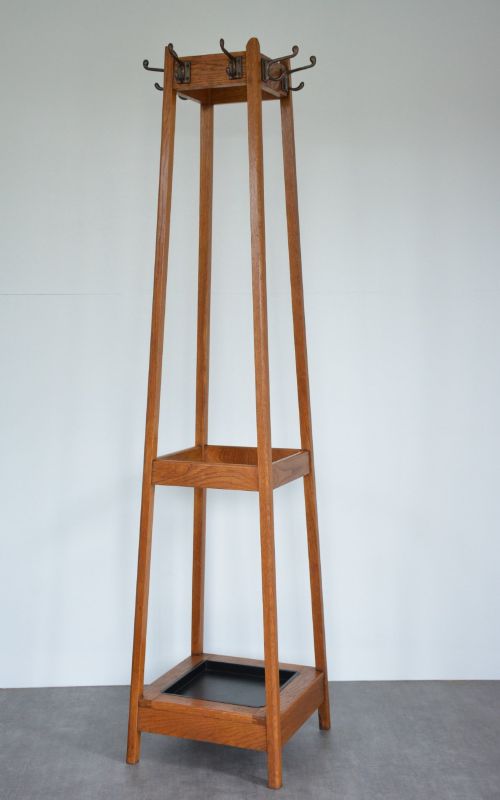
The pieces on this page span the nineteenth century through to the art deco period, taking the form of umbrella stands, hall seats and coat stands.
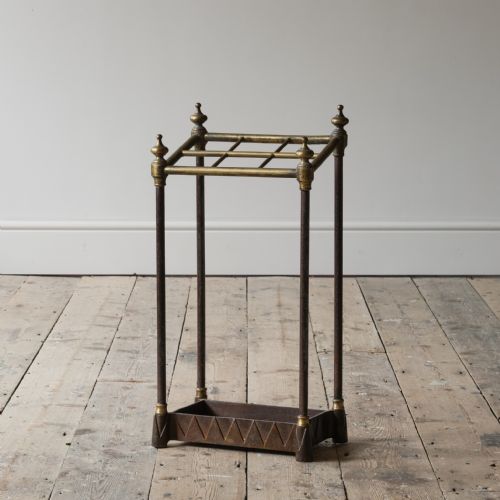
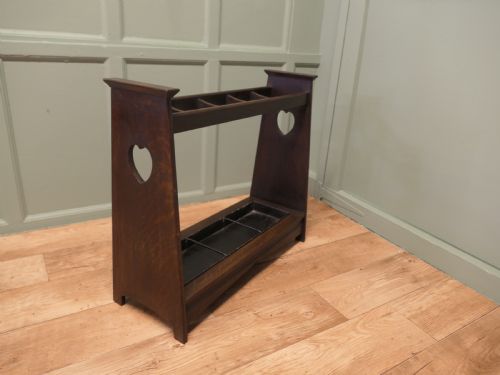
Oak, brass and cast iron dominate the selection, reflecting the materials favoured by Victorian, Edwardian and arts and crafts makers.
How they were made
Foundry workers cast iron and brass into structural frames, decorative rails and detachable lower trays, often incorporating zinc or copper for the moisture retention.
Cabinet makers joined solid timbers such as oak, mahogany and pine using traditional framing methods to build sturdy compartments for walking sticks and umbrellas.
Listings feature oak, mahogany, pine, brass, cast iron, zinc and copper across the Victorian, Edwardian and art deco periods.
What varies in quality
The standard of a stick stand rests on the integrity of its original metal drip tray and whether structural joints remain tight after decades of damp use.
Finishing details distinguish finer examples, such as decorative ball finials on brass frames, crisp cast iron mouldings and careful quarter-sawn oak selection.
Coalbrookdale·Thonet·Heals of London·Liberty Design
The Drip Tray Stick Stand Glossary
- Demi lune
- A half-moon shape used for brass and iron stick stands designed to sit flush against a hallway wall.
- Drip tray
- A removable metal basin positioned at the base of the stand to catch water from umbrellas and protect wooden floors.
- Arts and crafts
- A design movement prioritising honest construction, visible grain in oak and simple utility over excessive ornamentation.
- Cast iron
- A heavy alloy poured into moulds to create rigid openwork frames and stable bases for holding heavy walking canes.
Drip Tray Stick Stand: Frequently Asked Questions
How do I place a stick stand in a small hallway?
Demi lune brass and iron stands fit flat against narrow walls, taking up minimal floor space while still holding several umbrellas.
Placing them directly beside the front door ensures wet items land straight in the tray rather than on the hall flooring.
Are original drip trays important?
Original removable zinc, copper or iron trays maintain the integrity and correct fit of the lower section.
Replacements can function just as well for daily use, but matching period metals preserves historical correctness.
How do I care for oak stick stands?
Keep wooden stands away from direct heat sources and radiators to prevent the oak panels and joints from drying and splitting.
Regularly empty and dry the internal metal tray to stop stagnant moisture from affecting the timber base.
How do I distinguish Victorian from Edwardian stands?
Victorian stands tend to use heavy cast iron and dark oak with ornate scrolling or decorative finials.
Edwardian pieces often feature lighter golden oak timbers and simpler geometric lines reflecting the shift towards arts and crafts design.