
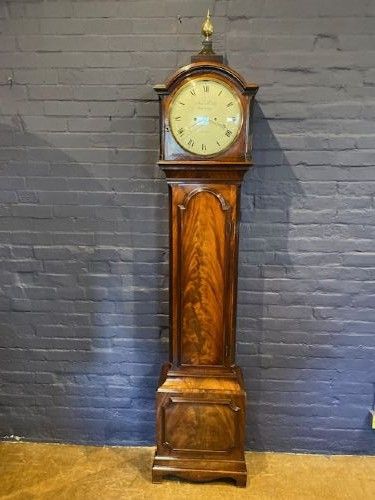
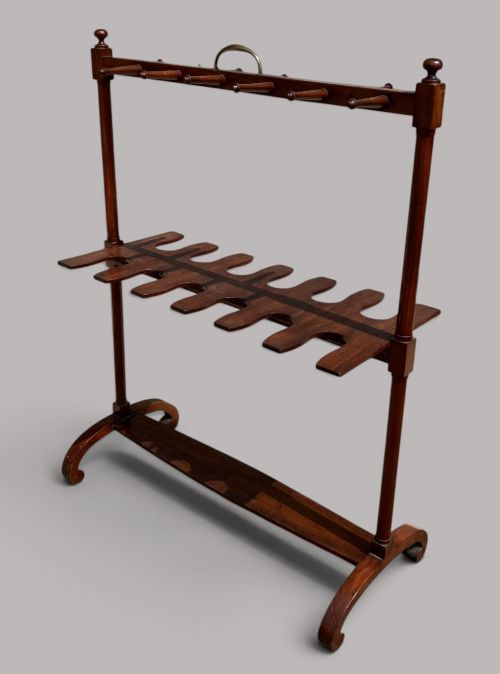


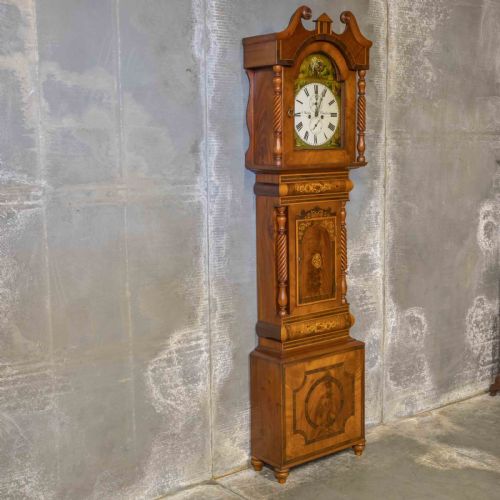


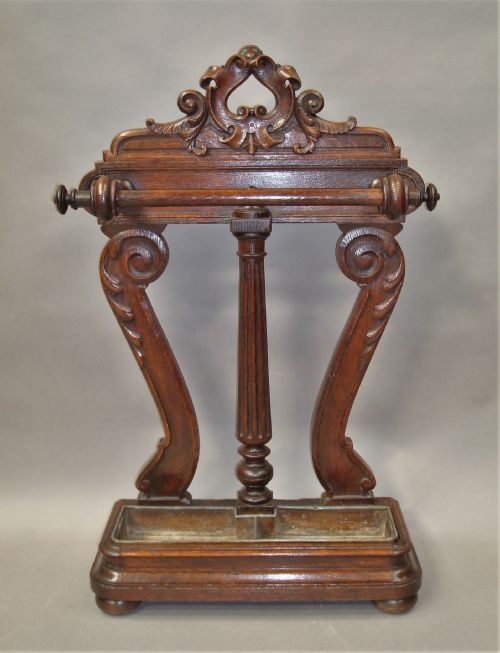

Regency Hall Stand
These regency hall stand pieces are substantial entrance furniture items designed for hats, coats, and boots in traditional hallways.
Regency Hall Stand
When you search for a regency hall stand, you encounter pieces designed for entrance halls that organise hats, coats, whips, and boots. These items date primarily from the nineteenth century, including the Regency and Victorian periods.
The selections available include country house hat and coat stands, boot racks, umbrella stands, and tree forms. Mahogany is a dominant material, often paired with brass elements and oak or rosewood structures.
Alongside dedicated stands, the record shows related hallway furniture including console tables, side tables, washstands, and occasional tables. These pieces share the proportion and timber characteristics of the Regency and George III eras.
Materials and construction
Makers utilised solid timbers alongside veneers, relying heavily on mahogany and oak for structural stability in high-traffic hallways. Flame mahogany veneer provides decorative grain patterns on larger surfaces, while satinwood and inlay offer contrasting detail.
Metal components such as brass hooks, rods, and iron fittings provide functional durability for hanging garments and storing umbrellas. Glass and marble elements appear on associated hallway furniture like washstands and mirrors.
Several listings specifically accommodate equestrian pursuits, featuring dedicated racks for riding whips alongside hats and boots.
Distinctions in quality
The standard of a regency hall stand rests on the selection of timber, such as figured mahogany or quarter-sawn oak, and the crispness of any inlaid decoration. Substantial proportions and provenance linking a piece to a specific country house indicate higher status.
Construction methods distinguish finer workshop output from standard utility pieces, visible in the joinery of the coat hooks, stability of the base, and integration of brass hardware. Matched pairs and items attributed to specific design manners command particular attention.
The Regency Hall Stand Glossary
- Regency
- A stylistic period spanning the early nineteenth century characterised by classical revival motifs and refined proportions. It draws heavily on ancient Roman, Greek, and Egyptian design vocabulary.
- Flame mahogany
- A veneer cut from timber where the branch meets the trunk, producing a distinctive rippled, flame-like pattern. Furniture makers utilised this figure on prominent surfaces to catch the light.
- Stick stand
- A piece of furniture designed to hold walking sticks, canes, and umbrellas, often incorporating a metal drip tray at the base. These frequently share form and timber with larger hall stands.
- Inlay
- A technique where contrasting woods or metals are inserted into recesses within the primary timber surface to create geometric or floral patterns. George III and Regency pieces frequently employ this decoration on tabletops and stands.
Regency Hall Stand: Frequently Asked Questions
What is a regency hall stand used for?
These pieces served as functional entrance furniture for hanging coats and hats while storing boots, whips, and umbrellas.
In traditional homes, they kept everyday outdoor wear organised and accessible near the front door.
How do I identify a Regency period piece?
Look for classical design influences, specific timber choices like mahogany and rosewood, and construction methods characteristic of the early nineteenth century.
Many pieces also feature brass hooks and detailing typical of the Regency and George IV eras.
Where should I place a hall stand?
They suit entrance halls, corridors, and boot rooms where their vertical orientation and hanging capacity serve a practical purpose.
Ensure adequate wall clearance and floor space for the specific footprint of the hat and coat hooks.
Are all hall stands made of mahogany?
While mahogany and flame mahogany veneer are the most common primary woods in the record, oak also appears in traditional designs.
Makers frequently combined these timbers with brass, iron, and marble depending on the specific form.