





Carved Stick Holder
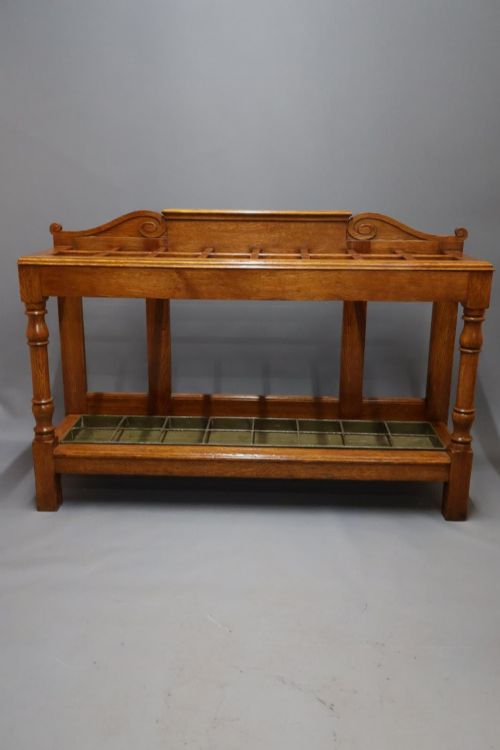
A carved stick holder brings practical utility and robust character to an entrance hall, offering sturdy storage for umbrellas and walking canes.
Carved Stick Holder
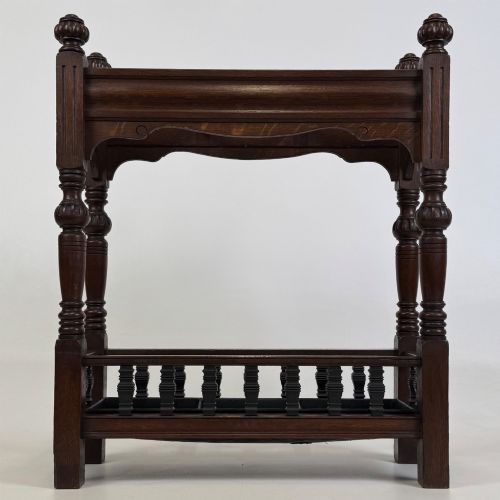
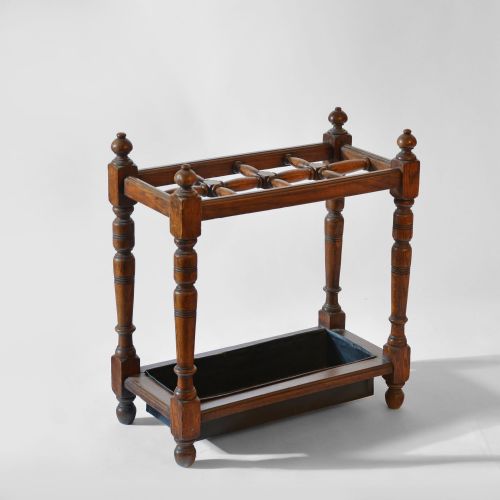
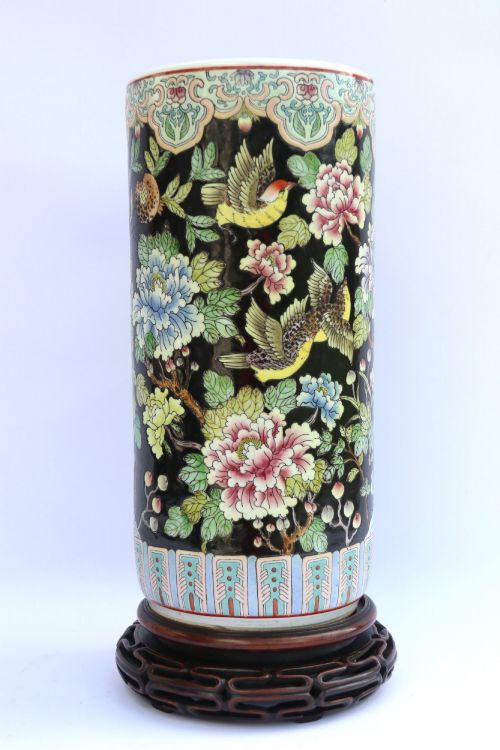
A carved stick holder serves as a functional hallway furnishing designed to store umbrellas, walking sticks, and canes. These pieces appear most frequently in oak, mahogany, and carved wood configurations from the Victorian, Edwardian, and nineteenth-century periods.
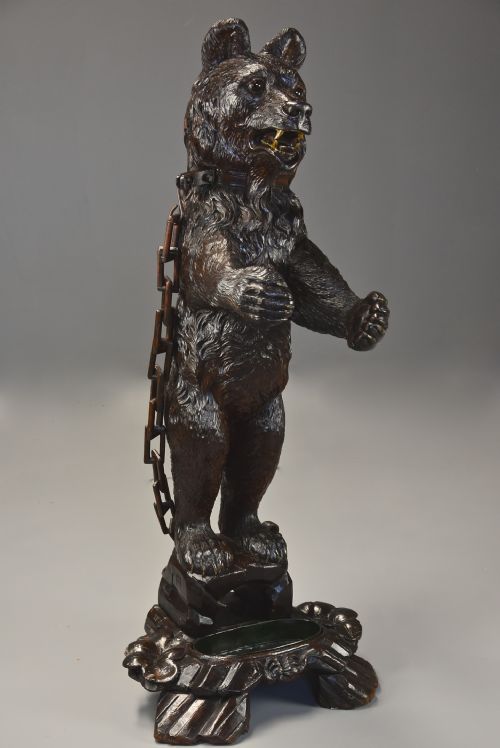
The selection encompasses dedicated umbrella and stick stands alongside larger hall stands that incorporate mirrors and glove compartments. Black Forest examples carved in the likeness of bears represent a distinct sculptural subset within this group.
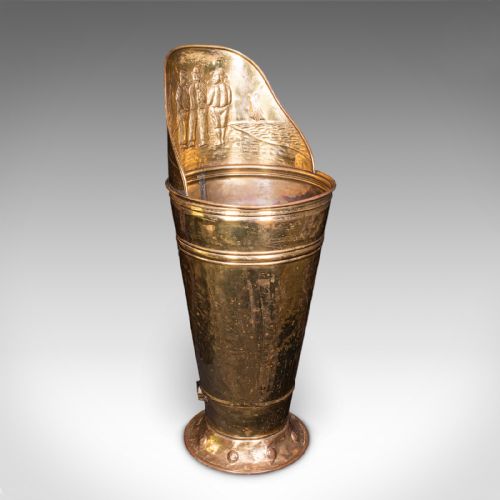
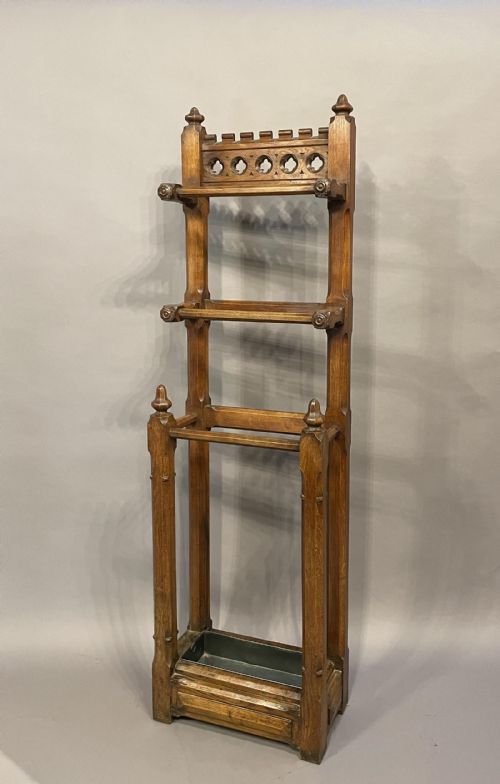
Regional and stylistic variations span from Gothic Revival and Arts and Crafts designs to country house oak models and Dutch brass or heavy iron pieces. Buyers encounter both compact domestic items and substantial exhibition-quality hall furniture.
Materials and construction methods
Makers utilised solid timbers such as oak and mahogany alongside fruitwood and lignum vitae for turned or carved wooden bodies. Joinery methods involve framed panels, turned barley twist supports, and caned sections.
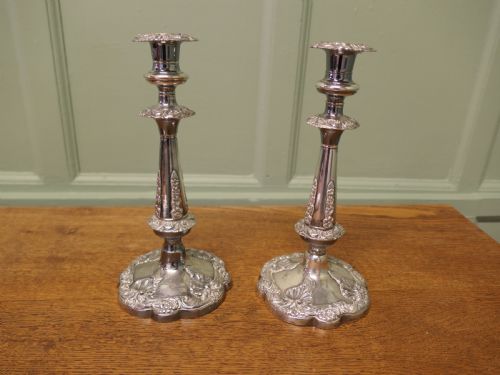
Sculptural Black Forest pieces rely on hand-carved detail work, depicting animals and naturalistic tree trunk forms from seasoned timber. Metal components include cast brass, iron, and silver plating on structural frames and drip pans.
The inventory records diverse stylistic influences including Black Forest animal carvings, Gothic Revival architecture, and Arts and Crafts joinery.
Distinctions in craftsmanship
The depth and precision of the hand-carving separate standard utility items from sculptural works of art, particularly in Black Forest bear figures and detailed foliage motifs. Crisp execution in turned barley twists and well-fitted panel construction indicate higher workshop standards.
Original elements such as metal drip trays, marble shelves, and mirrored backplates preserve the integrity of the piece. Timber selection and surface patination further define the distinction between straightforward utility items and grand country house furnishings.
The Carved Stick Holder Glossary
- Black Forest
- A nineteenth-century style of wood-carving originating in central Europe, known for realistic animal figures and foliage motifs. Carved bears holding trays or standing as posts frequently define these pieces.
- Barley twist
- A spiral turning technique executed on a lathe to create a column resembling twisted barley sugar. This decorative support appears on furniture legs and uprights from the Victorian period onwards.
- Bergere
- A type of woven cane panelling used for sides or backrests on seating and occasional furniture. It provides a lightweight, textured contrast to solid wooden frames.
- Treen
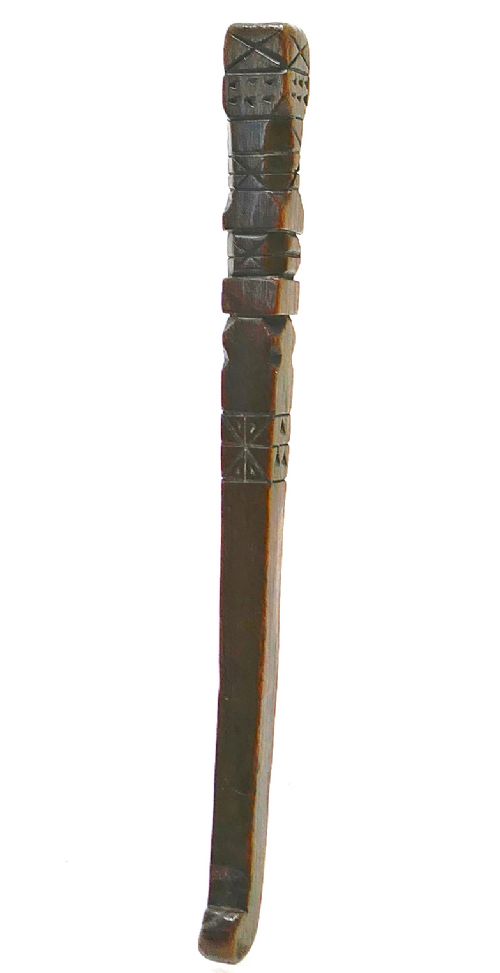
- Small handmade wooden household objects created through turning or carving. Items in this category include knitting sheaths and small holders produced from dense hardwoods.
- Pricket
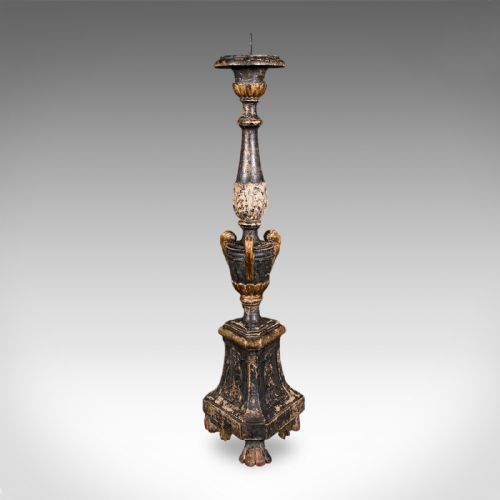
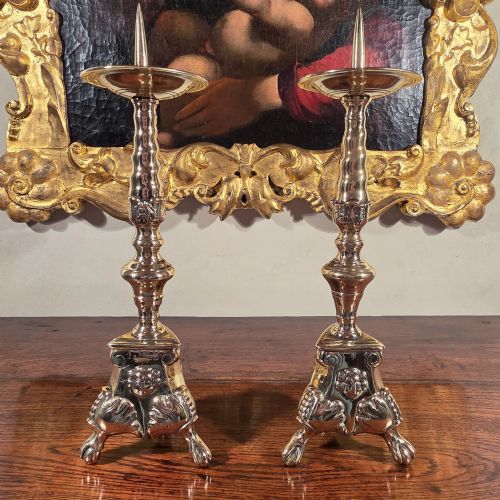
- A candlestick featuring an upward-facing spike that impels the base of a candle rather than a socket that holds it. These metal or wooden altar-style pieces date back across multiple centuries.
Carved Stick Holder: Frequently Asked Questions
What is a carved stick holder?
A carved stick holder is a hallway furnishing designed to store walking canes and umbrellas upright. They range from simple wooden barrels to elaborate sculptural stands.
Many examples incorporate drip pans at the base to catch rainwater from wet umbrellas. Larger versions often form part of a multi-functional hall stand featuring hooks and mirrors.
How do I date a wooden stick stand?
Dating relies on identifying the prevailing style, construction timber, and decorative motifs present on the body. Victorian and Edwardian pieces often utilise oak or mahogany with machine-assisted or hand-carved detailing.
Earlier nineteenth-century pieces may display hand-turned elements and simpler joinery. Stylistic indicators like Gothic Revival arches or Arts and Crafts linear forms help narrow the production era.
Where should I place a hall stand?
These pieces suit entrance halls, vestibules, or corridors where outerwear and walking accessories accumulate. Their vertical profile allows them to fit flush against hallway walls without obstructing pathways.
Placing them near an entrance door provides immediate access for storing wet umbrellas upon entry. Consideration must be given to the depth of the base to ensure clearance for doors and walkways.
What materials were used?
Solid woods such as oak and mahogany form the primary structure for the majority of domestic stands. Fruitwood and lignum vitae appear in smaller treen items and turned components.
Metal elements like brass, iron, and silver plating frequently form the drip trays, hooks, or decorative mounts. Some pieces integrate marble shelves and mirrored glass panels into the upper framework.