





Carved Oak Cane Stand
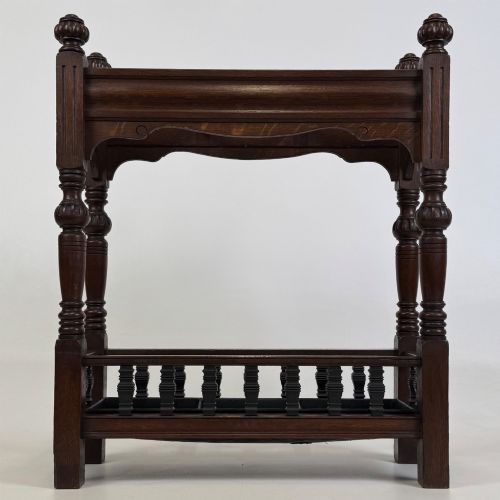
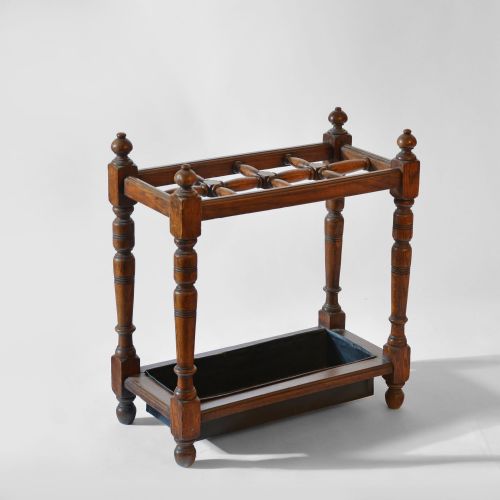
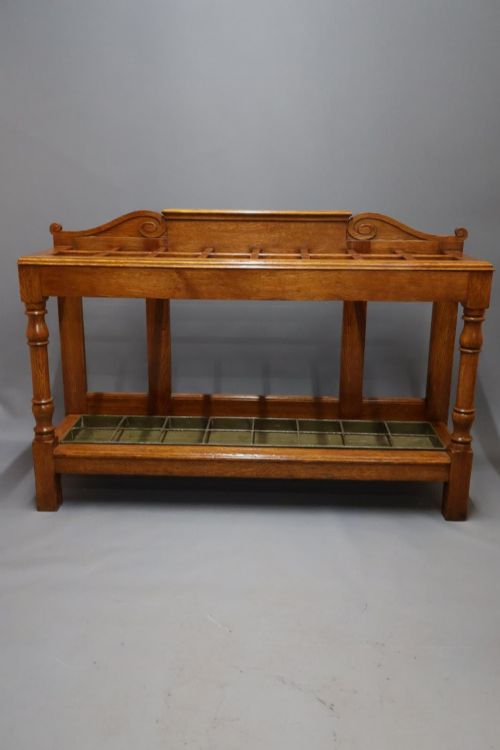
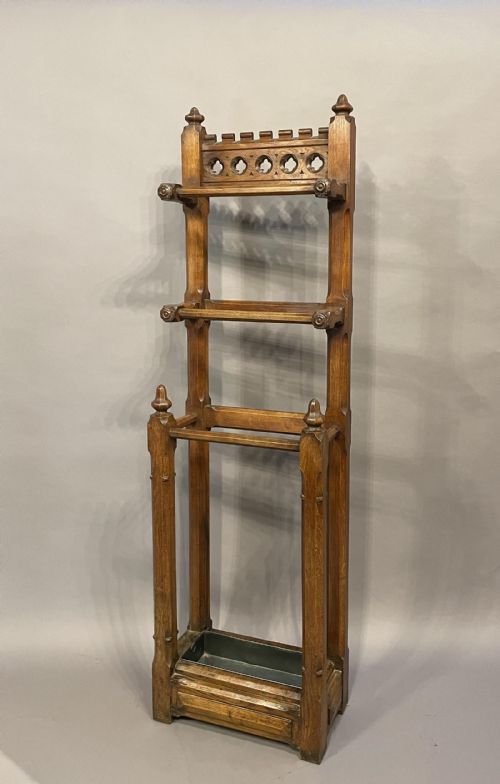
These carved oak cane stand pieces bring handsome presence to a hallway while keeping wet umbrellas and walking sticks firmly in order.
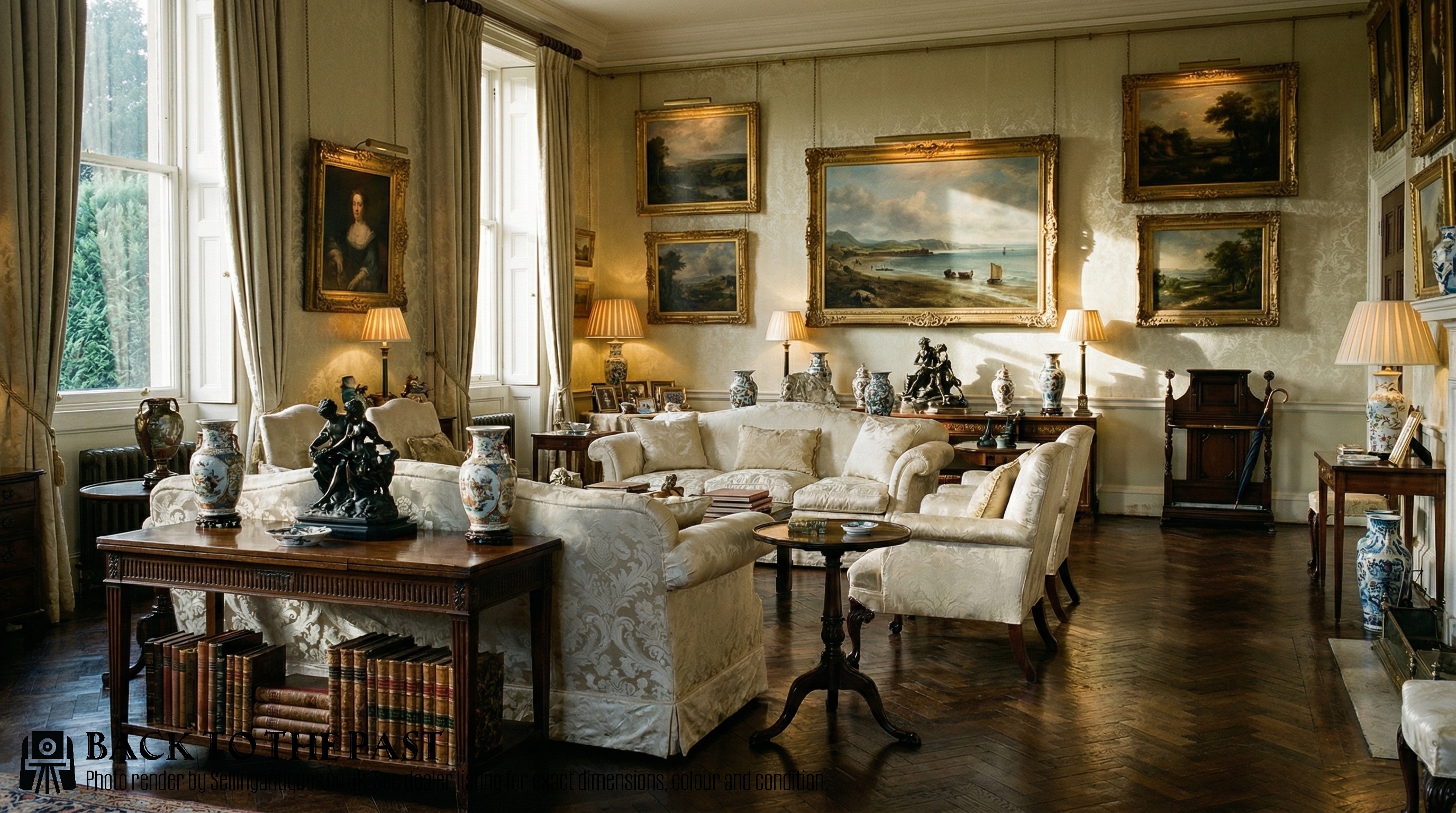
Carved Oak Cane Stand
A carved oak cane stand serves as a practical hallway fixture designed to house walking sticks, umbrellas and riding crops. When you search for this phrase, you encounter pieces that range from compact country house furnishings to larger hall stands with distinct period character.
The selections on this page span several decades, notably drawing on Victorian and Edwardian manufacturing periods. Alongside standard umbrella stands, you find variations incorporating side tables, demi-lune hall furniture and canework panels.
Stylistic influences vary significantly across the inventory, reflecting periods such as Gothic Revival, Arts and Crafts, Aesthetic Movement, and Black Forest design. These diverse aesthetic directions ensure that each piece brings a distinct architectural quality to an interior space.
Materials and construction
Solid oak forms the primary structural material across these pieces, frequently enhanced by decorative hand carving and applied mouldings. Artisans utilised robust timber to withstand the daily weight and moisture associated with wet walking apparatus.
Secondary materials appear in supporting roles, notably brass handles, metal drip trays, zinc linings and ceramic inserts. Caned panels and bergere work also feature on specific models to introduce textural contrast to the dense timber frames.
Several stands double as occasional tables or etageres, proving that Victorians wanted their wet umbrellas to have proper social status.
Distinctions in quality
The standard of carving and the crispness of detail largely separate standard utility items from finer decorative hall furniture. Deeply rendered motifs and well-balanced proportions indicate a higher level of workshop attention during production.
The integrity of secondary elements, such as original metal liners, intact ceramic bases and sturdy internal joinery, influences the overall standing of an individual piece. Retaining these original components speaks to how carefully the furniture has been maintained over generations.
The Carved Oak Cane Stand Glossary
- Demi-lune
- Half-moon shape. This semi-circular design allows hall furniture to sit flush against a wall while occupying minimal floor space.
- Bergere
- Woven cane panelling. It provides a lighter visual weight and textural contrast within heavy wooden frames.
- Barley twist
- A spiral turning technique used on wooden supports and columns. This decorative lathe work adds dynamic movement to furniture uprights.
- Coopered
- Constructed from vertical staves joined together, similar to barrel making. This method provides robust cylindrical housings for sticks and umbrellas.
- Drip tray
- A removable metal or ceramic basin placed at the base. It catches moisture from wet umbrellas to protect the wooden floor and structure.
Carved Oak Cane Stand: Frequently Asked Questions
Where should I place a cane stand?
These pieces traditionally sit in entrance halls, boot rooms or corridors where outdoor clothing and accessories are kept.
Their narrow profile allows them to fit neatly against walls without obstructing thoroughfares in your home.
How do I protect the wood from wet umbrellas?
Most traditional stands include an internal zinc, metal or ceramic liner at the base to catch water.
Emptying and drying these drip trays regularly prevents moisture from damaging the surrounding oak framework.
Can these stands hold heavy walking sticks?
Solid oak construction provides substantial structural weight and rigidity designed to support heavy timber or metal-shod walking sticks.
The robust joints and thick uprights withstand daily use without tipping or wobbling.
How do I identify an Edwardian piece?
Edwardian examples often display lighter proportions and cleaner lines compared to heavier Victorian counterparts.
They frequently incorporate stylistic elements drawn from Arts and Crafts or late revival movements.