
Dress Walking Cane
A dress walking cane is an elegant accessory that carries personal style and social standing through the nineteenth and early twentieth centuries.
Dress Walking Cane
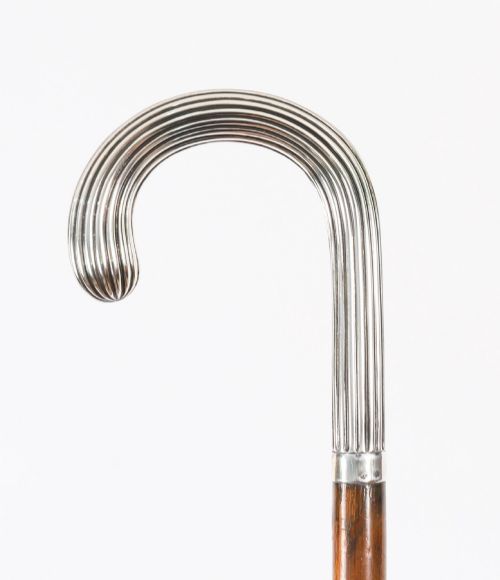
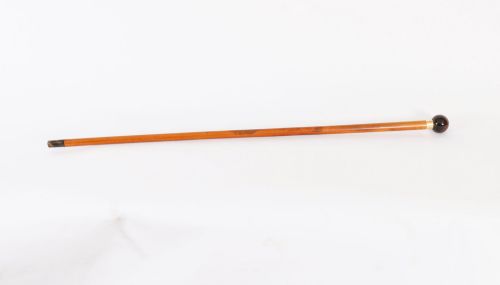
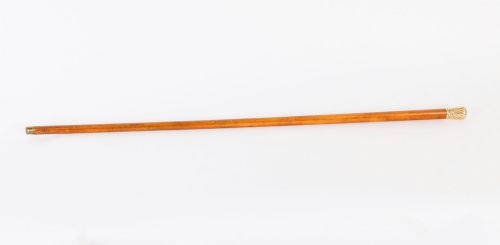
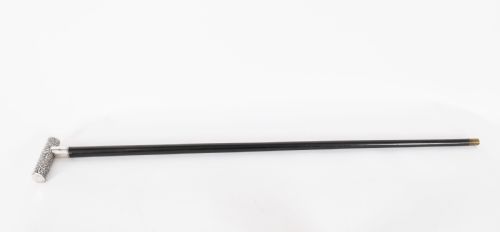
A dress walking cane is a refined accessory designed for formal promenade wear, typically combining a slender shaft with a decorative handle. When you search for dress walking cane, you encounter examples fashioned during the nineteenth and early twentieth centuries, spanning periods from the Victorian era through Art Deco.
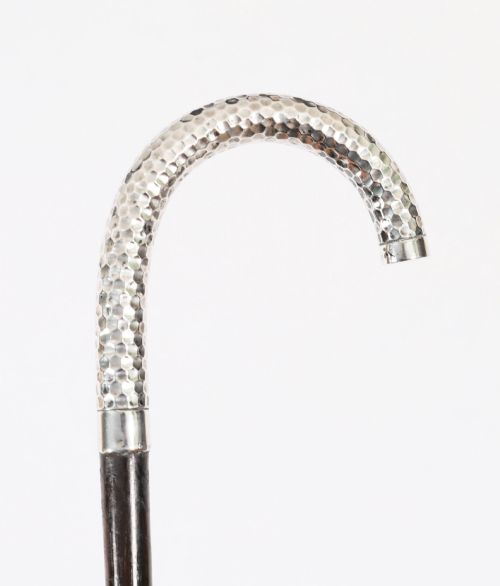
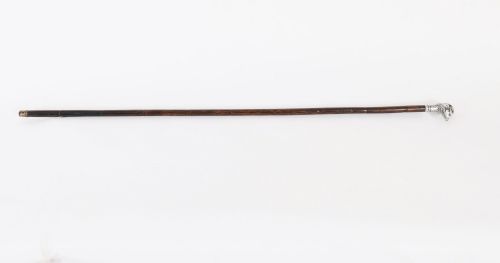
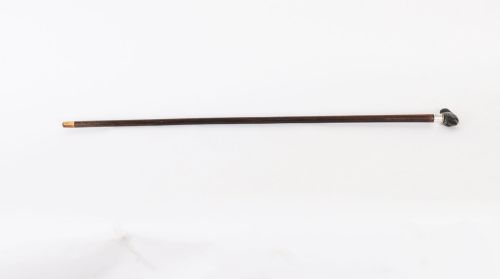
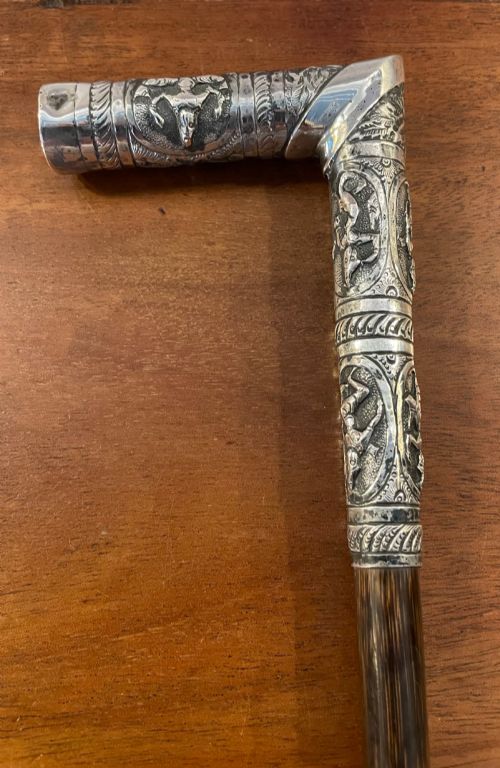
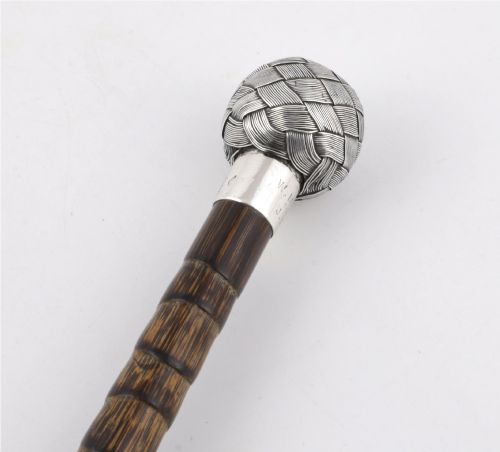
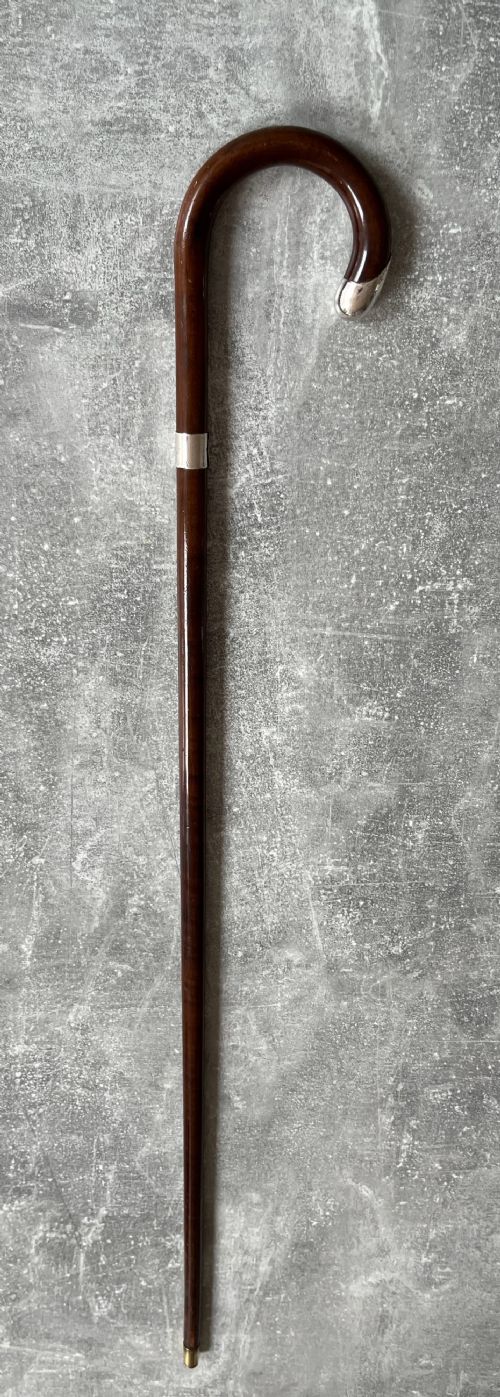
The most common versions on this page feature sterling silver or gold-plated mounts paired with hardwoods such as bamboo, hazel, snakewood, or palm. Many examples incorporate figural handles shaped as animals or birds, alongside specialised forms that conceal a concealed blade within the shaft.
How they were made
Makers shaped the shafts from dense timbers like ebonised wood and bamboo, balancing rigidity with lightness for daily carriage. Handles were cast in silver, gold, or brass, often depicting detailed animal forms or engraved with floral motifs.
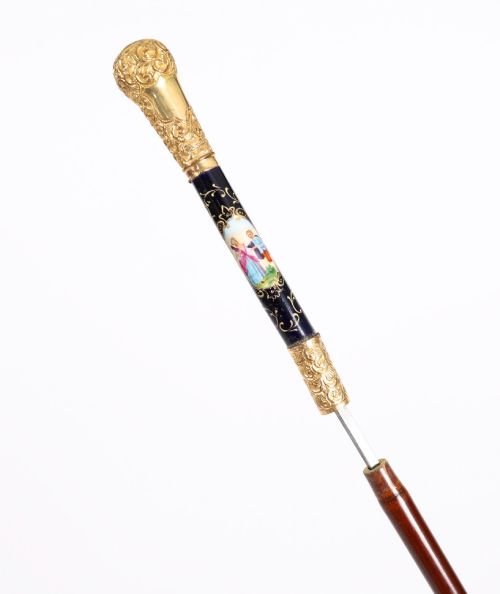
Metalsmiths attached mounts and pommels securely to the wooden shafts using internal screw threads or pinned collars. Porcelains such as Sevres ceramic panels were integrated into mounts alongside gold plating to create high-status presentation pieces.
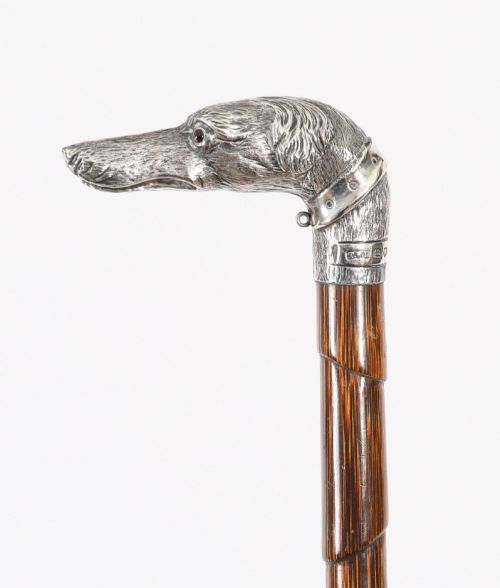
The selection includes novelty handles shaped as parrots, boars, pheasants, and greyhounds alongside concealed sword stick mechanisms.
What varies in quality
The quality of a dress walking cane rests primarily on the finesse of the handle carving and the preciousness of its metalwork. Finely chased silver or solid gold pommels marked by known makers demonstrate superior craftsmanship compared to plain plated mounts.
Materials dictate the standing of the piece, with dense exotic hardwoods and specialised mechanisms like integrated watch dials or concealed sword blades elevating the sophistication of the construction.
Briggs·Thomas Johnson·Henry Borlase Stevens
The Dress Walking Cane Glossary
- Pommel
- The rounded decorative handle at the top of a walking cane. These are frequently cast in silver, gold, or bronze.
- Sword stick
- A walking cane fitted with a concealed blade hidden inside the wooden shaft. This dual-purpose design was popular for personal defence in the Victorian period.
- Ebonised wood
- Timber treated with a dark stain to imitate ebony. It provides a stark contrast against silver or gold mounts.
- Snakewood
- A dense tropical timber named for its mottled, snakeskin-like grain pattern. It appears on high-status nineteenth-century walking sticks.
Dress Walking Cane: Frequently Asked Questions
How were sword sticks used?
Sword sticks combined the outward appearance of a standard promenade cane with a concealed steel blade housed within the shaft. They offered a discreet means of personal protection for travellers and city dwellers.
The blade is secured inside by a friction fit or a locking mechanism operated at the collar.
How do I identify Victorian canes?
Victorian examples frequently display hallmarks for British assay offices that date the silver mounts precisely. Stylistic cues include Neo-classical motifs, heavy chased silver, and naturalistic animal head handles.
The shafts are typically formed from dense hardwoods like ebonised wood, hazel, or snakewood.
What materials are the handles made from?
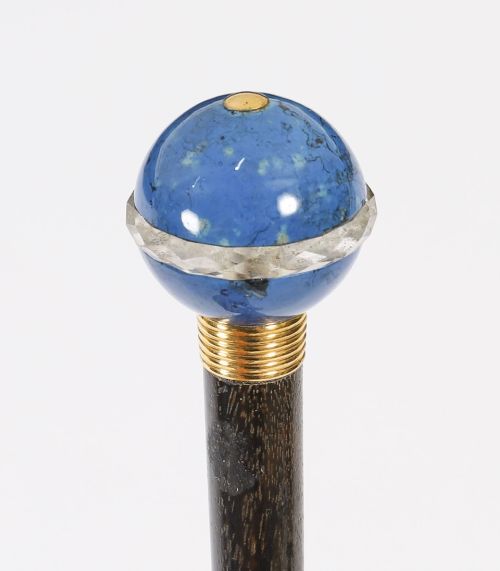
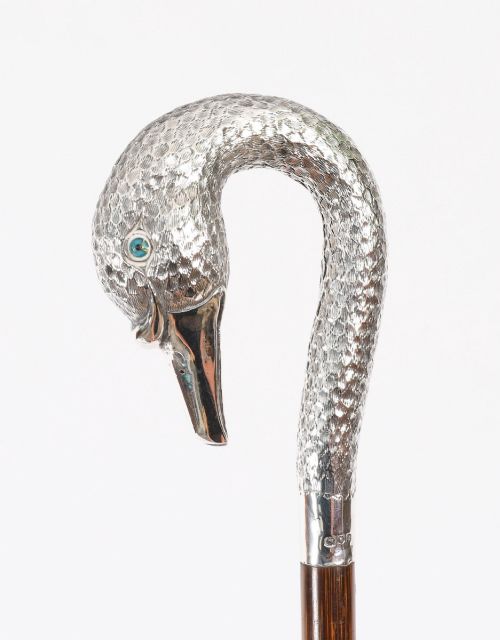
Handles on these pieces are predominantly cast from sterling silver, gold, or gold plate, often taking the form of greyhounds, swans, ducks, and parrots. Some examples incorporate fine porcelain panels or Lapis Lazuli.
Precious metals frequently bear hallmarks indicating the year of manufacture and the silversmith's mark.