


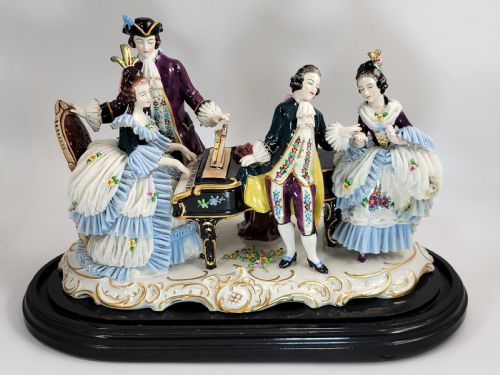

Dresden Porcelain Figures
These dresden porcelain figures capture the ornate charm of continental workshops, offering collectors delicate pastoral scenes and allegorical groups.
Dresden Porcelain Figures
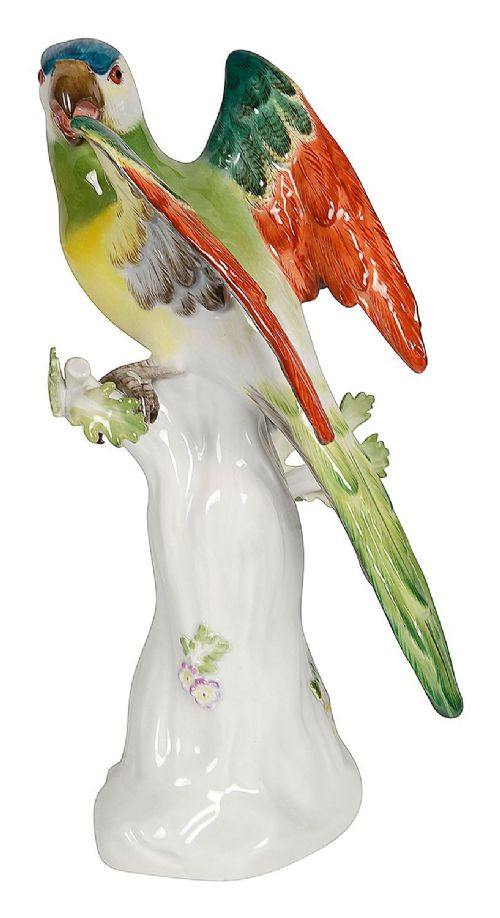
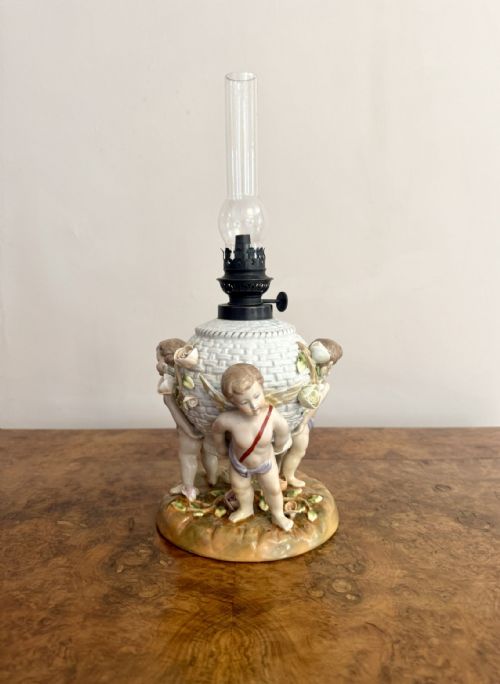
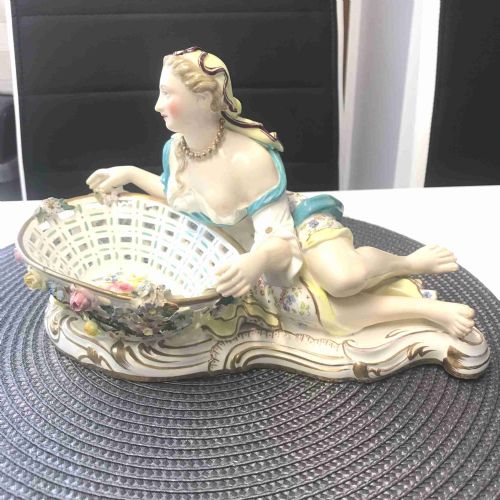
When buyers search for dresden porcelain figures, they encounter sculptural ceramics spanning the eighteenth, nineteenth, and early twentieth centuries. These pieces encompass porcelain figurines, candelabra, candlesticks, oil lamps, and sweetmeat dishes produced across German manufacturing centres. The selection on this page relies heavily on nineteenth-century Continental output, featuring pastoral subjects, allegorical figures, and musical groups.
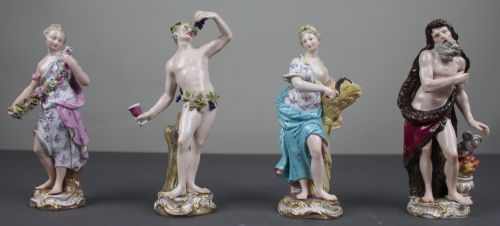
Makers such as Meissen, Sitzendorf, Volkstedt, and Carl Thieme dominate the forms available here, often channelling earlier rococo and neoclassical styles. Pieces frequently depict pairs of lovers, children in gardens, or personifications of the seasons and elements. Buyers also find complex lace groups and elaborate figural centrepieces produced in the German salon tradition.
The aesthetic leans towards the ornate, drawing on French Rococo Revival influences alongside English derivations such as Chelsea-Derby styles. Whether single figures or large multi-figure groups, these ceramics serve primarily as decorative table garnitures and mantel ornaments.
Judging Quality
The complexity of the form dictates distinction within the range, separating standard single figures from ambitious multi-figure groups with musical instruments or animals. The preservation of delicate elements like applied porcelain lace and intricate floral appliqués also marks the upper tier of execution.
Dresden Porcelain Figures Retail Price Guide 2026
Typical asking prices for dresden porcelain figures among the pieces listed under this phrase on Sellingantiques today, from the lower quarter to the upper quarter. They describe what is for sale here now, not the wider market.
The listings span from the eighteenth century to the twentieth century, with nineteenth-century German revival pieces forming the majority.
Meissen·Sitzendorf·Volkstedt·Carl Thieme·Helena Wolfsohn·Ernst Bohne Söhne·Bourdois and Bloch·Bloor Derby·Triebner ENS and Eckert·William Duesbury and Company
The Dresden Porcelain Figures Glossary
- Hard-paste porcelain
- A vitrified ceramic composed of kaolin and petuntse, fired at very high temperatures to create a dense, waterproof body. It resists scratching and takes enamel colours brilliantly.
- Rococo Revival
- A nineteenth-century design movement resurrecting the asymmetrical scrolls, C-curves, and shell motifs of the mid-eighteenth century. This style dictates the curving bases and lush floral embellishments found on many figures.
- Sweetmeat dish
- A small, decorative vessel designed to hold confectioneries, nuts, or dried fruits at formal dining tables. These dishes frequently integrate figural supports or putti.
- Allegorical figure
- A sculptural representation embodying an abstract concept such as a season, an element, or a continent. They typically hold identifiable attributes like sheaves of wheat for summer or instruments for music.
- Bisk
- Unglazed porcelain fired once to a porous state, often used for detailed portrait busts and figures before subsequent enamel decoration.
Dresden Porcelain Figures: Frequently Asked Questions
How do I identify genuine antique pieces?
Examine the underglaze factory marks, hand-painted details, and the composition of the porcelain body. Eighteenth-century pieces differ significantly in paste consistency and modelling style from nineteenth-century revivals.
Look for blue crossed swords, impressed numbers, and painted initials that correspond to specific German factories and decorators.
What subjects are most common?
Pastoral scenes featuring shepherds, shepherdesses, and romantic couples dominate the production. Allegorical series representing the four seasons or the four continents appear frequently.
Musicians, children playing with animals, and mythological groups also feature widely across nineteenth-century salon porcelain.
Were these figures meant for display?
These ceramics served as ornamental centerpieces, mantel garnitures, and decorative accents for formal nineteenth-century drawing rooms. They were designed to be viewed closely on tables or within glazed cabinets.
Many incorporated functional elements such as candle sockets or sweetmeat bowls, combining utility with decorative sculpture.