

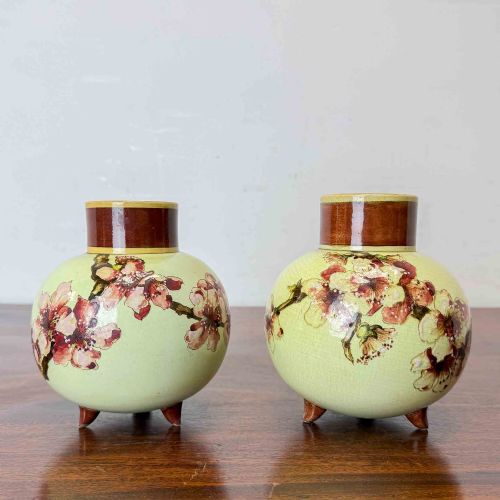


Doulton Lambeth Pair
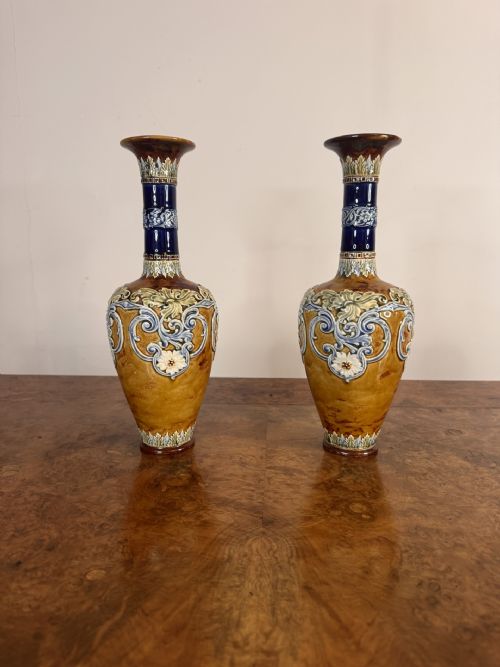
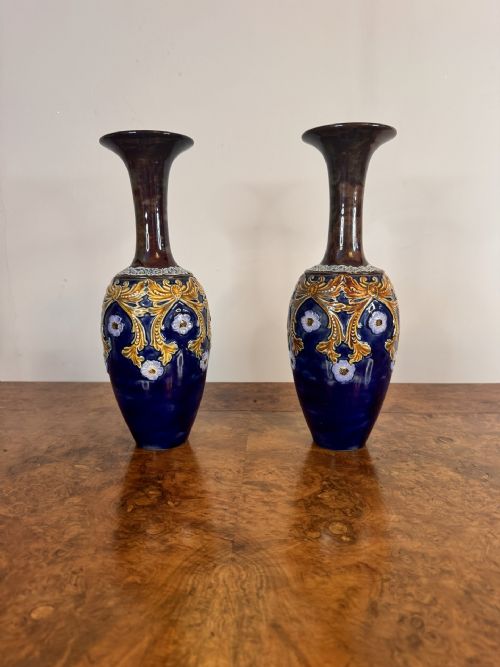
A doulton lambeth pair brings matched studio pottery tradition into the room, offering symmetrical design and detailed ornament created by renowned decorators.
Doulton Lambeth Pair
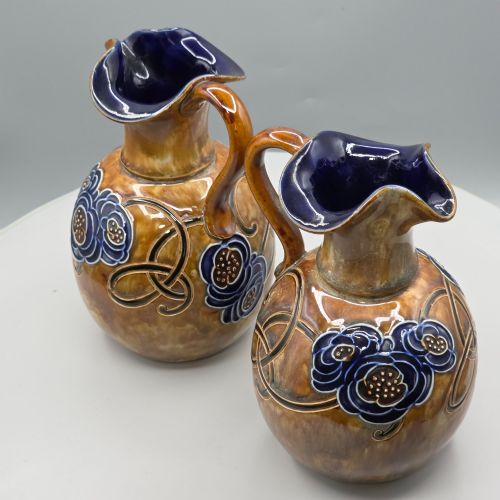
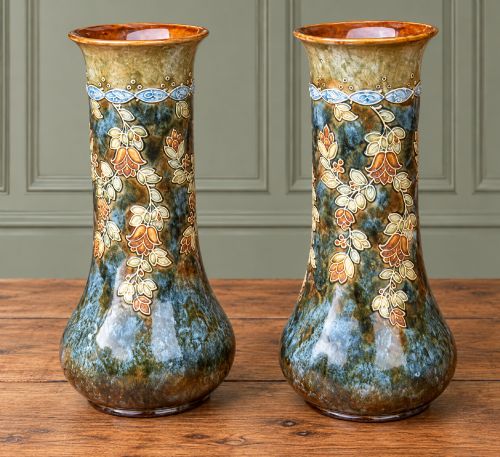
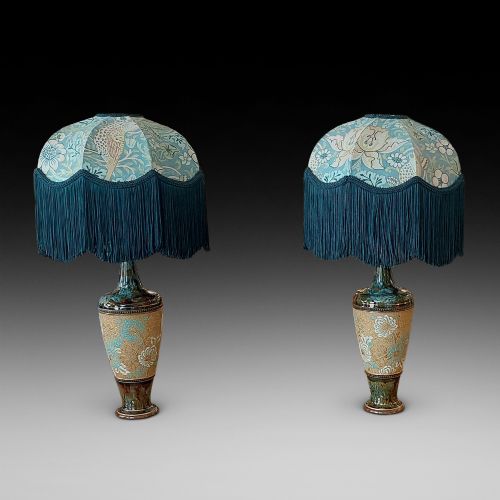
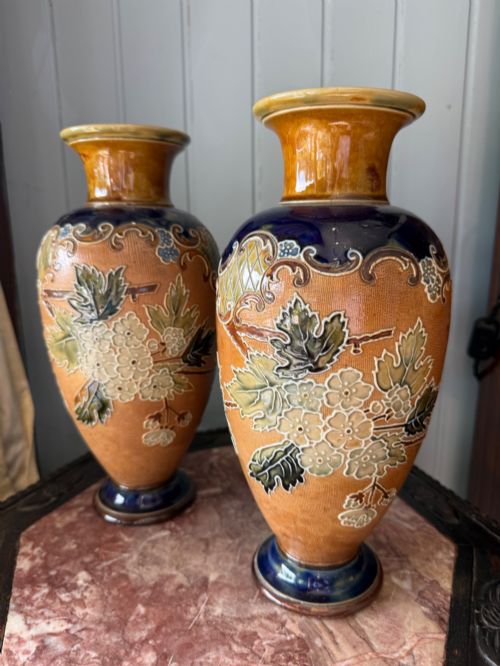
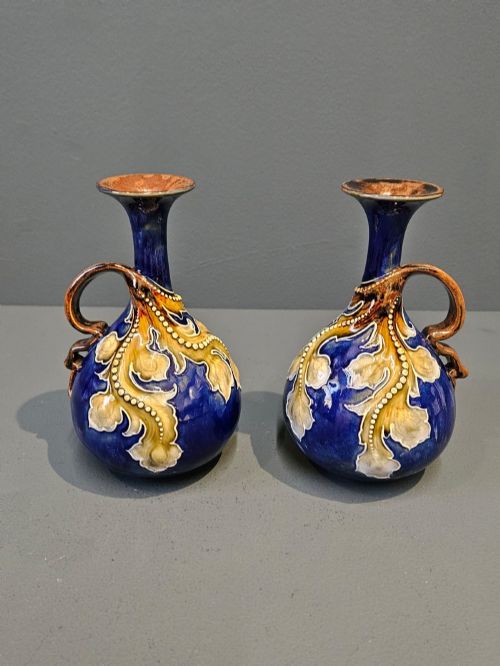
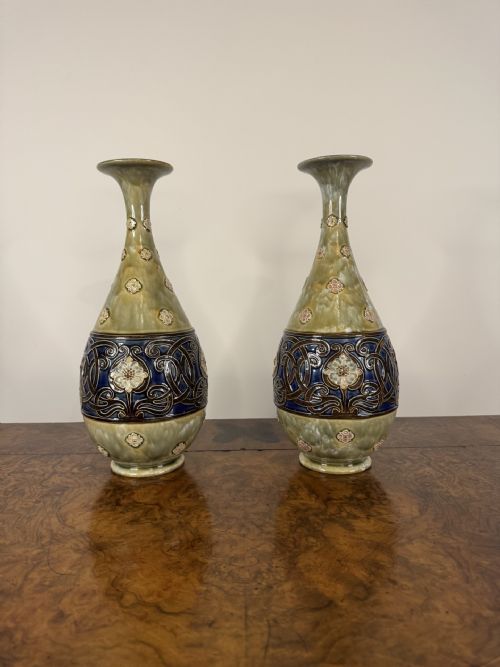
A doulton lambeth pair consists of matched ceramic objects created in south London workshops, spanning utilitarian vessels to highly ornamental display pieces. The selections on this page typically take the form of vases, jugs, and candlesticks produced during the Victorian and Edwardian eras.
Buyers encounter matched sets reflecting major design movements of the nineteenth and early twentieth centuries, including Art Nouveau, Arts and Crafts, and the Aesthetic Movement. These dual items provide balanced visual weight for mantels, sideboards, and architectural display spaces.
How they were made
Makers utilised stoneware, earthenware, and faience bodies, shaping them into baluster, bottle, and bulbous vessel forms on the potter's wheel or via moulds. Artisans applied salt glazes, slip, and enamel floral décor to build rich textures across the surface.
Individual artists hand-decorated these ceramic surfaces, incorporating incised foliage, textured patterning, and painted slip motifs before high-temperature kiln firing.
Doulton Lambeth Pair Retail Price Guide 2026
Typical asking prices for doulton lambeth pair among the pieces listed under this phrase on Sellingantiques today, from the lower quarter to the upper quarter. They describe what is for sale here now, not the wider market.
Listings feature stoneware, earthenware, and faience materials shaped into vases, jugs, lamps, and candlesticks across Victorian and 20th-century periods.
What varies in quality
The standard of a matched set depends on the clarity and depth of the incised ornament and the precision of the glaze finish. Pieces bearing specific artist monograms or signatures demonstrate higher studio execution and distinct individual design input.
Proportion and symmetry between the two objects dictate overall visual success, alongside the complexity of surface techniques such as Slater's Patent texturing and detailed enamel work.
Louisa Wakely·Emily Edwards·Ethel Beard·Alberta L Green·Eliza Simmance·J P Hewitt
The Doulton Lambeth Pair Glossary
- Stoneware
- A robust, vitrified ceramic pottery fired at high temperatures to achieve impermeability without requiring a glossy glaze. This material forms the durable foundation for many nineteenth-century studio vessels.
- Faience
- Tin-glazed earthenware pottery that accepts painted decoration directly onto an opaque white surface before a final kiln firing. It provides a smooth canvas for detailed floral and pictorial art.
- Slater's Patent
- A specialised manufacturing technique involving the impression of lace, textiles, or textured mats into moist clay surfaces to create intricate geometric patterns. These textured areas receive contrasting colours and glazes.
- Salt Glaze
- A chemical finish produced by casting common salt into the kiln during high-temperature firing, reacting with silica to form a durable, orange-peel textured coating. This protective layer seals the ceramic body.
- Baluster
- A vertical architectural form featuring a rounded, bulging lower body that tapers upward toward a narrow neck. Many studio vases utilise this traditional silhouette for balanced display.
Doulton Lambeth Pair: Frequently Asked Questions
What is a doulton lambeth pair?
A doulton lambeth pair comprises two matching ceramic vessels, vases, or jugs produced by the London pottery works during the Victorian and Edwardian periods. These matched items share identical decorative motifs, glazes, and throwing profiles.
They reflect the output of skilled studio artists working within historical design movements like Art Nouveau and Arts and Crafts.
How do I identify periods?
Identifying the era involves examining the base marks, glaze styles, and decorative characteristics recorded across late nineteenth and early twentieth-century production. Victorian examples often feature heavy salt glazing and naturalistic relief ornamentation.
Later Edwardian and Arts and Crafts pieces tend toward stylized floral patterns, specific artist ciphers, and refined surface textures.
Were these items used daily?
While many forms served functional roles as tableware, jugs, tobacco jars, or candlesticks, numerous examples were created purely for decorative display. Domestic interiors of the nineteenth century utilised these ceramics on mantels and sideboards to introduce colour and texture.
Converted items, such as tobacco jars transformed into lamps, show how historical vessels adapted to changing household needs over time.