

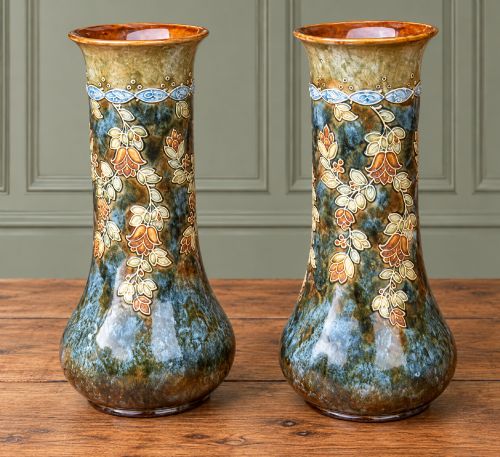
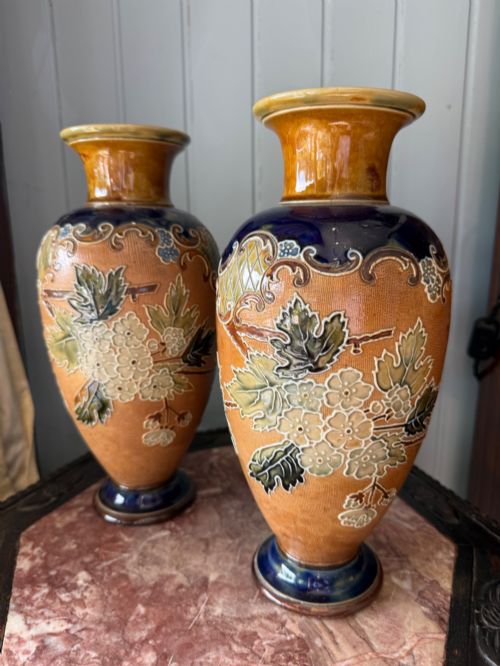
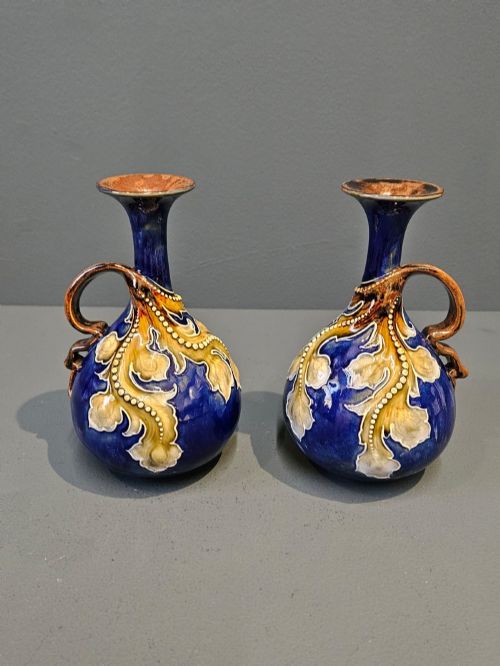

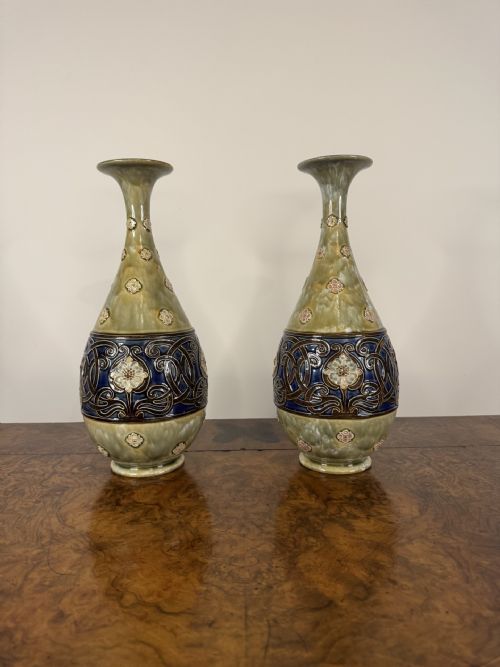


Doulton Lambeth Stoneware Vase
These robust doulton lambeth stoneware vase examples bring substantial weight, rich glaze, and botanical ornament into any room.
Doulton Lambeth Stoneware Vase
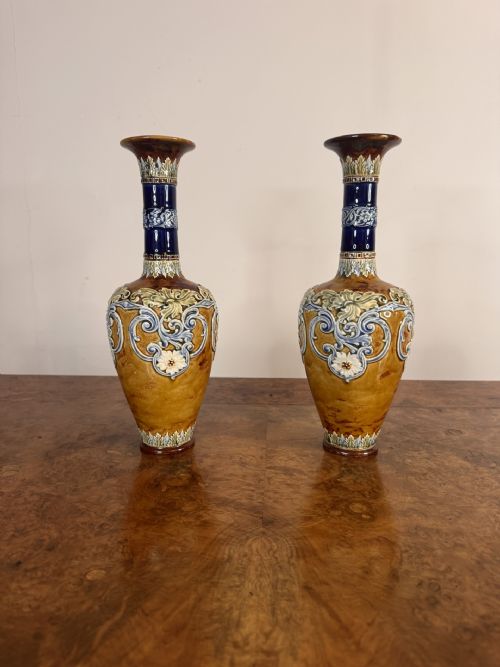
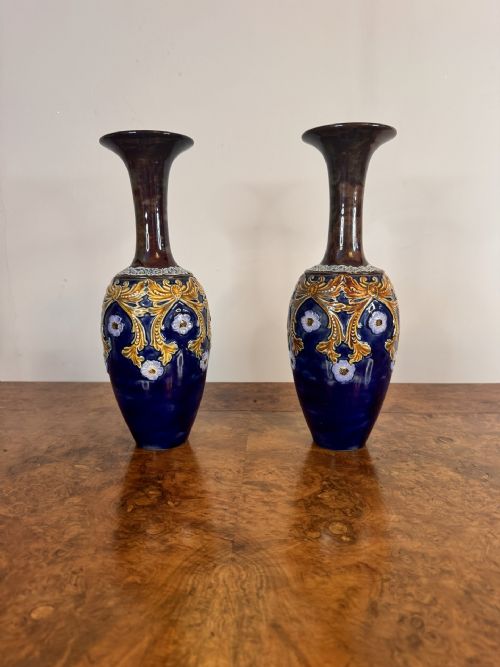
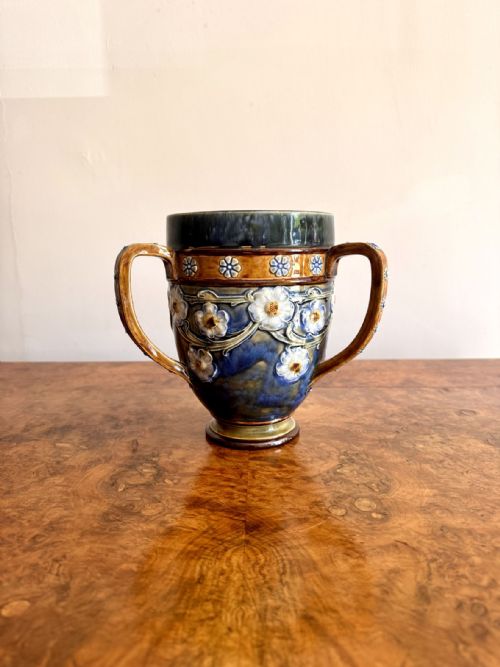
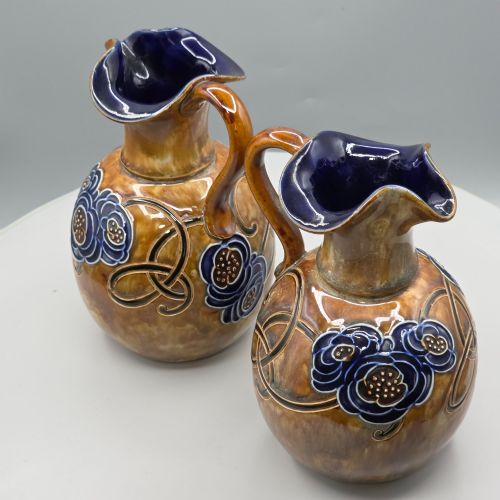
A doulton lambeth stoneware vase represents a major pillar of British art pottery, combining utilitarian clay bodies with sophisticated surface decoration. The pieces you encounter most often span the Victorian era, the Edwardian period, and the early twentieth century, showing strong ties to the Arts and Crafts and Art Nouveau movements.
The forms range from baluster vases and shaped vessels to decorative jugs and ewers, often appearing in balanced pairs. Makers and artists at the Lambeth pottery utilised salt-glazing and applied ornament to give these vessels their characteristic textured finish.
What varies in quality
Quality rests primarily upon the ambition of the design, the crispness of the incised or applied ornamentation, and the prestige of the individual artist. Pieces carrying the signature or monogram of renowned studio assistants demonstrate superior hand-finishing and artistic oversight.
The complexity of the glaze interaction and the integration of specialised elements like pate-sur-pate work or detailed enamel floral décor elevate specific examples well above standard production wares.
Doulton Lambeth Stoneware Vase Retail Price Guide 2026
Typical asking prices for doulton lambeth stoneware vase among the pieces listed under this phrase on Sellingantiques today, from the lower quarter to the upper quarter. They describe what is for sale here now, not the wider market.
Current listings feature stoneware pieces spanning from the Victorian era through the Edwardian period, incorporating both glazed ceramic and gilt finishes.
Louisa Wakely·Eliza Simmance·Emma Shute·Emily Edwards·Emily Stormer·Ethel Beard·Florence Barlow
The Doulton Lambeth Stoneware Vase Glossary
- Stoneware
- A dense, hard ceramic fired at high temperatures until vitrified, making it completely impermeable to liquids. This robust body forms the foundation of most Lambeth vessels.
- Salt-glaze
- A glossy, slightly textured finish achieved by throwing common salt into the kiln during the high-temperature burn. It produces a distinctive orange-peel texture across the stoneware surface.
- Slater's Patent
- A manufacturing technique involving the pressing of organic lace or textiles into damp clay to create textured patterns. This method provides a rich background for subsequent enamel decoration.
- Baluster
- A vertical architectural form featuring a rounded, bulbous lower body tapering upwards to a narrow neck. This classic shape appears frequently among nineteenth-century display vessels.
- Art Nouveau
- A decorative style characterised by flowing, organic lines, asymmetrical plant motifs, and botanical curves. It heavily influenced the ornamentation of pottery produced around the turn of the twentieth century.
Doulton Lambeth Stoneware Vase: Frequently Asked Questions
How do I identify a Doulton Lambeth piece?
Look for impressed factory stamps, specific model numbers, and incised artist monograms on the unglazed base. These marks provide definitive proof of the pottery and the individual studio hand responsible for the decoration.
Studying the characteristic salt-glaze finish and typical colour palettes of deep blues, browns, and greens will also help confirm the origin.
What is Slater's Patent pottery?
Slater's Patent refers to a patented decoration method where lace, netting, or woven fabrics were pressed directly into the wet clay body. This created a textured canvas that artists then enhanced with coloured slips and enamel.
These patterned areas are usually combined with smooth panels featuring hand-painted flowers or gilding.
Were these vessels made as pairs?
Many decorative items were produced as matching pairs intended for mantlepieces or sideboard displays. Individual makers often decorated both vessels simultaneously to ensure symmetry in pattern and coloration.
Single vessels also exist in abundance, having been separated from their original pairs over time.
How should I clean my stoneware?
Dust the surface gently with a soft, dry cloth to prevent the accumulation of dirt within the textured glazed areas. Avoid using harsh chemical cleaners or submerging pieces with applied enamel or gilt.
Gentle care preserves the original surface finish and protects any delicate hand-painted details from accidental wear.