
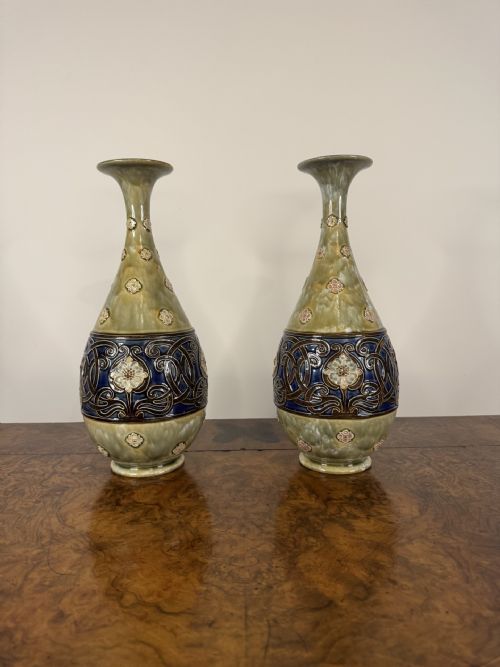


Decorative Stoneware Pottery Vase
A decorative stoneware pottery vase brings tactile weight and enduring craft to an interior, drawn largely from late nineteenth and early twentieth century production.
Decorative Stoneware Pottery Vase
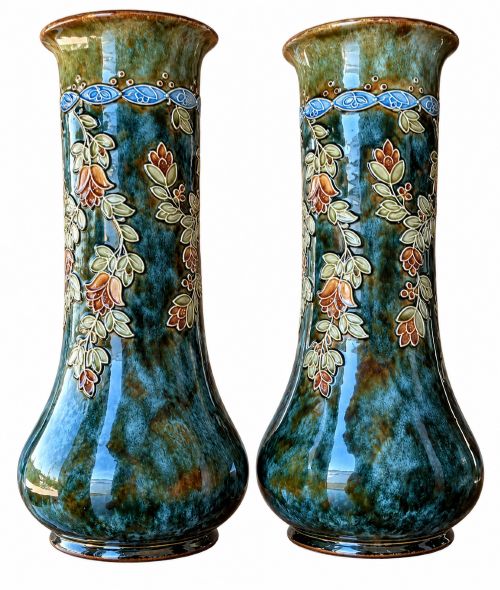
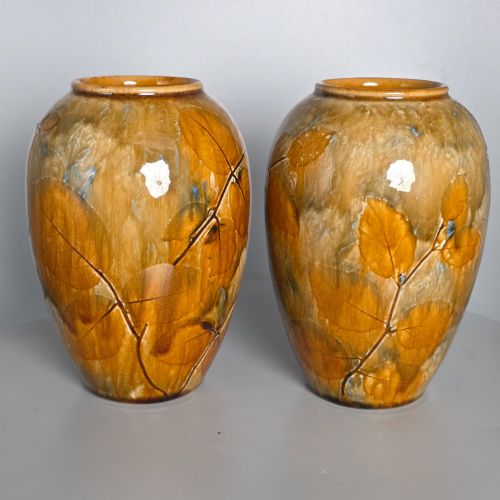
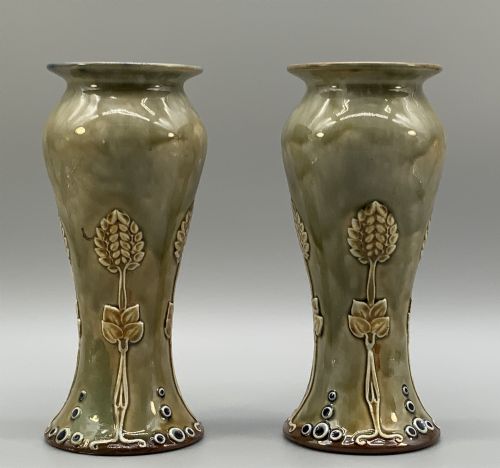
When you search for a decorative stoneware pottery vase, you encounter robust ceramic vessels shaped primarily during the Victorian, Edwardian, and Art Nouveau periods. The selection on this page leans heavily towards British studio and factory output from the late nineteenth century and the early decades of the twentieth century, alongside continental European and Asian examples.
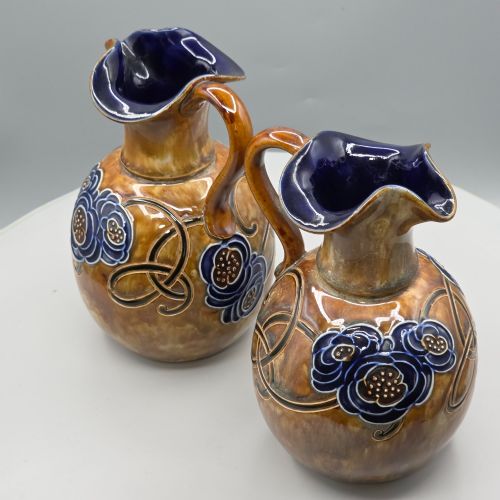
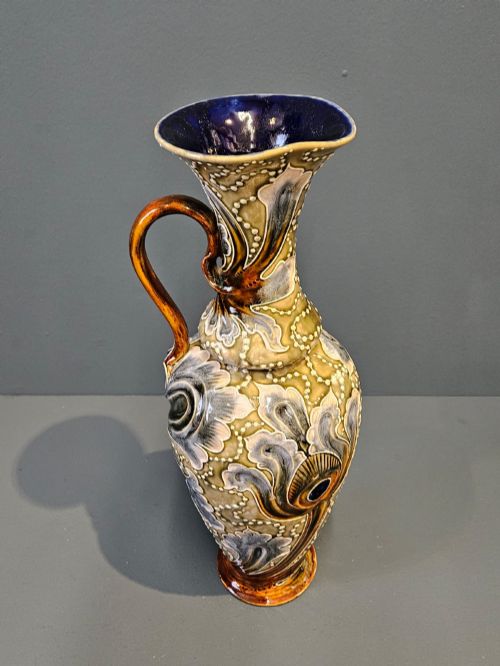
Forms range from baluster silhouettes and slender jugs to large ewers and covered jars. Many of these pieces emerge from well-documented kilns such as Doulton Lambeth, though French ceramics and German Mettlach pottery also appear among the vessels.
Collectors find these objects prized for their substantial presence and varied decorative surfaces. The typical piece combines utilitarian clay bodies with artistic glaze treatments that reflect the design movements of their time.
Materials and production methods
Potters utilised dense stoneware and ceramic bodies fired at high temperatures to achieve impermeability and durability. These clay foundations were then worked by hand or thrown on the wheel before receiving surface treatments.
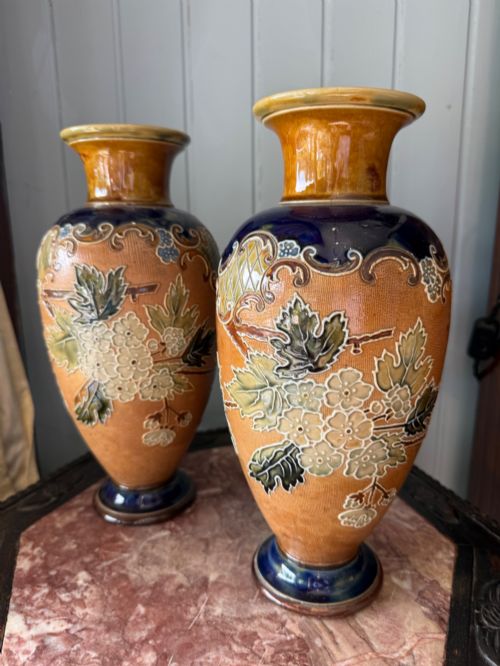
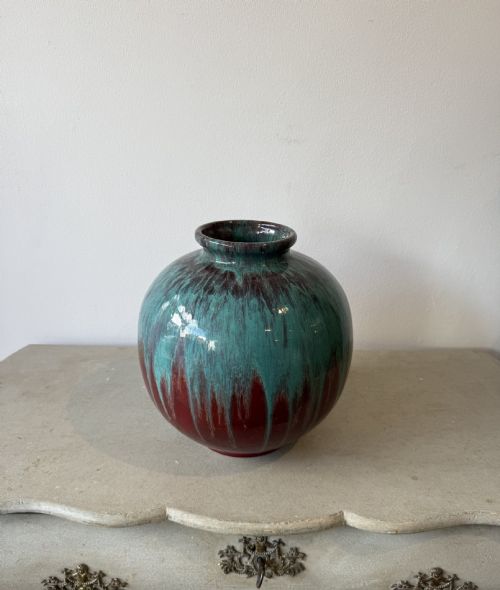
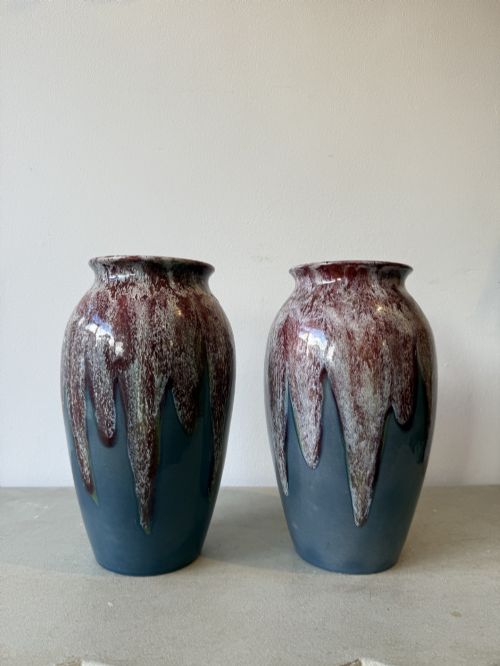
Glazes play a defining role across these pieces, ranging from drip glazes and lustres to enamelled floral patterns and gold leaf highlights. Techniques such as Slater's Patent introduced textured lace impressions into the clay body, while slip decoration created raised motifs.
Makers often applied detailed floral or geometric ornament by hand, combining incised lines with coloured glazes to achieve rich visual depth.
Listings feature stoneware, earthenware, and glazed ceramic vessels spanning the Victorian era through the Art Deco period.
Assessing quality in ceramic vessels
Quality rests upon the crispness of the modelled form and the control evident in the glaze application. Hand-painted details executed by named studio artists elevate a piece above standard factory output.
The complexity of the surface decoration, whether intricate enamel work or specialist lustre finishes, distinguishes finer examples. Balance in proportion and preservation of the original surface finish remain central to a piece's standing.
Royal Doulton·Doulton Lambeth·Mettlach Pottery·Royal Lancastrian·Roger Guerin·Carter Stabler Adams
The Decorative Stoneware Pottery Vase Glossary
- Stoneware
- A robust, vitrified ceramic made from clay fired at high temperatures. It is impermeable to liquids even without a glaze.
- Baluster
- A vertical vase form characterised by a rounded lower body that tapers towards a narrow neck. This shape provides stability and visual balance.
- Lustre
- A type of ceramic glaze containing metallic salts that produce an iridescent sheen upon firing. It reflects light in shifting rainbow hues.
- Faience
- Earthenware decorated with coloured glazes over an opaque white tin-glaze. It offers a smooth canvas for painted pictorial designs.
- Ewer
- A large jug with a wide spout and a curved handle, traditionally used for holding water. In decorative contexts, it serves as an ornamental vessel.
Decorative Stoneware Pottery Vase: Frequently Asked Questions
What is Slater's Patent pottery?
Slater's Patent refers to a technique developed at Doulton where lace or textiles were pressed into the damp clay body. This created a textured background that was subsequently highlighted with coloured enamels and gold.
Pieces bearing this patent display distinctive patterned surfaces that combine industrial innovation with hand-finished artistry.
How should I clean an antique ceramic vase?
Dust the surface gently with a soft, dry brush to remove particulate matter without disturbing fragile glazes or enamel work. Avoid submerging vessels that feature exposed earthenware or delicate gold leaf.
Harsh chemical detergents can damage historic finishes, so rely solely on dry maintenance unless a specialist advises otherwise.
Are these vases suitable for holding fresh flowers?
Stoneware and glazed ceramic bodies are naturally watertight, meaning many of these vessels can safely hold water. However, antique pieces with historic internal residue or delicate enamel decoration are best kept dry to preserve the material.
Using a small glass insert inside the vase protects the historic interior from moisture and mineral deposits.