







Doulton Lambeth Ceramic Vase
A doulton lambeth ceramic vase brings tactile salt-glazed texture and intricate hand-finished detail to any interior scheme.

Doulton Lambeth Ceramic Vase
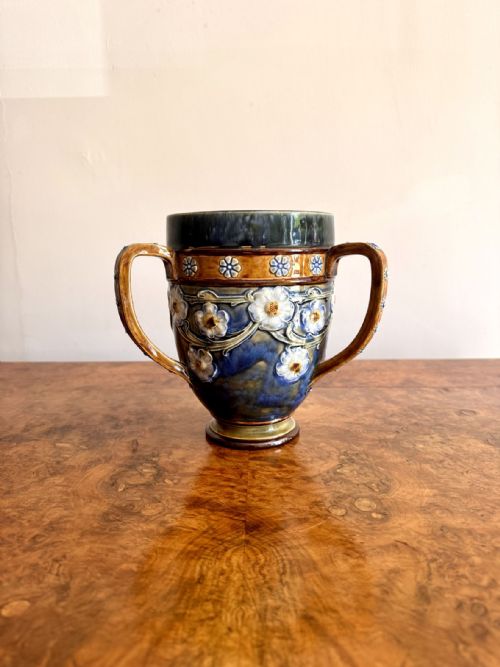
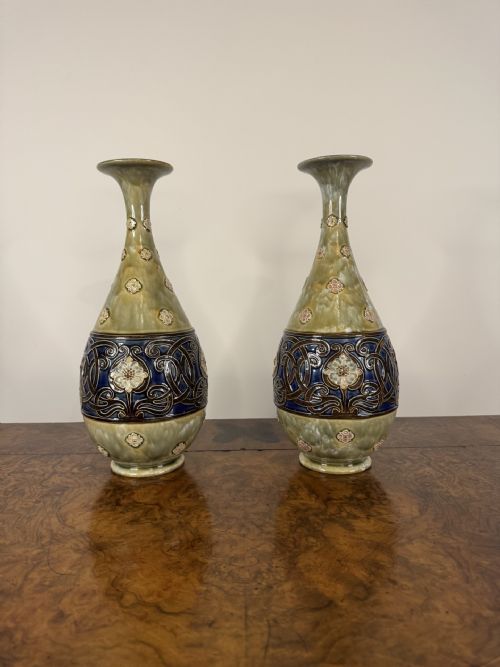
A doulton lambeth ceramic vase represents the height of British art pottery production during the late nineteenth and early twentieth centuries. These vessels emerge predominantly from Victorian and Edwardian periods, showcasing distinct shifts in decorative taste from ornate historicism to organic design.
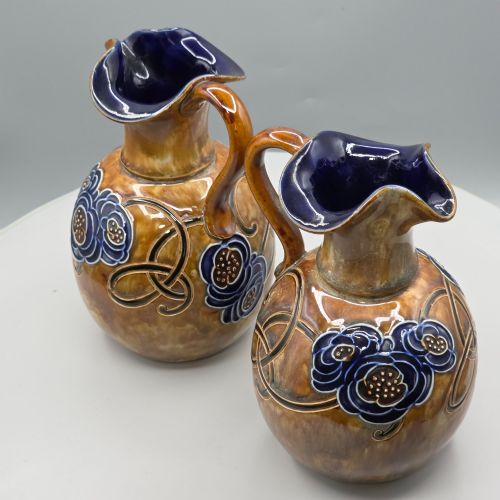
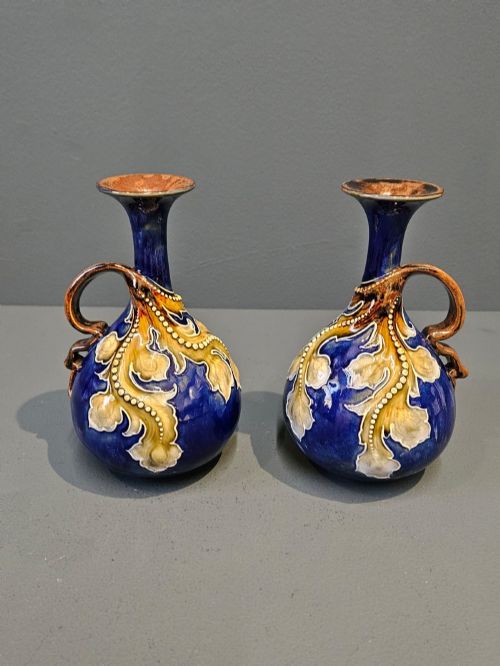
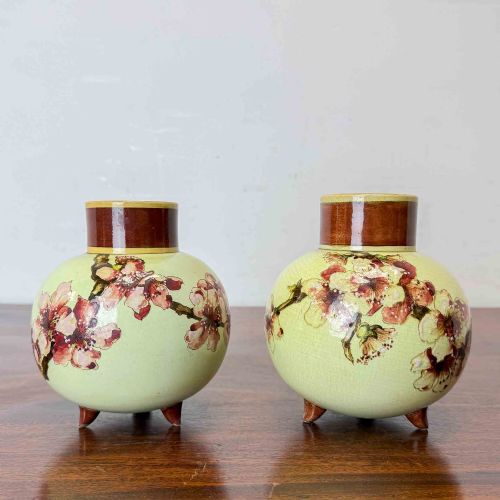
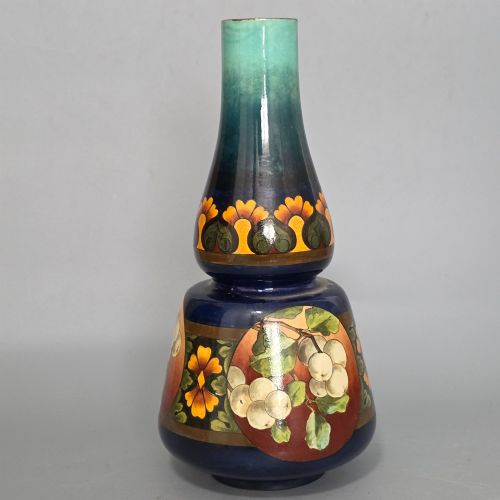
Buyers encounter balanced pairs and individual statement pieces taking forms such as baluster bodies, rounded jugs, and decorative ewers. The selection on this page captures prominent aesthetic movements including Art Nouveau, Arts and Crafts, and the Aesthetic Movement.
Origins trace directly to the Lambeth workshops in south London, where studio artists decorated utilitarian clay with intricate incisions and applied motifs. The resulting pieces range from miniature cabinet items to substantial floor-standing vessels.
Materials and technique
Makers utilised dense stoneware and refined earthenware bodies as the foundation for intricate surface manipulation. Salt glazing and rich coloured glazes provide the durable, impervious finish characteristic of these works.
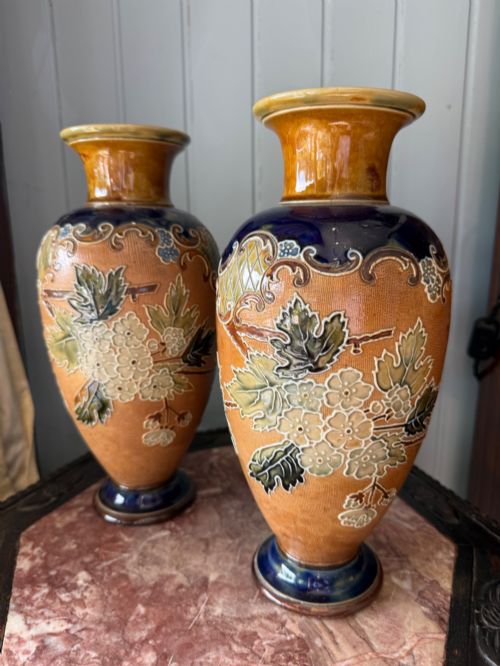
Artisans applied specialised techniques such as Slaters Patent texturing, where lace or fabric was impressed directly into wet clay. Enamel floral decor, raised slip, and hand-painted details were then layered over the textured surfaces before firing.
Doulton Lambeth Ceramic Vase Retail Price Guide 2026
Typical asking prices for doulton lambeth ceramic vase among the pieces listed under this phrase on Sellingantiques today, from the lower quarter to the upper quarter. They describe what is for sale here now, not the wider market.
Florence Barlow famously pressed real bird feathers directly into damp clay before painting feathered subjects in slip.
Judging the range
The division between standard production and exceptional work rests upon the identity and skill of the decorator. Vessels bearing the verified monogram or signature of renowned studio artists command greater attention from collectors.
Execution depth also determines standing, separating simple moulded patterns from pieces featuring hand-carved foliage, pate-sur-pate work, or complex tube-lining. Crispness in the impressed ornament and subtlety in the colour palette indicate superior studio output.
Alice Euphemia Thatcher·Louisa Wakely·Eliza Simmance·Emma Shute·Emily Edwards·Emily Stormer·Ethel Beard·Florence Barlow
The Doulton Lambeth Ceramic Vase Glossary
- Stoneware
- A robust, vitrified ceramic fired at high temperatures until non-porous. This material forms the durable body for the majority of Lambeth pottery.
- Faience
- Tin-glazed earthenware used as a smooth canvas for painted decoration. It allows for detailed pictorial scenes beneath a clear glossy surface.
- Baluster
- A vase form featuring a rounded lower body that tapers gracefully toward a narrow neck. This shape provides stability while accentuating surface patterns.
- Ewer
- A large jug with a flared spout and an arched handle designed historically for pouring water. In art pottery, these serve purely decorative functions.
- Slip
- Liquid clay applied to the surface of a vessel for decorative effect or raised texture. Artisans use it to trace relief patterns before firing.
Doulton Lambeth Ceramic Vase: Frequently Asked Questions
How do I date a Doulton piece?
Dating relies heavily on the impressed factory marks stamped into the base of each vessel alongside individual assistant monograms. Changing crown and lion ciphers across Victorian and Edwardian decades help narrow the production window.
Stylistic cues such as heavy Victorian ornament versus flowing Art Nouveau lines further clarify the era of manufacture.
Were these vases meant for flowers?
Many larger vessels were created primarily as interior display ornaments rather than functional flower holders. Their intricate surface textures and delicate hand-painted slips made them centrepieces for drawing rooms.
Smaller examples frequently accommodated single stems or decorative grasses in period parlours.
What is Slaters Patent?
Slaters Patent refers to a proprietary technique involving the impression of textiles, lace, or netting into moist clay. This created a textured background that contrasted with smooth glazed panels.
Artists often highlighted these textured areas with gilt or enamelled floral decoration.
How should I display them?
These ceramic works benefit from placement in natural light where their salt glazes and metallic accents catch illumination. Pairing balanced pairs on mantels or side tables honours their original domestic context.
Keeping them away from direct sunlight preserves the vibrancy of any applied enamel or painted floral decor.