


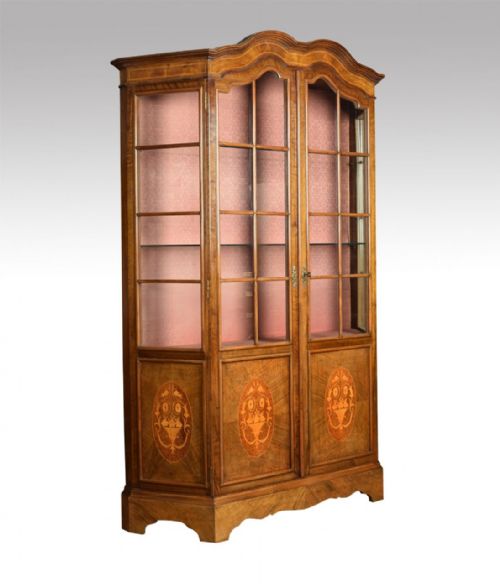


Double Door Vitrine
A double door vitrine brings proportion and light to a room, offering glazed display space for treasured collections.

Double Door Vitrine
A double door vitrine stands as a substantial piece of furniture designed specifically to display ceramics, books, and curiosities behind protective glass. When searching for a double door vitrine, buyers encounter pieces spanning the nineteenth century, the Victorian era, and the Edwardian period. These cabinets serve both practical storage and decorative exhibition.
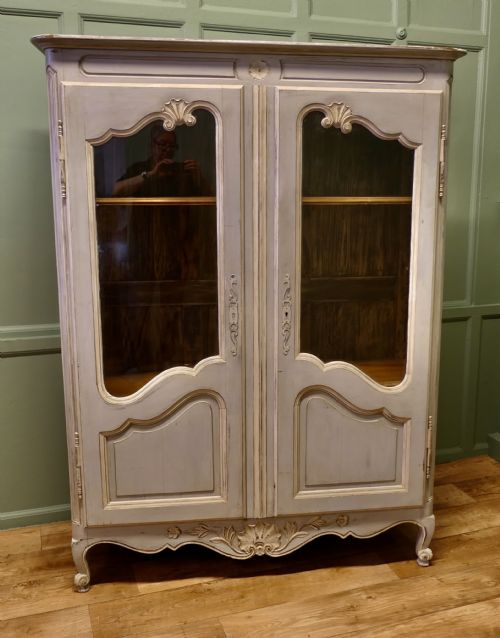
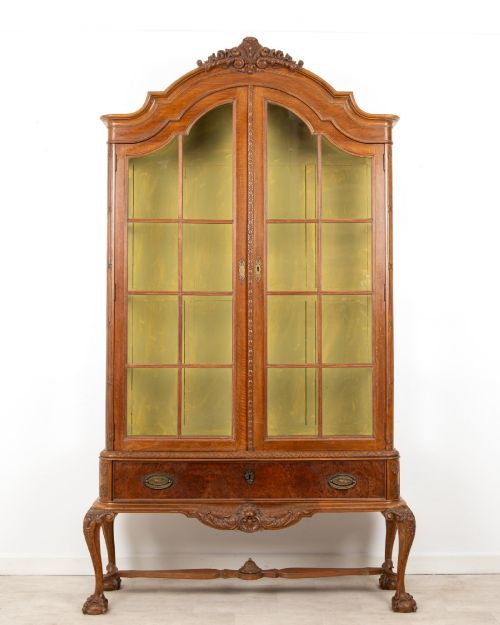
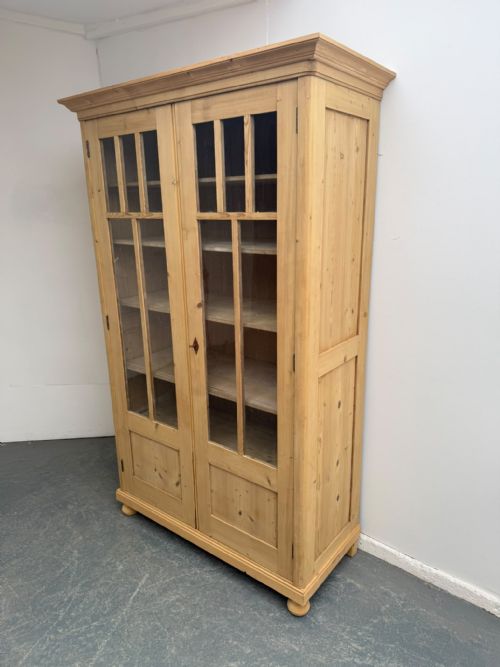
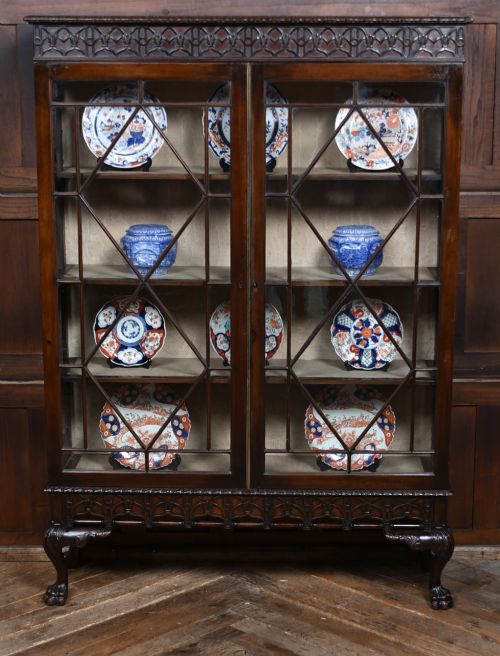
The forms on this page include mahogany bookcases, walnut pier cabinets, and painted display cabinets reflecting styles from French Rococo and Chippendale Revival to Queen Anne Revival and Continental Classical Revival. Walnut and mahogany predominate, often enhanced by marquetry, inlay, or ormolu mounts. Interior linings frequently feature velvet or fabric to complement the displayed objects.
How they were made
Cabinet makers utilised dense hardwoods such as mahogany, walnut, rosewood, and oak, alongside burr maple veneers and painted softwoods. Timber selection determined both the structural integrity and the visual richness of the cabinet facade. Glazing bars were meticulously joined to support large glass panes securely.
Decorative detailing involved intricate marquetry inlay, gilt bronze ormolu mounts, and hand-applied paint finishes. Interiors were lined with velvet or fabric to provide a contrasting backdrop for displayed items. Brass hardware completed the fittings on doors and internal shelves.
Periods represented span from the early nineteenth century through the Victorian era and Edwardian period.
What varies in quality
The selection of timber grain and the precision of veneer work distinguish finer examples from standard production. Figured walnut and carefully matched mahogany figure elevate the visual presence of a cabinet. Marquetry panels show varying degrees of dexterity and design complexity.
Construction methods and hardware selection also set pieces apart. Fine joinery in the door frames and glazing bars ensures longevity, while high-grade ormolu mounts and brass fittings add tactile weight. The integration of period-appropriate interior fabrics reflects the original maker's investment in detail.
The Double Door Vitrine Glossary
- Vitrine
- A glass-fronted cabinet designed for displaying fine objects and porcelain. The term originates from the French word for glass.
- Marquetry
- Decorative patterns formed by the insertion of pieces of wood, shell, or ivory into a veneer. Craftsmen use this technique to create elaborate floral or geometric designs on cabinet doors.
- Ormolu
- Gilt bronze ornamentation applied to furniture, popular in French and continental designs. This decorative metalwork adds metallic contrast against dark woods like walnut and mahogany.
- Pier cabinet
- A low or tall cabinet designed to stand against a pier wall between windows. These pieces often feature glass doors to display collections in narrower architectural spaces.
- Chippendale Revival
- A style drawing inspiration from eighteenth-century designs by Thomas Chippendale, characterised by carved mahogany and classical proportions. Revival pieces date primarily to the nineteenth and early twentieth centuries.
Double Door Vitrine: Frequently Asked Questions
Can I use a vitrine for books?
Many examples listed as double door vitrines also function as bookcases, featuring adjustable wooden shelves behind glass doors. These hybrid cabinets protect volumes from dust while maintaining visible storage.
Check the depth of the interior shelves to ensure they accommodate your specific collection of books.
What woods were commonly used?
Mahogany and walnut are the primary timbers found across these cabinets, often accompanied by rosewood, oak, burr maple, and painted pine. Cabinet makers selected these hardwoods for stability and attractive grain patterns.
Inlays and veneers further enhanced the surface appearance using contrasting timber species.
How do I care for the interior fabric?
Vacuum velvet and fabric linings gently using a soft brush attachment to remove dust without damaging the fibres. Avoid exposing the interior to direct sunlight to prevent fading of the textile backdrop.
Professional textile cleaners can address stubborn marks if necessary.