


Doorstep Shoe Scraper
These doorstep shoe scraper pieces clear mud from boots before the hallway sees it, built heavy to stay put.
Doorstep Shoe Scraper
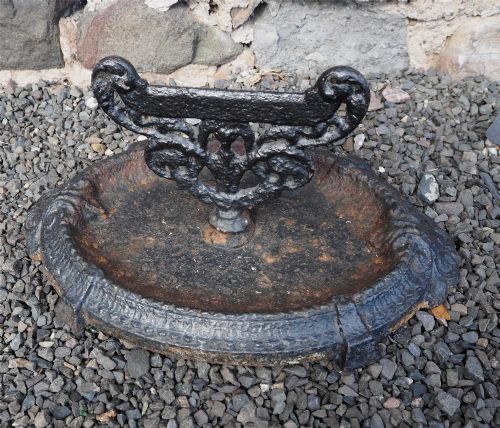
A doorstep shoe scraper is a heavy entrance fixture designed to clear thick mud from boots before visitors step inside. The examples found here span the Georgian, Regency, and Victorian periods, alongside later nineteenth-century interpretations.
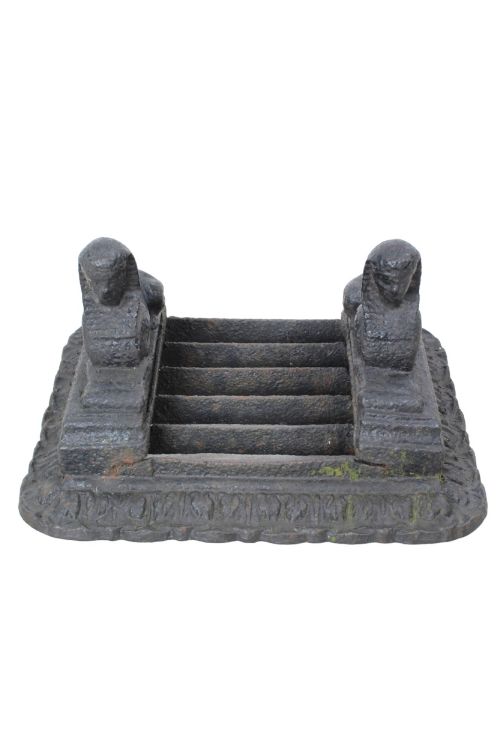
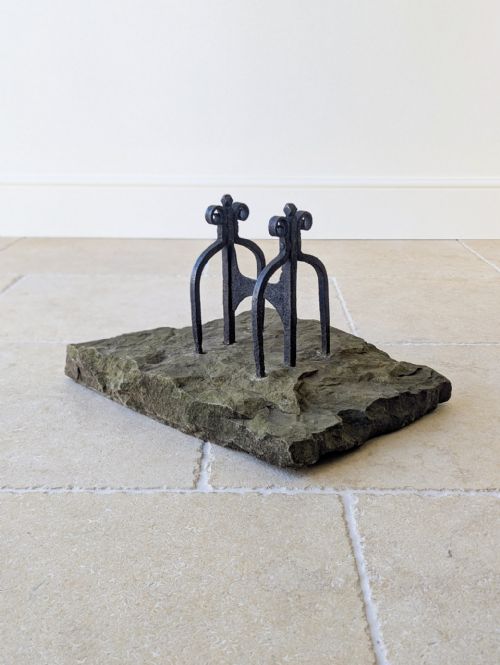
Most pieces on this page are cast iron or wrought iron, occasionally set into durable Yorkstone bases. These range from simple country house utilities to elaborate gothic and egyptian revival designs fitted with integrated shoe pulls.
How they were made
Foundry workers poured molten iron into sand moulds to create robust cast iron scrapers with decorative flourishes or standard oval designs. Blacksmiths hammered and shaped wrought iron bars by hand for earlier or more utilitarian country house models.
Some heavy urban pieces combine iron blades with dense Yorkstone blocks, providing a solid foundation that resists tipping during use.
Listings feature cast iron, wrought iron, and Yorkstone materials across Georgian, Regency, and Victorian periods.
What varies in quality
Quality rests in the weight of the metal and the ambition of the casting or smithing work. Simple utility pieces rely purely on functional strength, while grander townhouse examples incorporate decorative elements like lions or architectural revival details.
The presence of an integrated boot pull alters the complexity of the piece. Well-preserved surfaces with clean casting lines command greater interest than heavily pitted or poorly repaired metal.
Coalbrookdale
The Doorstep Shoe Scraper Glossary
- Boot scraper
- A fixed metal blade outside a doorway used for scraping mud from footwear. They are typically mounted in stone or bolted directly to exterior masonry.
- Shoe pull
- An attached hook or loop designed to help the wearer leverage their foot out of a tight boot. These appear frequently on larger townhouse examples.
- Cast iron
- Iron melted and poured into a mould to form solid shapes. It forms the primary material for the majority of these nineteenth-century pieces.
- Wrought iron
- Iron beaten and shaped by hand while hot. This material appears on earlier country house models.
- Yorkstone
- A tough British sandstone used traditionally for paving and architectural blocks. Several examples feature scrapers anchored directly into this durable stone.
Doorstep Shoe Scraper: Frequently Asked Questions
How were doorstep shoe scrapers installed?
Many examples were originally embedded directly into exterior stone steps or mortared beside the threshold to prevent movement under heavy foot pressure. Others used heavy integral bases like Yorkstone blocks that sat firmly on the ground without masonry work.
Over the years, some pieces have been detached from their original thresholds and mounted onto modern display bases or left freestanding.
Why do some scrapers have loops?
The loop functions as a boot pull, allowing the wearer to hook the heel of their footwear and gain leverage when pulling off mud-caked boots. This feature appears most often on grander townhouse pieces intended for polite visitors.
It saves the user from bending down to wrestle damp leather off tired feet after a muddy ride or walk.
How do I date a cast iron scraper?
Georgian and Regency examples tend towards simpler wrought iron or cleaner classical lines, while Victorian versions often feature heavier cast ornamentation and Gothic or Egyptian revival motifs. Examining the sharpness of the casting and the surrounding stone can also offer clues.
Later nineteenth-century pieces frequently display more complex industrial casting techniques and heavier proportions.
Can I use an antique scraper outside today?
Cast iron and wrought iron are durable metals built for exterior elements, making them perfectly suited for placement beside a modern doorway. Regular cleaning helps prevent surface rust from accumulating in wet weather.
Their heavy construction ensures they remain stable when visitors scrape muddy boots across the metal blade.