




Heavy Boot Cleaner
A heavy boot cleaner keeps mud outside the hall, built from cast iron or stone to last centuries.
Heavy Boot Cleaner
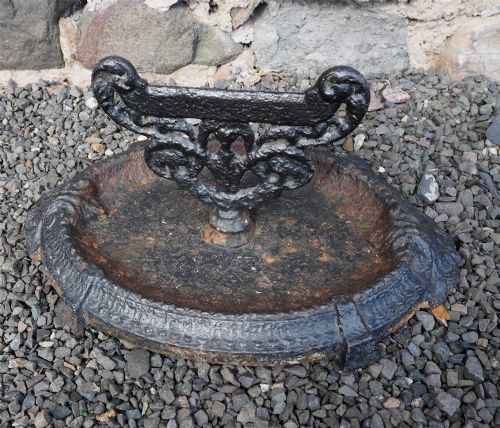
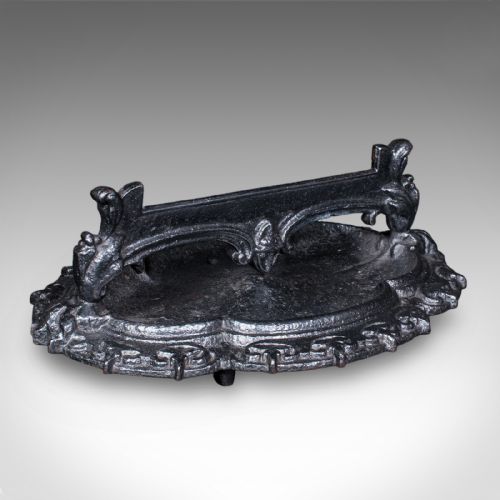
A heavy boot cleaner sits by an entrance door to scrape thick mud from footwear before stepping inside. When searching for a heavy boot cleaner, a buyer finds robust metal and stone pieces designed to stand firmly on the ground or mount beside a threshold.
The versions most commonly met on this page date from the Georgian and Victorian periods, taking forms such as entrance scrapers, townhouse scrapers, and shoe pulls. These items reflect the domestic needs of large country houses and London townhouses where muddy boots required a sturdy metal blade.
How they were made
Makers utilised cast iron and wrought iron, pouring molten metal into moulds or forging it by hand to create rigid scrapers and integral shoe pulls. These materials provided the necessary weight and durability to withstand constant scraping from heavy footwear.
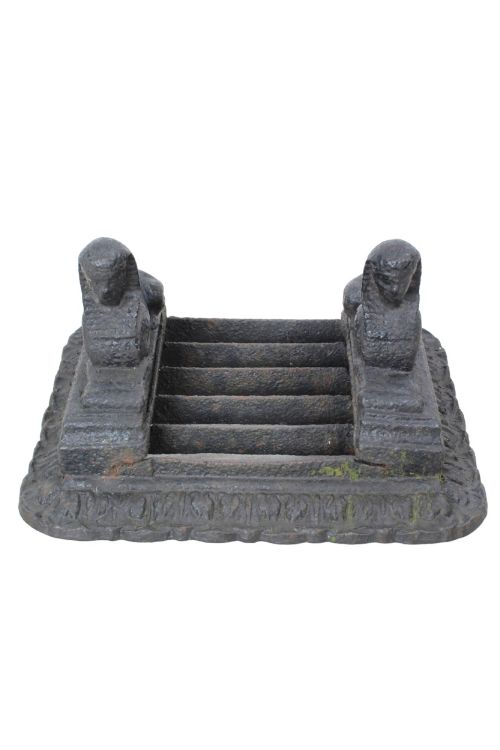
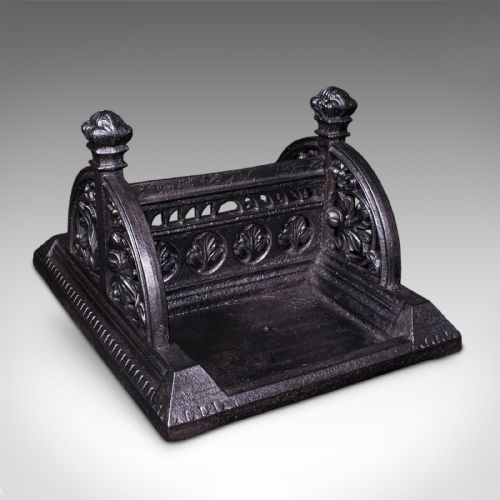
Some examples incorporate stone bases or architectural mountings, reflecting styles such as Victorian Gothic Revival, Egyptian Revival, and Regency design. The construction often combines a scraper blade with a loop handle or shoe pull to assist in removing footwear.
Heavy Boot Cleaner Retail Price Guide 2026
Typical asking prices for heavy boot cleaner among the pieces listed under this phrase on Sellingantiques today, from the lower quarter to the upper quarter. They describe what is for sale here now, not the wider market.
Victorian guests faced social ruin if they tracked London street mud onto a pristine parlour carpet.
What varies in quality
Quality rests in the crispness of the casting detail and the proportion of the design, distinguishing standard utility items from ambitious architectural foundry work. Pieces associated with notable foundries or specific stylistic movements display cleaner lines and more elaborate ornamentation.
The survival of original surface textures and structural integrity also dictates the standing of a piece, as heavy everyday use often led to replacement parts or heavy wear. The presence of integrated shoe pulls and substantial mounting flanges elevates the character of the object.
Coalbrookdale
The Heavy Boot Cleaner Glossary
- Boot scraper
- A metal blade fixed near a doorway for scraping mud from the soles of boots and shoes. It usually stands on a heavy base or fixes directly into stonework.
- Shoe pull
- A loop or handle attached to a scraper frame to steady the foot while removing muddy boots. This feature appears frequently on townhouse and country house models.
- Cast iron
- An iron-carbon alloy poured into moulds to form rigid objects. This material forms the primary substance for the majority of these scrapers.
- Egyptian Revival
- An architectural and decorative style drawing inspiration from ancient Egyptian motifs. This style appears on select cast iron pieces from the nineteenth century.
- Coalbrookdale
- A famous Shropshire ironworks known for producing decorative and architectural cast ironwork. Items from this source represent notable foundry production.
Heavy Boot Cleaner: Frequently Asked Questions
Where were heavy boot cleaners placed?
These items stood directly outside entrance doors, often by the steps of townhouses or country houses. They were positioned so visitors and residents could clean their footwear before entering the hall.
Some examples mounted directly into exterior stone thresholds or brickwork, while others relied on their substantial iron weight to remain stable on the ground.
How do I date a cast iron boot cleaner?
Dating relies on stylistic clues, such as the decorative motifs of the Victorian Gothic Revival or Egyptian Revival periods. Georgian examples often display simpler, heavier architectural lines.
Foundry marks and the specific method of casting also offer clues to the age of the piece, as production techniques shifted over the nineteenth century.
Can these scrapers still be used outdoors?
Cast iron and stone are robust materials built to withstand exposure to weather when placed by an entrance. They require very little maintenance to remain functional outdoors.
Buyers often place them beside modern doorways to serve their original practical purpose while retaining period character.