


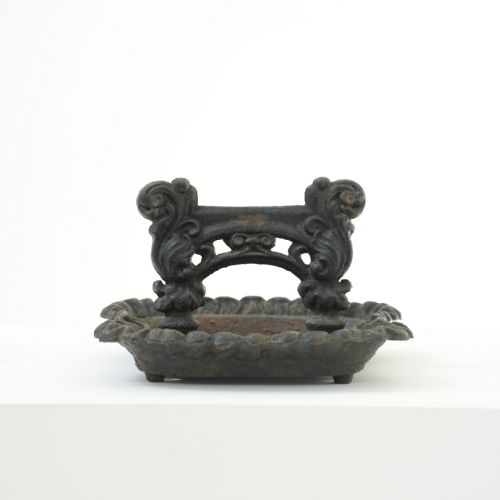


Cast Iron Mud Tray
These cast iron mud tray examples are heavy entryway essentials designed to clear heavy soil from boots before crossing the threshold.
Cast Iron Mud Tray
A cast iron mud tray is fundamentally a boot scraper designed for placement beside doorways to catch soil, mud, and debris removed from footwear. When searching for a cast iron mud tray, buyers most frequently encounter Victorian pieces, alongside occasional Georgian and Regency examples.
The forms vary from simple small oval designs to large country house and townhouse editions, frequently incorporating shoe pulls or integrated trays. Many feature architectural details from the Gothic Revival style or originate from notable foundries such as Coalbrookdale.
Materials and construction
These items are produced entirely from durable cast iron, chosen for its strength and ability to withstand heavy outdoor use and weathering. The manufacturing process relies on sand casting to create the robust scrapers and surrounding trays, resulting in solid, weighty pieces built for longevity.
Cast Iron Mud Tray Retail Price Guide 2026
Typical asking prices for cast iron mud tray among the pieces listed under this phrase on Sellingantiques today, from the lower quarter to the upper quarter. They describe what is for sale here now, not the wider market.
Victorian visitors scraped more than just mud off their boots; they left centuries of social history embedded in the iron.
Assessing quality
Quality in these pieces rests upon the crispness of the casting and the complexity of the design, distinguishing standard utility items from grand country house or exhibition pieces. Better examples display refined architectural detailing, such as Gothic Revival motifs or integrated shoe pulls, while retaining their structural integrity.
Coalbrookdale
The Cast Iron Mud Tray Glossary
- Boot Scraper
- A metal blade or device fixed near a doorway for scraping mud from the soles of boots. These often incorporate a tray or pan to catch the falling dirt.
- Coalbrookdale
- A famous English ironfoundry known for producing high-quality decorative and functional cast ironware during the nineteenth century. Their work is particularly sought after by collectors of period metalwork.
- Gothic Revival
- An architectural and decorative style drawing inspiration from medieval design, popular during the nineteenth century. Pieces in this style often feature pointed arches and quatrefoil motifs.
- Shoe Pull
- An auxiliary loop or handle attached to a boot scraper to help steady the foot while removing footwear. This feature appears on many substantial townhouse and country house examples.
Cast Iron Mud Tray: Frequently Asked Questions
Where were mud trays placed?
These items were traditionally positioned directly outside the primary entrance doors of townhouses and country estates. Their primary function was to catch heavy soil before guests stepped inside.
Positioning them on stone steps or dedicated porch areas kept mud contained in the tray rather than on the interior floors.
How do I date a cast iron scraper?
Dating relies on stylistic clues such as Gothic Revival architectural motifs, registration marks, or specific foundry attributions. Victorian pieces frequently display heavier ornamentation compared to simpler Georgian designs.
Examining the casting technique and the wear patterns also helps establish the approximate production period.
What is a shoe pull?
A shoe pull is an integrated loop or handle attached to the scraper assembly. It allowed users to steady themselves or leverage their foot while pulling tight riding boots off.
This feature is common on larger country house and London townhouse models.
Can I use these outdoors today?
Cast iron is exceptionally durable and withstands outdoor weather conditions without difficulty. Placing an authentic period scraper by a modern doorway serves the exact practical purpose it was cast for centuries ago.
Routine maintenance involves simply brushing away accumulated debris and managing surface oxidation.