


Distressed Wood Accent Chairs
These distressed wood accent chairs bring painted surfaces and period character into a room, offering tactile seating rooted in centuries of craftsmanship.
Distressed Wood Accent Chairs
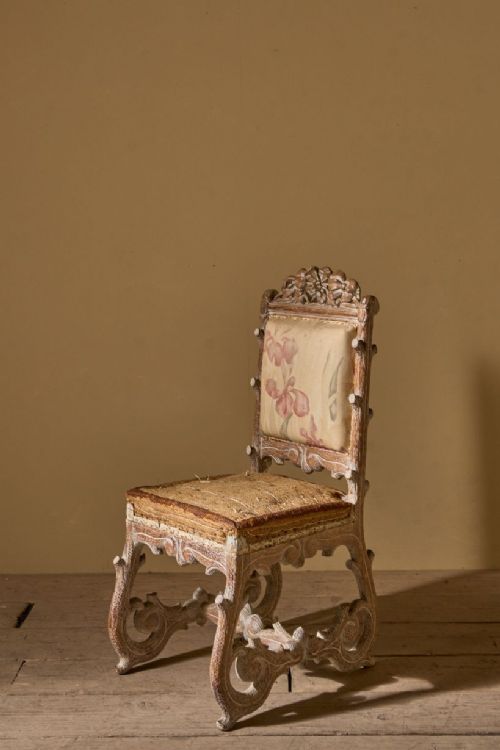
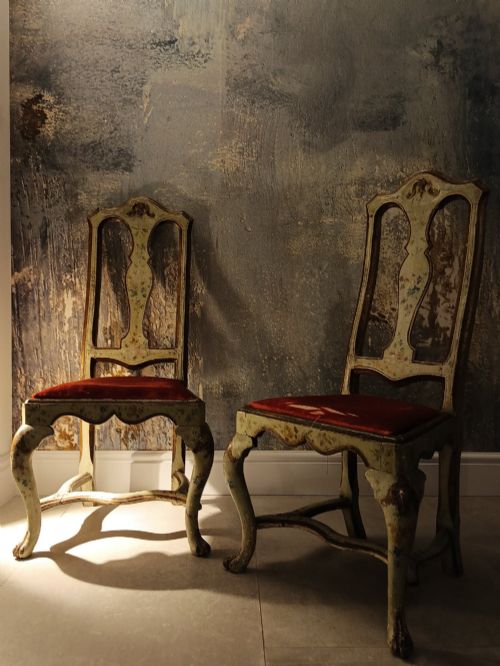
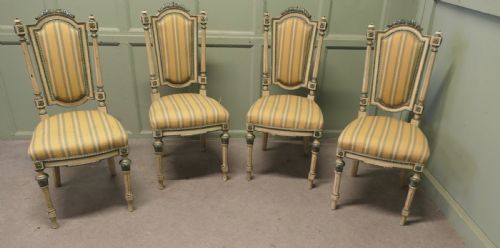
Distressed wood accent chairs encompass seating options designed to stand out within a room through painted finishes and weathered textures. The pieces encountered here span from the eighteenth century through to the early twentieth century, with a strong representation of nineteenth-century examples.
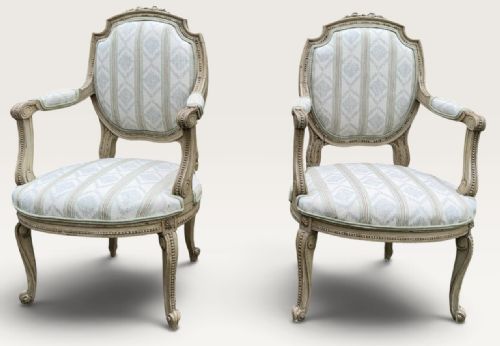
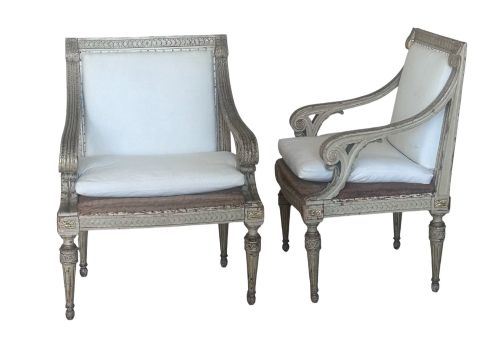
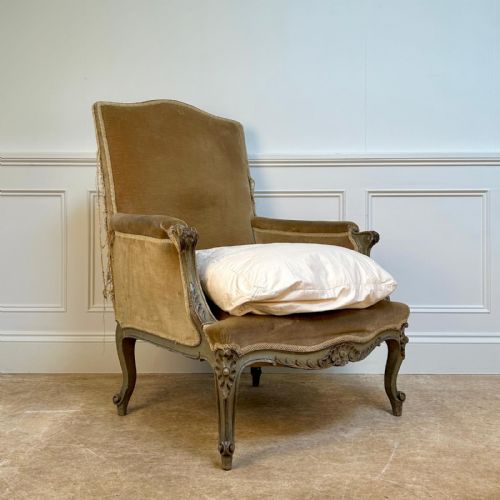
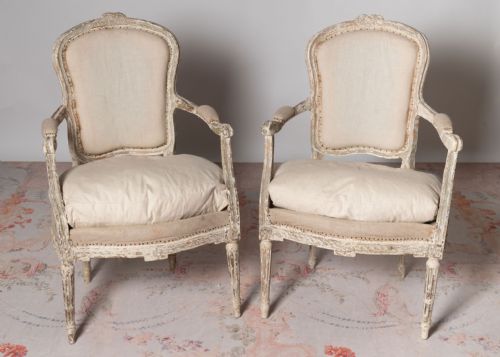
The forms vary across armchairs, side chairs, and salon chairs, offering diverse silhouettes for domestic spaces. Armchairs and bergères provide structured seating with upholstered elements, whereas side chairs and salon chairs present lighter frames suitable for occasional use.
Origins stretch across European workshops, featuring French, Italian, and Swedish pieces alongside Chinese yoke-back forms. French salon chairs and bergères dominate the selection, bringing Louis XVI and Louis XV revival styles into the mix.
Materials and construction
Makers utilised solid timbers such as beech and walnut to build the foundational frames of these chairs. Carved wood details shape the arms, legs, and crest rails, employing traditional joinery methods to ensure structural integrity.
Surfaces received layers of paint, gesso, and faux finishes to achieve distinct visual character. Original paint layers and faux bamboo or faux bois effects appear across the pieces, often showing age-related wear that creates the distressed aesthetic.
Materials span from beech and walnut to applied gesso, fabric, velvet, and painted wood surfaces.
Quality and craftsmanship
The refinement of the carved wood ornamentation separates standard production from finer examples. Deeply carved motifs and balanced proportions indicate skilled handwork by period artisans.
The integrity of the painted finish and the retention of original surface treatments dictate the character of each piece. Chairs retaining their early or original paint layers demonstrate higher authenticity than those with later repainting.
The Distressed Wood Accent Chairs Glossary
- Bergère
- An enclosed upholstered armchair with wooden framing around the sides and back. This French form provides a wider, deeper seat than standard armchairs.
- Fauteuil
- An open-arm armchair featuring an exposed wooden frame and upholstered seat and back. The arms typically have padded elbow rests.
- Gesso
- A plaster-like mixture applied to wood surfaces to prepare them for painting or gilding. It provides a smooth base that can be carved or moulded before colour is added.
- Faux bois
- A technique of painting or sculpting wood or other materials to imitate the natural grain and texture of tree branches or timber. Artisans used this to create rustic visual effects.
- Yoke-back
- A chair design featuring a curved top rail resembling an ox yoke. This form appears in traditional Chinese seating.
Distressed Wood Accent Chairs: Frequently Asked Questions
How do I place an accent chair in a modern room?
Pair a painted nineteenth-century armchair with contemporary minimalist furnishings to create a striking contrast of textures and eras. The weathered wood and soft upholstery anchor the space without overwhelming the surrounding layout.
Position the chair in a corner or reading nook where its sculptural frame can be appreciated from multiple angles. Allow sufficient surrounding floor space so the carved details and painted surface remain visible.
Can I use these chairs for daily seating?
These period armchairs and salon chairs suit regular domestic use, provided they are treated with appropriate care. Solid wood frames and sturdy joinery ensure they remain functional for daily sitting.
Consider the upholstery type and cushion support when selecting a chair for frequent use. Lighter salon chairs function best as occasional seating, whereas padded bergères offer deeper comfort for prolonged sitting.
How do I identify French regional styles?
Look to the decorative motifs and frame geometry to distinguish between regional French designs and revival periods. Louis XV styles feature curved cabriole legs and asymmetrical floral carvings, while Louis XVI pieces display straighter lines and neoclassical symmetry.
Examine the paint finish for signs of age, such as craquelure and thinning layers. Original paint applied during the manufacturing period carries distinct wear patterns compared to later decorative updates.
What maintenance do painted wooden frames require?
Dust the carved wooden surfaces regularly with a soft, dry cloth to prevent dirt accumulation within the recessed details. Avoid harsh chemical cleaners that might strip or soften the historic paint layers.
Keep the chairs away from direct sunlight and steady moisture sources to protect the wood and gesso from warping or cracking. Maintaining stable indoor humidity preserves both the structural frame and the painted finish.