
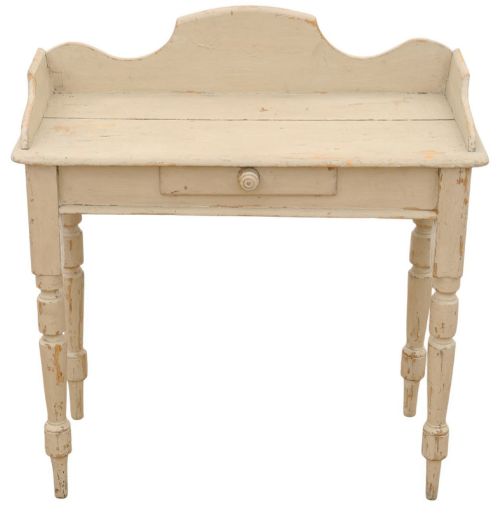
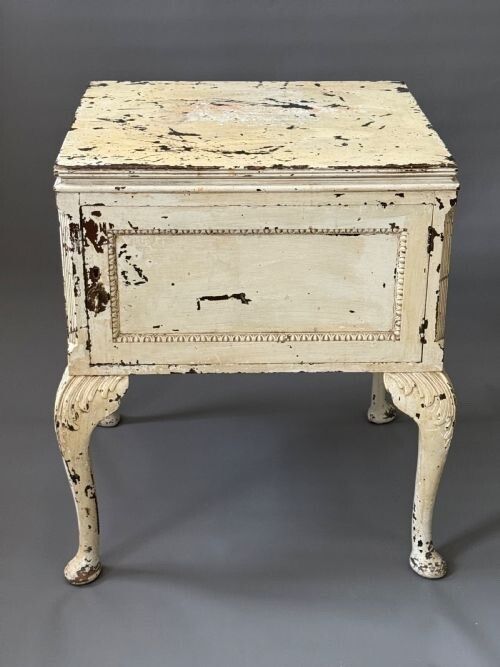
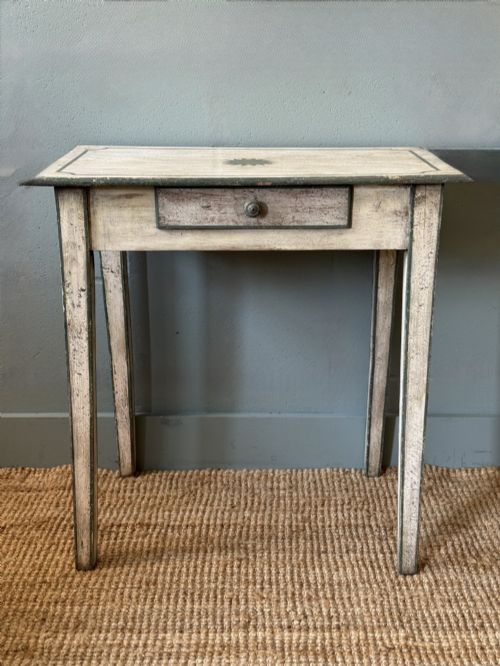
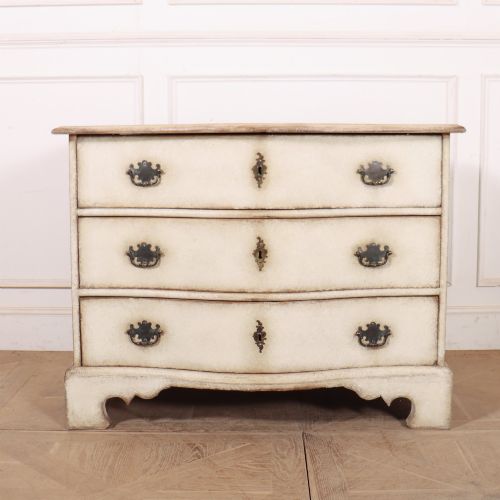
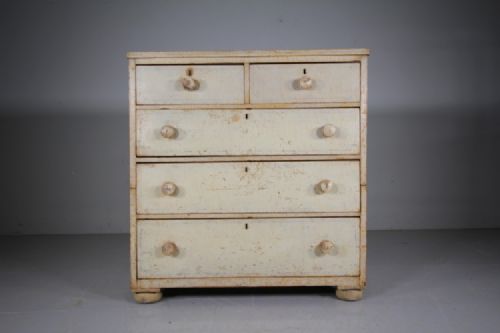
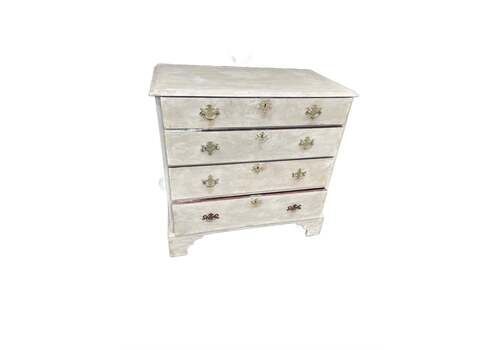
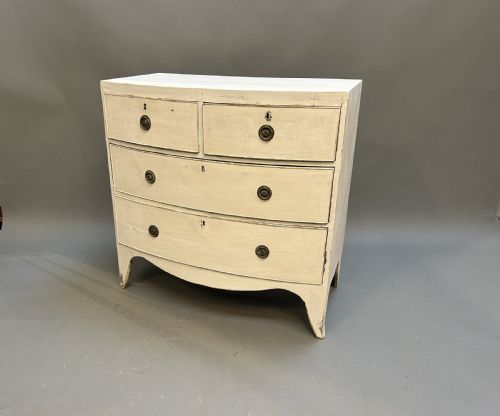


Distressed White Drawers
Distressed white drawers are painted storage pieces carrying aged character, sought after for bringing understated texture and history into an interior scheme.
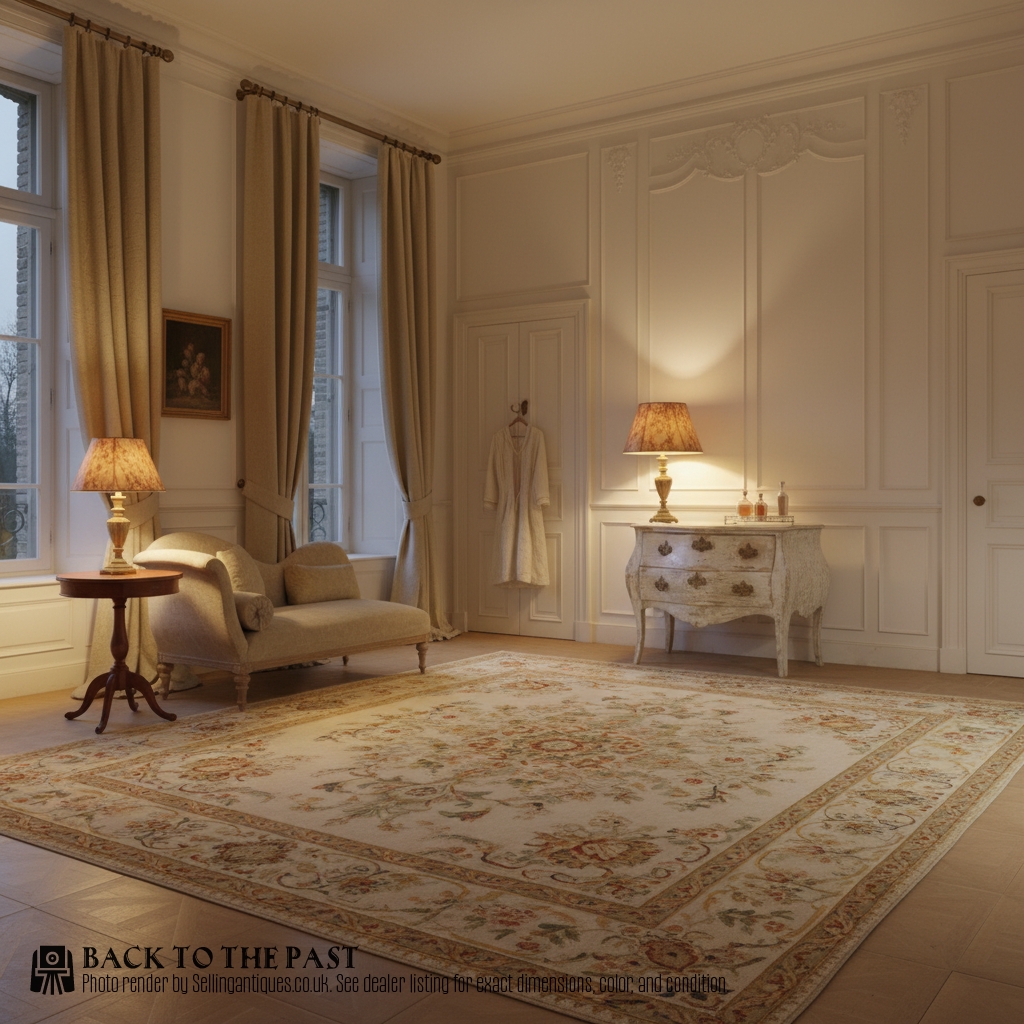
Distressed White Drawers
Distressed white drawers span multiple forms including chests of drawers, commodes, bedside tables and writing desks, emerging from traditions such as French Provincial, Gustavian and Scandinavian Country. The most frequent encounters on this page are nineteenth-century painted pine chests of drawers alongside continental commodes.
The selection ranges across several centuries, touching upon the eighteenth century, the Regency era, and early twentieth-century dates like nineteen-twenty and nineteen-thirty. Construction types include pieces made in two parts and serpentine fronts.
Origins stretch across European workshops, taking in English country pieces, French chateau furniture, and Swedish painted items. These diverse regional traditions share a common reliance on painted wood surfaces.
Materials and construction methods
Makers utilised solid timbers beneath decorative layers, with pine and mahogany forming the primary structure of these chests and tables. Hardwoods such as fruitwood and oak also appear, particularly in eighteenth-century and nineteenth-century examples.
Surface treatments rely on paint applied over wood, developing patination and wear over time. Metal fittings, specifically brass handles and escutcheons, provide functional contrast to the painted timber.
The inventory includes commodes with serpentine fronts originating from Italy, France, Germany and Denmark.
Judging the range of quality
Quality rests upon the integrity of the original construction, seen in well-fitted drawer box joints and balanced proportions across serpentine or bow fronts. Pieces made in two parts reveal careful joinery designed for stability and movement.
The character of the painted surface dictates visual success, where natural age and historical layering create depth rather than uniform modern finishes. Carved elements on commodes and tables show the hand of the maker through crispness of detail.
Edwards and Roberts
The Distressed White Drawers Glossary
- Commode
- A low chest of drawers or cabinet, frequently featuring a serpentine front and cabriole legs. These pieces originated in France and became popular across eighteenth-century Europe.
- Serpentine
- A front contour characterised by a convex centre flanked by concave curves, creating an undulating line. This shape demands high skill from the cabinetmaker.
- Gustavian
- A Swedish neoclassical style developed during the late eighteenth century, known for pale painted finishes and restrained classical carving. It draws inspiration from French Louis XVI design.
- Bombe
- A swelling, bulging chest profile where the sides and front curve outward in convex shapes. This form is typical of eighteenth-century Dutch cabinetmaking.
- Escutcheon
- A protective plate surrounding a keyhole, usually cast in brass. It prevents the wood around the lock from splitting through repeated use.
Distressed White Drawers: Frequently Asked Questions
What periods do these pieces come from?
The pieces span from the eighteenth century through the nineteenth century and into the early twentieth century, including Regency and nineteen-twenty examples.
European workshops from England, France, Sweden, Italy, Germany and the Netherlands produced these painted items across distinct regional traditions.
How were these drawers used originally?
Chests of drawers and commodes served for bedroom and parlour storage of linens and garments. Smaller side tables and writing desks functioned in reception rooms for correspondence.
Bedside cabinets and tables provided private storage beside sleeping quarters. Console tables stood against walls in halls and drawing rooms to display decorative objects.
How do I live with distressed white furniture?
These pieces integrate easily into neutral or rustic interiors, adding texture through their aged painted surfaces. Their muted tones complement both modern and traditional rooms.
Use them as statement storage in bedrooms, hallways or living spaces. The painted wood requires simple dusting and care to preserve the existing patination.
How do I tell styles apart?
Gustavian and Scandinavian pieces typically feature pale paintwork and simpler neoclassical lines. French Provincial and Louis XV items often showcase carved details and serpentine fronts.
English country furniture tends to utilise pine with straightforward proportions. Dutch pieces frequently display dramatic bombe curves or serpentine shaping.