


Distressed Painted Accent Chairs
These distressed painted accent chairs bring surface character and Continental form to a room, offering functional seating with historical presence.
Distressed Painted Accent Chairs
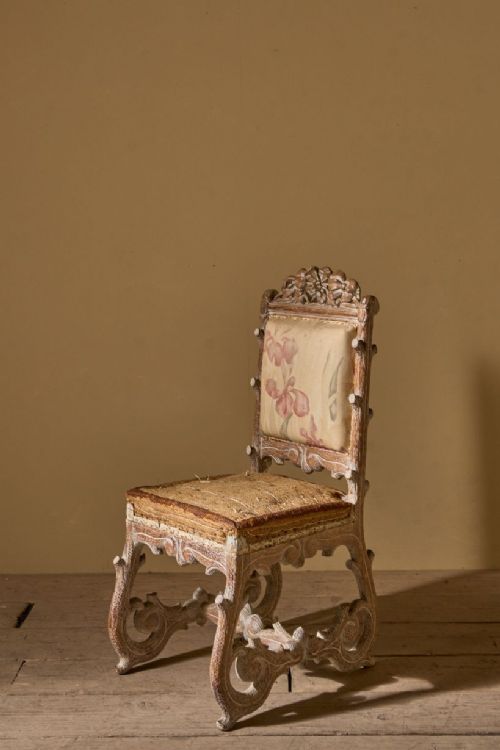
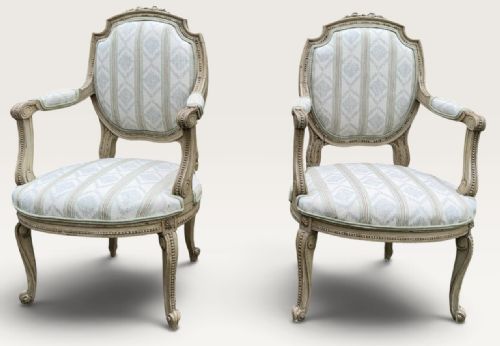
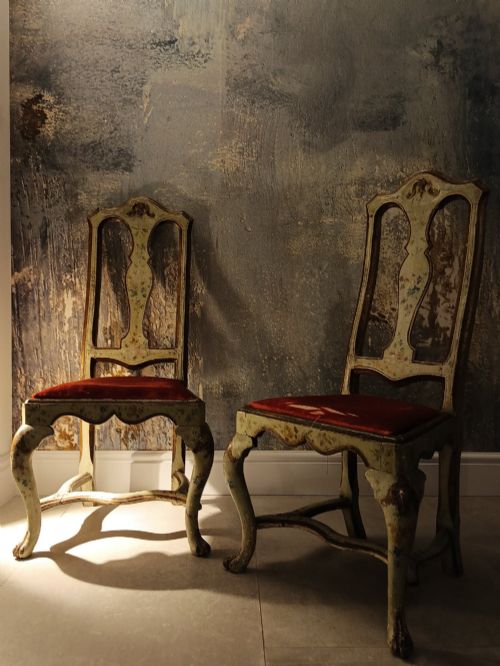
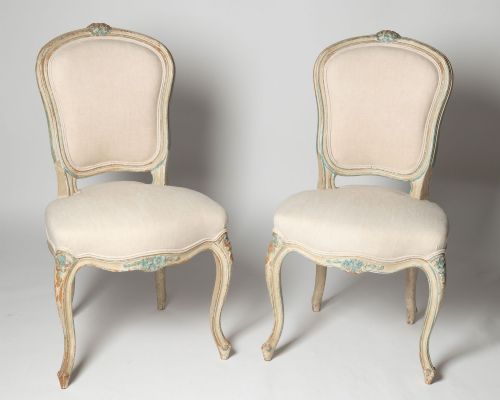
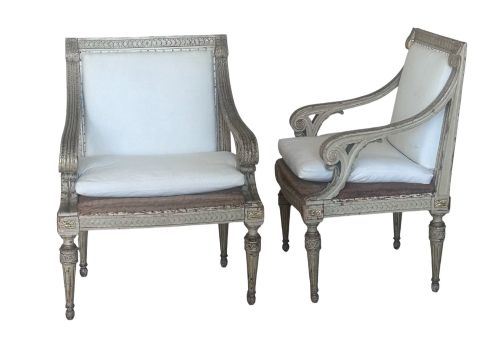
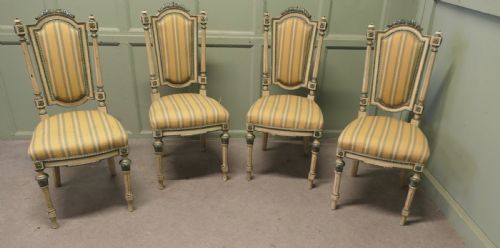
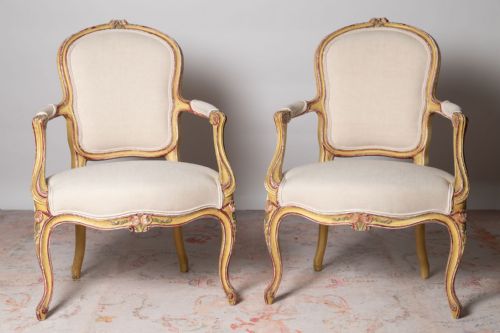
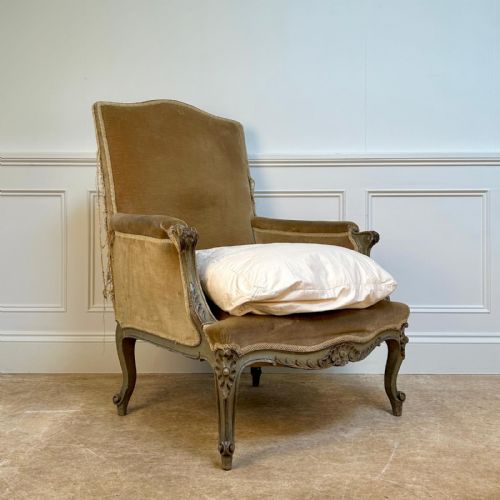
Distressed painted accent chairs comprise seating forms designed for decorative impact, predominantly taking the shape of French armchairs, side chairs, and salon chairs. When searching for distressed painted accent chairs, buyers encounter pieces originating from the eighteenth century through to the early twentieth century, with a strong representation of nineteenth-century French and Italian examples.
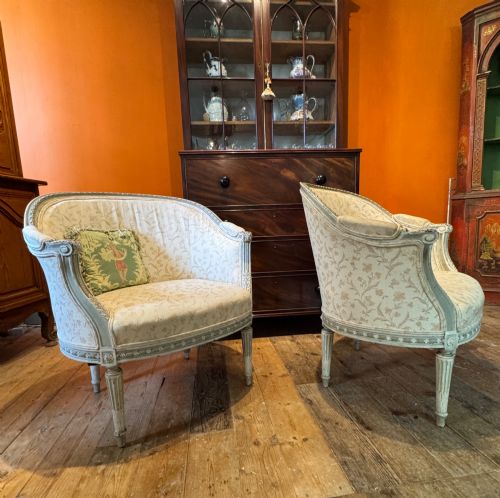
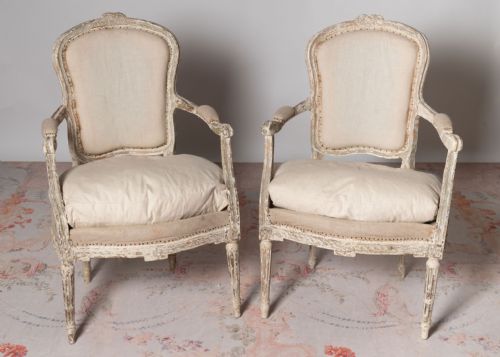
The selection includes specific regional variations, such as North Italian and Piedmontese armchairs, alongside Georgian styles and French provincial designs. Forms range from open armchairs and fauteuils to bergère tub armchairs and yoke-back chairs, often appearing as matched pairs.
Makers and workshops across Europe produced these chairs using local timbers, applying decorative paint schemes that have weathered over decades. Buyers find both original paint surfaces and later decorative paint layers, spanning Louis XV and Louis XVI revivals as well as rustic vernacular designs.
How they were made
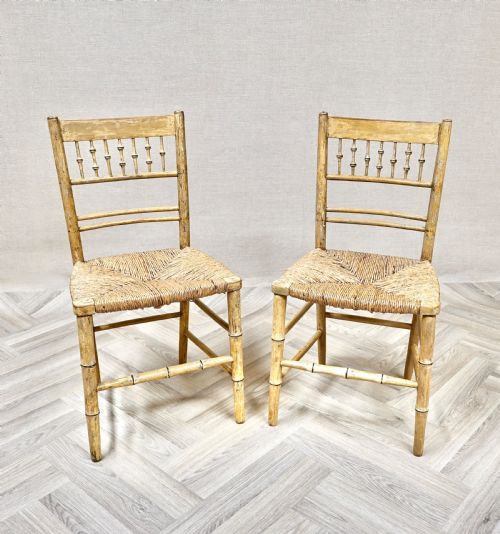
Makers constructed these chairs primarily from solid woods such as beech and walnut, occasionally employing bamboo or faux bamboo shaping for lighter frames. Carved decorative elements and structural joints relied on traditional carpentry techniques appropriate to the period.
Surfaces received layers of paint, gesso, and sometimes subtle gilding over wood substrates, applied to achieve decorative finishes that weathered naturally over time. Upholstery involved traditional stuffing techniques covered in textiles such as linen, velvet, and various decorative fabrics.
Several chairs feature painted bamboo and faux bamboo frames, proving that nineteenth-century makers loved a convincing wooden trick.
What varies in quality
Quality in these chairs rests upon the integrity of the carved wooden frame and the authenticity of the surface finish. Pieces featuring original paint retain a historical depth that later decorative layers lack.
Proportion and carving crispness distinguish workshop output, where regional interpretations display varying degrees of refinement. The harmony between the structural woodwork and the remaining surface distress determines the visual success of the piece.
The Distressed Painted Accent Chairs Glossary
- Fauteuil
- An open-arm armchair with a wooden frame, originating in France and typically featuring upholstered seat and back pads.
- Bergère
- An enclosed armchair with upholstered sides and a padded back, often featuring a loose seat cushion above a low rail.
- Gesso
- A plaster-like mixture applied to wood surfaces to provide a smooth base for painting and gilding.
- Faux Bois
- A decorative technique imitating the appearance of natural wood grain through painted or sculpted manipulation.
- Yoke-back
- A chair back featuring a curved top rail resembling a traditional oxen yoke, seen in specific regional and international designs.
Distressed Painted Accent Chairs: Frequently Asked Questions
What is a fauteuil?
A fauteuil is an open-arm upholstered armchair originating from French design traditions. These chairs feature exposed wooden frames and padded armrests designed for drawing room use.
They combine structural woodwork with upholstered seating elements, serving as both functional chairs and decorative accents in period interiors.
How do I identify original paint?
Original paint surfaces show natural wear patterns, craquelure, and integration with the underlying gesso and wood layers. These finishes accumulate gentle patination through decades of domestic use rather than artificial distressing.
Examining the edges and recesses reveals how the layers have thinned naturally over time, distinguishing genuine period surfaces from later decorative applications.
Where were these chairs made?
The available pieces originate primarily from France and Italy, with examples spanning provincial workshops and urban cabinet makers. Regional styles include North Italian, Piedmontese, and Swedish variations alongside standard French provincial and Louis-style revivals.
Makers utilised local timbers native to these European regions, applying decorative paint finishes popular during their respective periods of production.
How do I use them at home?
These accent chairs function effectively in living rooms, bedrooms, and hallways where a decorative focal point is required. Their distinct painted surfaces and historical forms allow them to complement both traditional and contemporary interior schemes.
Pairs can be placed flanking a fireplace or console table, while single chairs serve as reading seats or bedroom dressing chairs.