

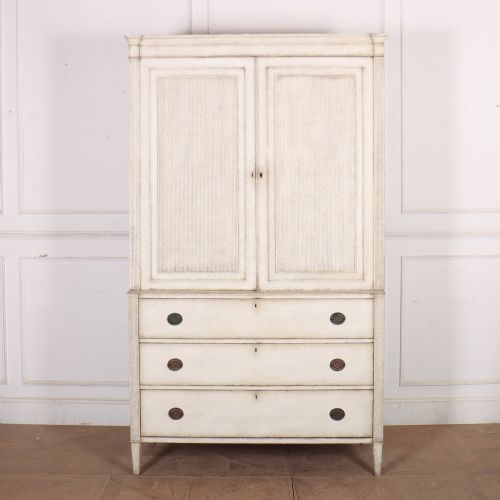
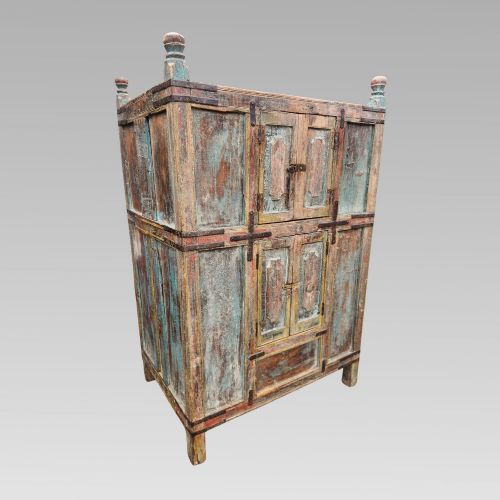
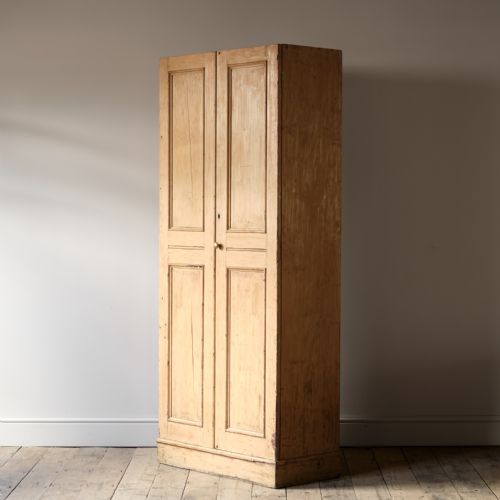
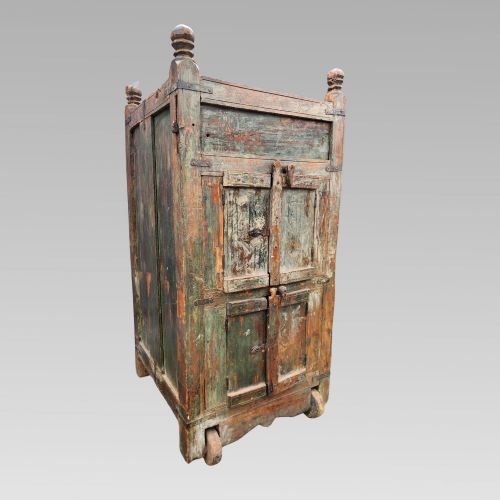
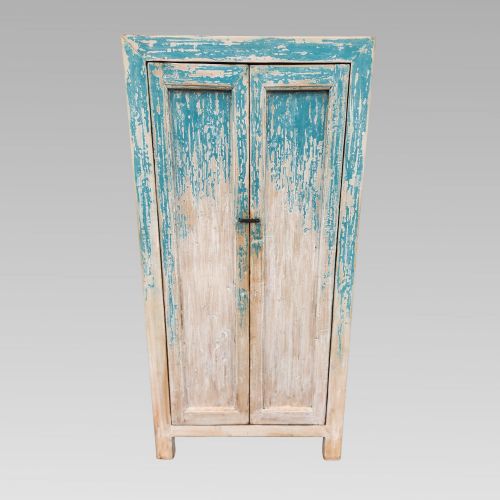
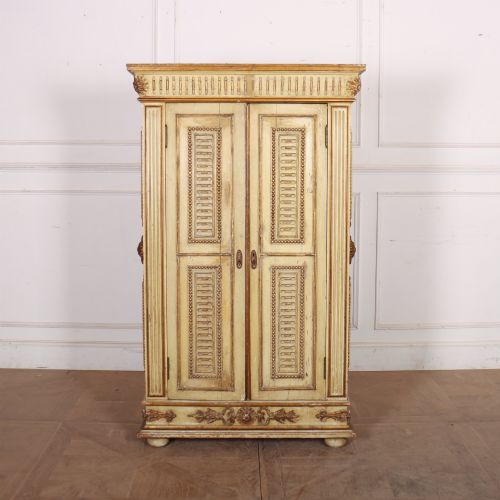
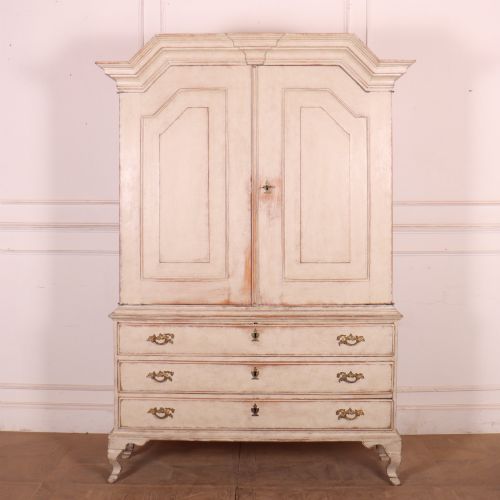

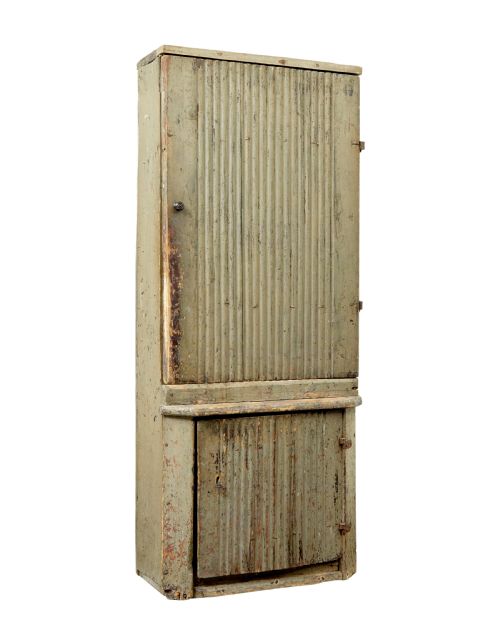
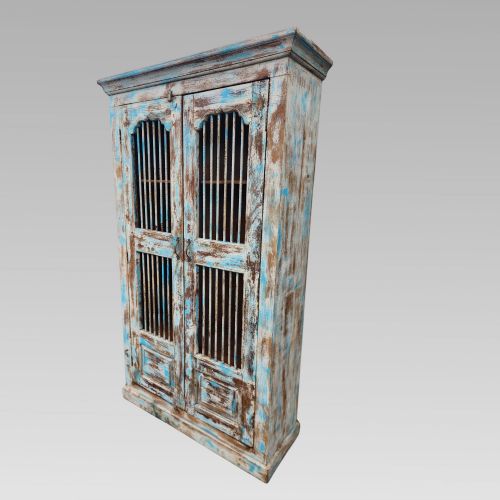


Distressed Paint Armoire
A distressed paint armoire brings surface history and useful volume into a room, offering storage wrapped in layers of time.
Distressed Paint Armoire
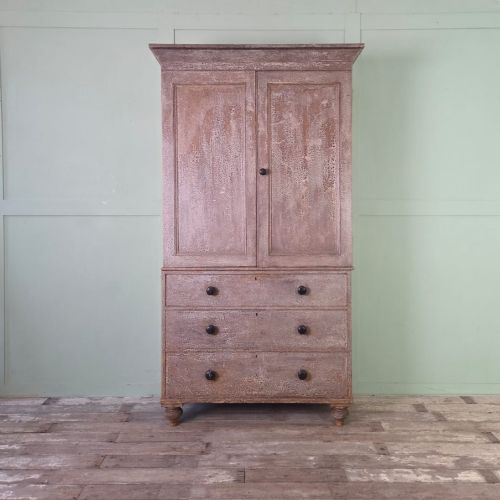
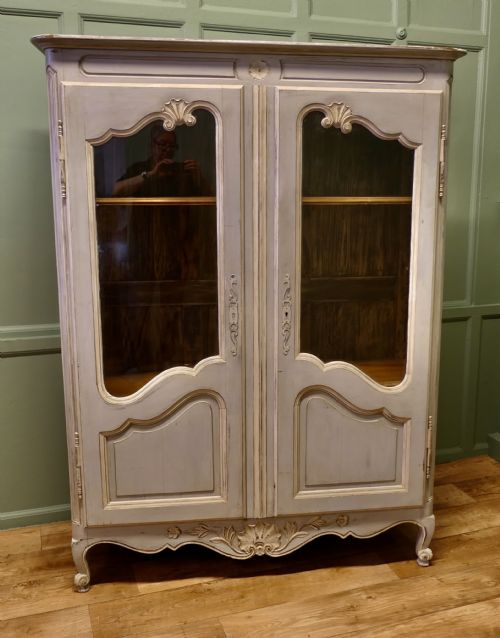
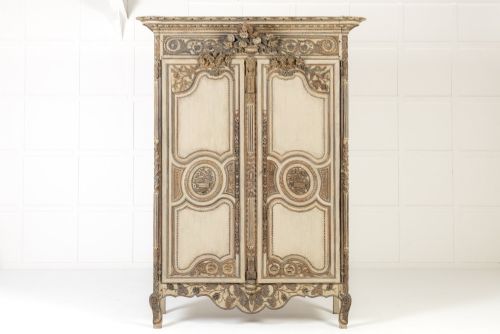
A distressed paint armoire encompasses large storage cupboards, wardrobes, and linen presses originating primarily from the eighteenth and nineteenth centuries. These pieces span regional styles including French provincial, Scandinavian country, rustic farmhouse, and traditional Indian design.
Pine forms the backbone of the Scandinavian and British examples, often finished with historic layers of grey, white, or polychrome paint. Heavier architectural statements arrive from eighteenth-century French and Italian workshops, alongside Indian almirahs built from teak and cedar.
Most examples function as housekeepers cupboards, double-door wardrobes, or vitrines fitted with internal shelving and hanging space. The surface wear on these items stems from decades or centuries of domestic use, leaving authentic patination across the timber and pigment.
Materials and construction methods
Makers relied principally on solid pine, teak, and cedar, joined using traditional pegged mortise and tenon construction to withstand daily household demands. Carved details occasionally appear on cornices and panelled doors, particularly within Scandinavian and French workshops.
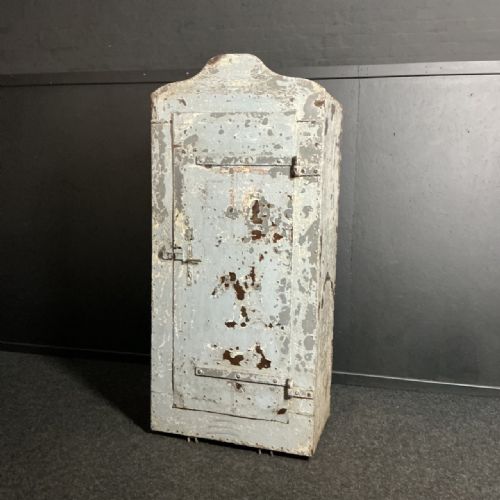
The distinctive painted finishes comprise mineral or oil-based pigments applied directly to bare wood over generations. Subsequent wear exposes the underlying grain and earlier coats of colour, creating the characteristic distressed aesthetic.
Distressed Paint Armoire Retail Price Guide 2026
Typical asking prices for distressed paint armoire among the pieces listed under this phrase on Sellingantiques today, from the lower quarter to the upper quarter. They describe what is for sale here now, not the wider market.
The inventory spans the eighteenth and nineteenth centuries, featuring pine, teak, and cedar shaped into Scandinavian, French, and Indian storage forms.
Assessing quality and character
Quality rests upon the integrity of the original construction and the authenticity of the surface finish. Pieces retaining their initial structural timber without excessive modern intervention command greater interest from collectors.
The depth and nuance of the paint layers determine the visual merit of the piece. Unfettered patination showing natural ageing holds more appeal than heavily simulated distressing.
The Distressed Paint Armoire Glossary
- Armoire
- A large freestanding cupboard or wardrobe, traditionally used for storing garments and household linens. French examples often feature double doors and decorative carving.
- Almirah
- A freestanding cupboard or wardrobe originating from the Indian subcontinent, frequently constructed from reclaimed teak or cedar. These pieces often serve as statement storage items.
- Vitrine
- A glass-fronted cabinet or bookcase designed for displaying objects. Nineteenth-century versions frequently incorporate painted finishes.
- Housekeepers cupboard
- A large utilitarian storage piece with cupboards and drawers, traditionally kept in domestic service rooms. Pine remains the most common timber for this form.
- Polychrome
- Painted or decorated in several colours. This finish appears frequently on continental European and Italian wardrobes.
Distressed Paint Armoire: Frequently Asked Questions
How do I clean a painted surface?
Dust the exterior gently with a dry, soft cloth to prevent particulate accumulation. Avoid abrasive modern chemical cleaners that strip historic pigment.
Maintain stable humidity levels in the room to protect both the underlying timber and the fragile layers of historic paint from flaking.
Are these wardrobes suitable for modern clothes hangers?
Many nineteenth-century cupboards and armoires were built for folded linens rather than modern apparel. Check the internal depth before planning daily wardrobe use.
Some pieces feature historic wooden pegs or shallow depths that require careful positioning of garments or the addition of a slim hanging rail.
How do I date a painted pine cupboard?
Examine the construction joints, nail types, and backboards for signs of manual hand-tool work. Hand-forged iron hardware and pegged frames generally point towards earlier centuries.
Inspect the paint layers under natural light to identify genuine age-related crazing and wear patterns that distinguish authentic historic surfaces from later decoration.