


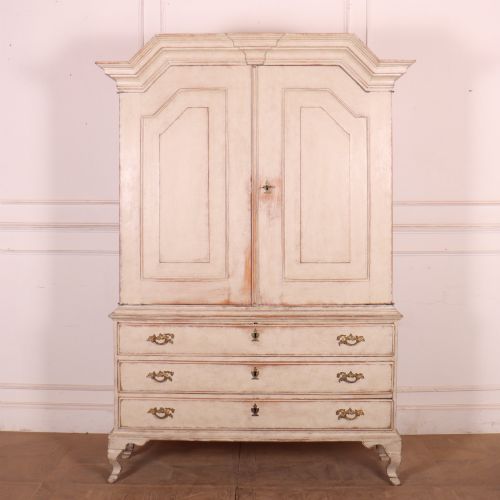


Off White Pine Cupboard
An off white pine cupboard brings practical storage and aged character to a room, drawing on centuries of vernacular tradition.
Off White Pine Cupboard
When you search for an off white pine cupboard, you are looking at utilitarian storage furniture finished in muted tones, ranging from crisp ivory to soft cream and distressed putty. These pieces originate primarily from British and Scandinavian country houses, spanning the eighteenth and nineteenth centuries.
The versions you are most likely to meet on this page include tall linen cupboards, housekeeper's cupboards, and smaller food cupboards. Formats vary from grand Scottish and English country storage units to compact Gustavian display cabinets and rustic sideboards.
Makers built these pieces for daily domestic utility in sculleries, kitchens, and bedchambers rather than formal reception rooms. Their enduring appeal lies in the way time softens both the timber and the original or layered painted surfaces.
Construction and materials
Makers built these pieces using solid pine as the primary timber, chosen for its workability and local availability in English and Scandinavian workshops. Boards were joined to create sturdy carcases, often fitted with iron hinges and brass hardware for everyday domestic service.
Surfaces were finished with paint, utilising traditional techniques that left layered brushmarks and subtle patination over the wood. Glass panels were occasionally integrated into upper sections for bookcase and display formats, while lower sections relied on solid timber doors.
Off White Pine Cupboard Retail Price Guide 2026
Typical asking prices for off white pine cupboard among the pieces listed under this phrase on Sellingantiques today, from the lower quarter to the upper quarter. They describe what is for sale here now, not the wider market.
The current selection spans the eighteenth and nineteenth centuries, featuring English, Scottish, and Swedish country pieces in painted pine.
Assessing quality and character
Quality in an off white pine cupboard rests in the integrity of the original construction and the honesty of the surface finish. Pieces retaining their original painted finish show a depth of colour and wear that later decorative overpainting simply cannot replicate.
Proportion and architectural detailing distinguish finer regional examples from basic utility pieces. Well-balanced cornices, original ironwork, and untouched interior shelving separate standard storage from exceptional vernacular pieces.
The Off White Pine Cupboard Glossary
- Gustavian
- A Swedish neoclassical style popular in the late eighteenth and nineteenth centuries, known for restrained ornamentation and pale painted finishes. It brings a lighter, more symmetrical aesthetic to country pine furniture.
- Housekeeper's cupboard
- A large storage piece traditionally used in country houses to store linens, preserves, and dry goods. These tall cupboards typically feature multiple doors and internal shelving.
- Scullery cupboard
- A utilitarian storage unit designed for use in the functional workrooms of a house. They are prized for their straightforward construction and honest utility.
- Patination
- The natural surface alteration that occurs through age, use, and cleaning over decades or centuries. It creates a soft lustre on painted wood and metal hardware.
- Vernacular furniture
- Domestic pieces made by local craftsmen for everyday use rather than following high-style academic designs. This tradition defines the character of country pine storage.
Off White Pine Cupboard: Frequently Asked Questions
What is an off white pine cupboard used for today?
These cupboards serve brilliantly as everyday storage for books, dinnerware, or linens in modern living spaces and kitchens. Their generous internal capacity helps keep rooms orderly while adding historical texture to an interior.
Because they originate from domestic working environments, their proportions fit naturally into hallways, dining rooms, and bedrooms. They offer practical utility without overwhelming a modern room scheme.
How do I date an antique pine cupboard?
Dating relies on examining construction methods, hardware types, and the composition of the timber boards. Hand-cut joints, wrought iron hinges, and early paint layers point towards eighteenth or nineteenth-century origins.
Stylistic cues also help narrow down the period, such as the neoclassical proportions found in Swedish Gustavian pieces versus the robust practicality of English and Scottish country furniture.
Are these cupboards made of solid pine?
Yes, traditional country furniture of this type was constructed using solid pine for both the structural carcase and the internal shelving. This timber provided a strong yet accessible material for regional cabinetmakers.
Makers occasionally incorporated secondary woods for backing boards or internal drawers, but the primary exterior surfaces remain solid pine beneath their painted finishes.
How do I care for a painted pine cupboard?
Keep the piece away from direct heat sources and dramatic humidity fluctuations to protect the aged timber and painted finish. Dust gently with a dry or slightly damp cloth without using harsh chemical cleaners.
Allowing the surface to age naturally preserves the character and subtle patination built up over generations of use.