
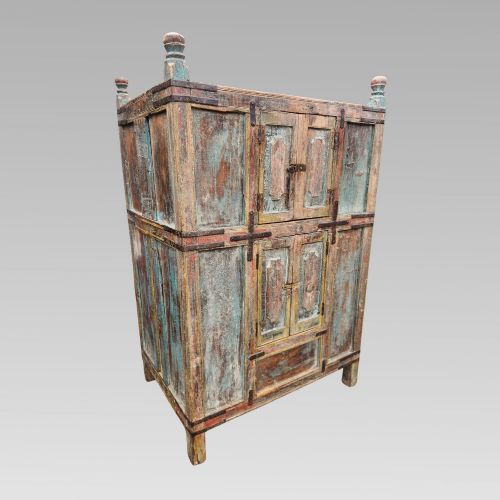
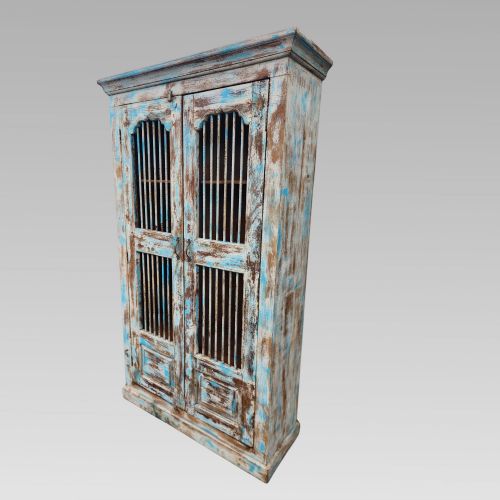
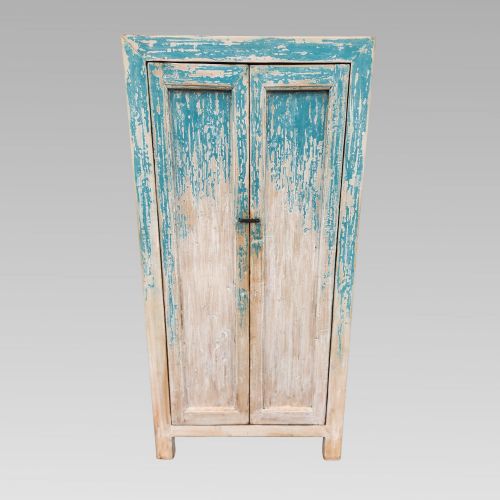


Distressed Blue Armoire
A distressed blue armoire brings character and practical storage to a room through painted wood and time-worn finishes.
Distressed Blue Armoire
A distressed blue armoire encompasses large storage cupboards, wardrobes, and linen cupboards finished in blue paint. These pieces range from eighteenth-century Welsh vernacular and Swedish furniture to nineteenth-century Scandinavian country items and traditional Indian pieces.
The versions most frequently met on this page combine functional storage interiors with painted wooden surfaces that show visible age. Buyers encounter tall double-door cupboards alongside smaller kitchen and housekeeper variants from various regional traditions.
How they were made
Construction relies primarily on solid timbers such as pine, teak, cedar, and reclaimed wood. Joinery techniques vary by region, joining heavy planks to form sturdy cabinets and wardrobes.
Surfaces receive layers of paint that age over decades or centuries. Iron and brass hardware, including hinges and latches, secure the doors on these storage cupboards.
Several cupboards retain stubborn iron latches that have outlived generations of keys.
What varies in quality
Quality rests in the integrity of the timber framing and the character of the painted surface. Pieces showing authentic regional vernacular styles often display superior proportion and hand-finished details.
The harmony between the original structure and the patinated blue finish dictates the visual success of each cabinet. Finer examples retain their original iron or brass fittings alongside robust internal shelving.
The Distressed Blue Armoire Glossary
- Armoire
- A large wardrobe or cupboard, traditionally used for storing clothes. These pieces often feature double doors and internal shelving.
- Vernacular
- Architecture and furniture built by local craftsmen using traditional regional methods and materials. Such pieces reflect the specific domestic needs of their area.
- Pine
- A soft timber widely utilised in European country furniture. It takes paint readily and forms the basis of many traditional Swedish cupboards.
- Patina
- The surface appearance altered by age, use, and polishing. In these painted pieces, it manifests as worn areas revealing underlying layers.
Distressed Blue Armoire: Frequently Asked Questions
What is a distressed blue armoire?
A distressed blue armoire is a large wooden storage cabinet or wardrobe finished in blue paint with aged surfaces. These pieces serve as functional storage while adding distinct decorative colour to an interior space.
Origins span European country traditions and Indian workshop styles, utilising materials like pine, teak, and cedar.
How were these cupboards used?
Historically, these cupboards stored household textiles, clothing, and kitchen provisions. Their generous interior space kept items protected from dust and dampness in traditional homes.
Today, they adapt easily to modern rooms for wardrobe use, linen storage, or general household organisation.
How do I live with one?
Placing an armoire requires measuring both floor space and ceiling height, as these pieces are often substantial. They function effectively in bedrooms, hallways, or living areas as a focal point.
Allowing adequate clearance for wide doors ensures practical daily access to the interior shelves or hanging space.
How do I tell periods apart?
Eighteenth-century pieces often display regional British or Swedish vernacular joinery with hand-forged iron fixings. Nineteenth-century examples frequently show Scandinavian country or folk art painting styles.
Early twentieth-century items incorporate reclaimed timbers, particularly teak and cedar, reflecting different geographic workshops.