






Desktop Stationery Organiser
A desktop stationery organiser keeps letters, papers, and ink neatly sorted on a writing desk.
Desktop Stationery Organiser
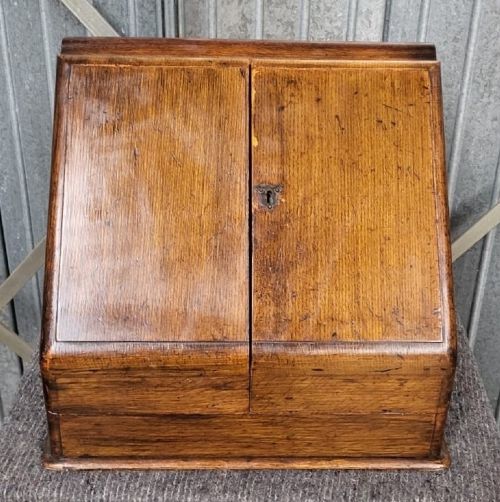
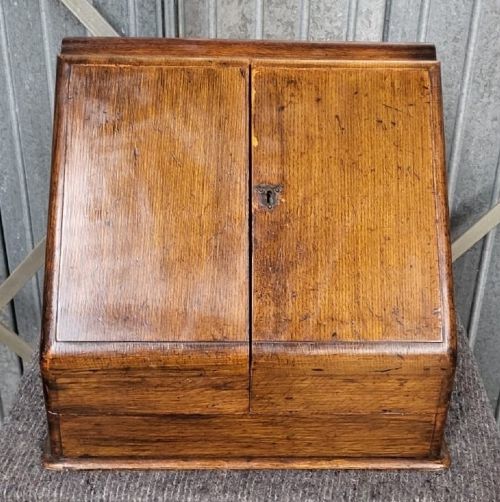
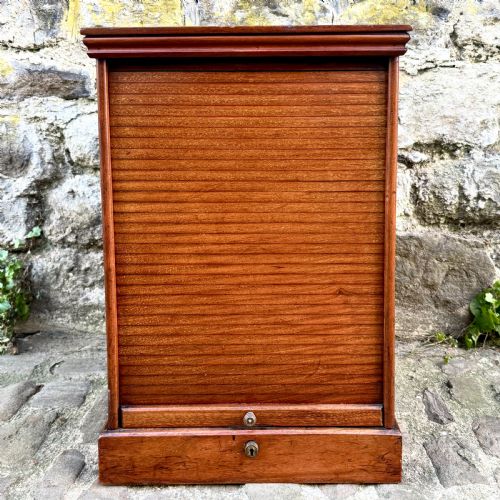
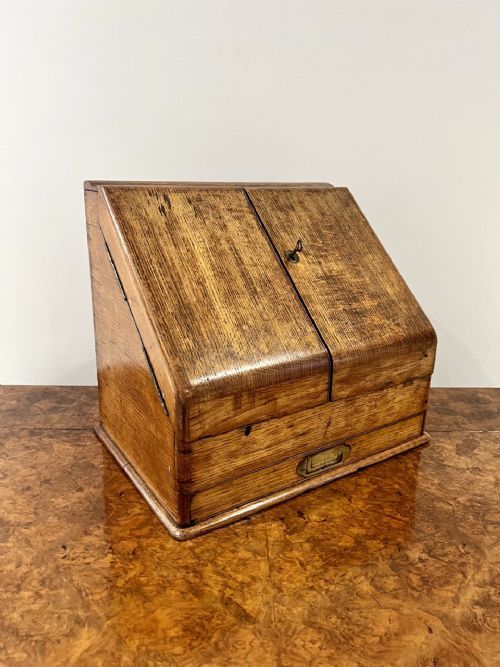
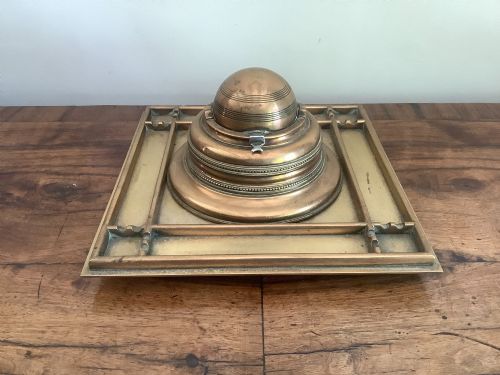
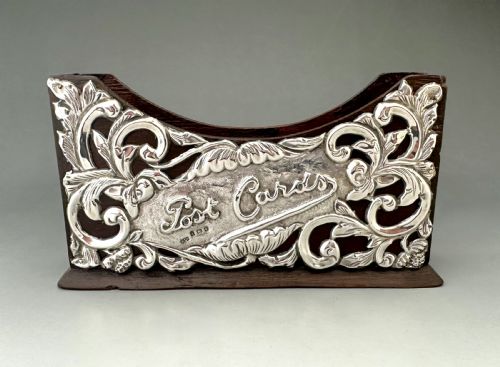
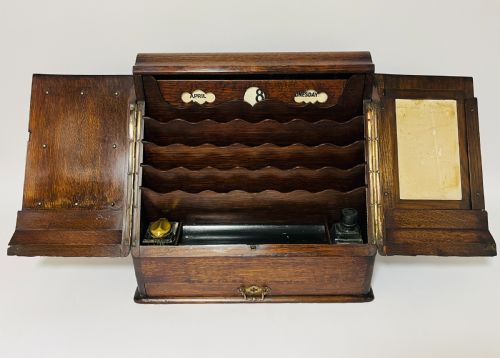
A desktop stationery organiser takes the form of stationery boxes, cabinets, letter racks, and cartonnieres designed to hold correspondence. These pieces serve to keep working surfaces tidy while adding architectural presence to a room.
Victorian and Edwardian examples predominate here, constructed from robust woods like oak and mahogany alongside more decorative materials such as rosewood and walnut. Such items reflect the heavy volume of daily letter writing in period households and offices.
Earlier Georgian items also appear, including satinwood boxes and sloped chests converted or built for papers. These foundational forms demonstrate how desk furniture evolved to meet shifting clerical needs across the centuries.
Materials and construction
Cabinetmakers utilised hardwoods such as oak, mahogany, walnut, and rosewood for structural durability, often enhancing surfaces with satinwood veneers, brass mounts, and mother-of-pearl inlay. Glass ink bottles and silver mounts frequently accompany these wooden housings.
Joinery methods range from dovetailed box construction to framed panels on drop-front cabinets and tiered letter boxes. Many incorporate specialised internal compartments, adjustable dates, and secret drawers operated by hidden latches.
Desktop Stationery Organiser Retail Price Guide 2026
Typical asking prices for desktop stationery organiser among the pieces listed under this phrase on Sellingantiques today, from the lower quarter to the upper quarter. They describe what is for sale here now, not the wider market.
The listings demonstrate a strong presence of nineteenth-century oak and walnut stationery cabinets alongside earlier eighteenth-century satinwood and mahogany boxes.
Judging execution and finish
Quality rests in the precision of the timber selection, such as figured walnut or richly grained oak, paired with crisp marquetry and secure brass hardware. Inferior pieces rely on plain surfaces with minimal internal fittings.
The refinement of internal divisions, working locks, original glass inkwells, and maker signatures distinguish standard utility boxes from high-status library accessories commissioned for wealthy households.
F Waller
The Desktop Stationery Organiser Glossary
- Cartonnier
- A desktop cabinet fitted with multiple horizontal compartments or pigeonholes designed for holding papers and documents. These pieces often feature decorative ormolu mounts in continental revival styles.
- Cheveret
- A small mobile writing table featuring a small set of drawers or a stationery stand mounted on top. This form emerged during the eighteenth century for light boudoir correspondence.
- Ormolu
- Gilded bronze applied as decorative mounts and feet on nineteenth-century cabinets and boxes. The technique adds metallic contrast to dark woods like rosewood and walnut.
- Marquetry
- Inlaid patterns of contrasting wood veneers used to decorate the exterior of stationery boxes and cabinets. Artisans cut various timber species to create floral or geometric motifs.
Desktop Stationery Organiser: Frequently Asked Questions
What is a desktop stationery organiser?
A desktop stationery organiser is a container, cabinet, or rack designed to hold letters, envelopes, and writing materials in an orderly fashion. These items range from simple open wooden letter racks to complex drop-front cabinets with internal compartments.
Such pieces sat upon writing tables and desks in period homes and offices, keeping daily correspondence sorted and ready for use.
How were stationery boxes used?
Stationery boxes held blank writing paper, envelopes, stamps, and incoming or outgoing mail. Many included built-in perpetual calendars, inkstands, and small drawers for nibs and seals.
By keeping these items enclosed, the boxes protected delicate paper from dust and moisture while maintaining a neat surface on the desk.
How do I identify a Victorian stationery cabinet?
Victorian stationery cabinets frequently feature heavy oak, walnut, or coromandel construction with brass mounts, sloping drop-fronts, and fitted pigeonholes inside. They often date from the mid to late nineteenth century.
Details such as Gothic revival carving, Arts and Crafts strapwork, or inlaid brass escutcheons help narrow down the specific decades of manufacture.
Are these organisers suitable for modern desks?
These organisers function well on contemporary work surfaces for holding mail, notebooks, and modern correspondence. Their compartments accommodate letters and cards just as they did over a century ago.
Placing an antique box on a desk introduces traditional cabinetmaking materials like mahogany and oak into a modern workspace.