

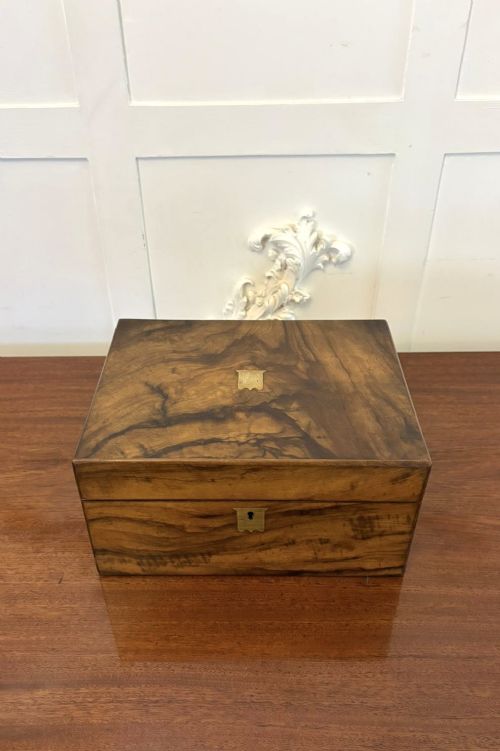

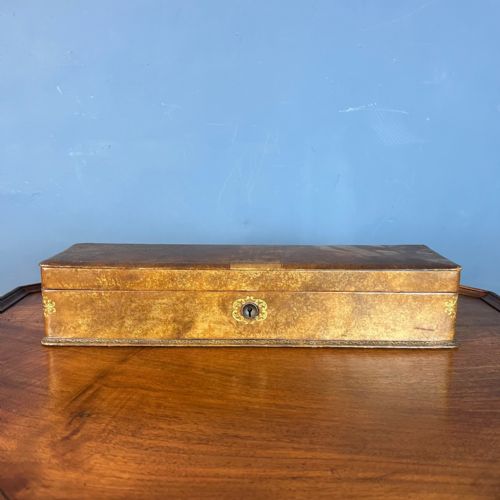


Desktop Stationery Box
A desktop stationery box keeps correspondence and writing implements organised while adding period character to a working surface.
Desktop Stationery Box
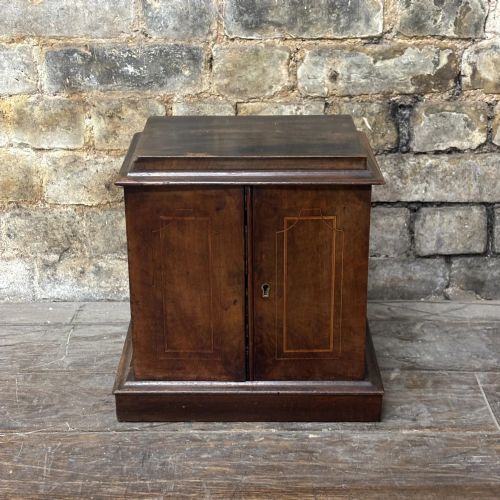
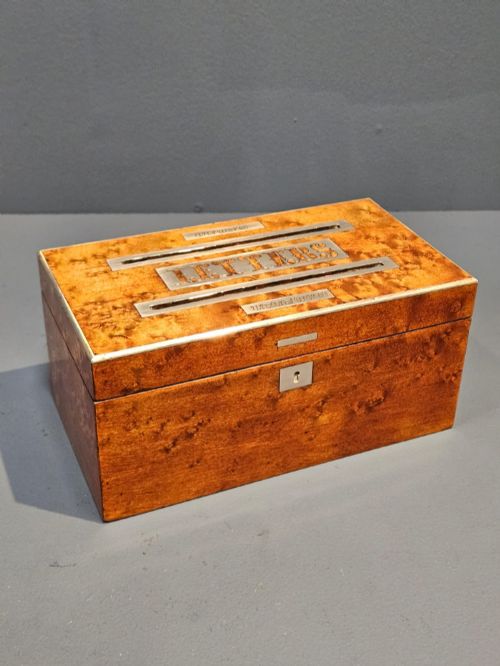
A desktop stationery box serves as a functional receptacle for papers, letters, and writing implements, keeping a desk tidy and organised. These pieces emerge in various forms, from simple table cabinets and letter boxes to elaborate writing slopes and fitted compartments.
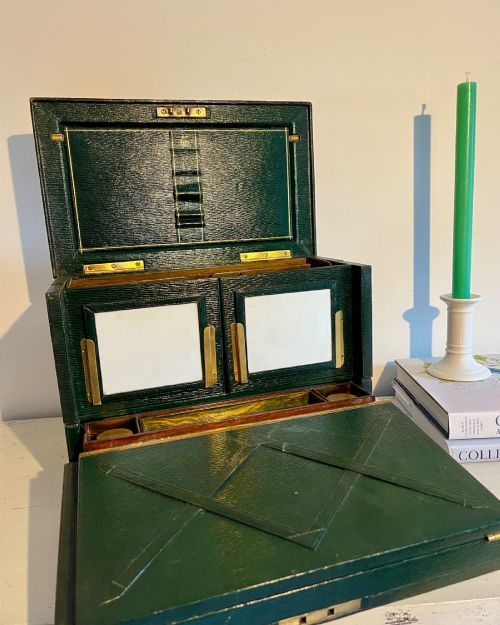
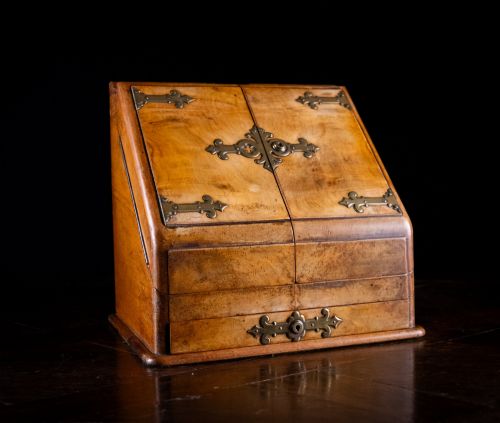
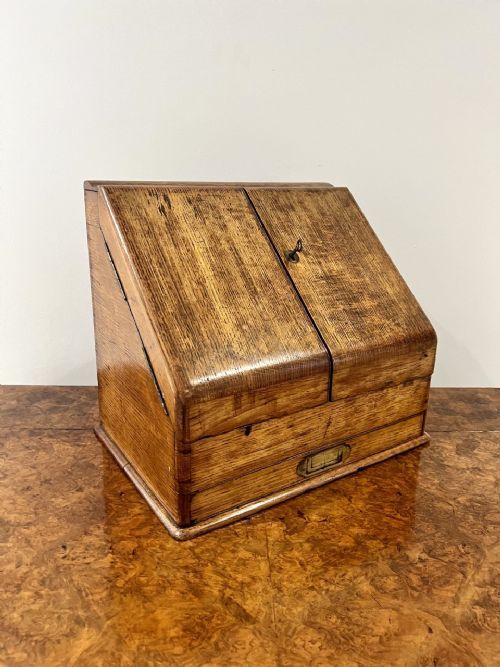
The versions met most frequently on this page date from the nineteenth century and the Edwardian era, constructed in styles ranging from plain oak to ornate Victorian Gothic revival and Arts and Crafts designs.
Materials and Construction
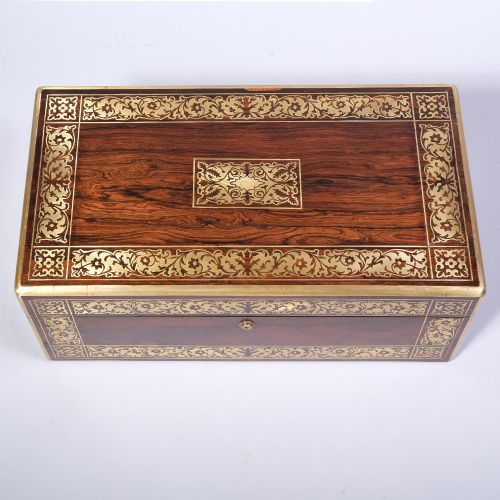
Cabinet makers utilised a variety of timbers including oak, mahogany, walnut, and satinwood, often accentuating the grain with burr veneers or inlay. Many examples feature brass mounts, hinges, and bindings to reinforce corners and secure lids.
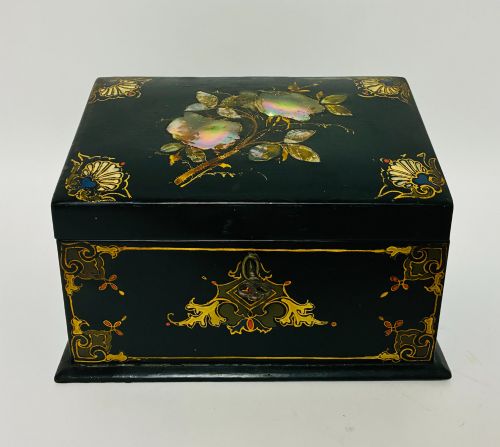
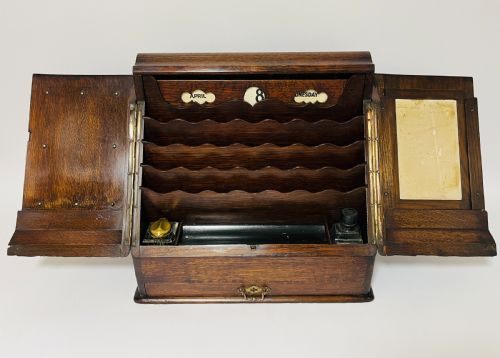
Specialised techniques such as Tunbridge ware, pokerwork, marquetry, and carved bone embellishments appear on specific decorative items, while internal partitions and secret drawers provide tailored storage for paper and ink.
Secret drawers tucked beneath stationery racks remind us that Victorians loved hiding their love letters.
Assessing Quality
Quality rests upon the selection of timber and the precision of the joinery, with figured veneers and solid brass hardware marking out superior examples. The complexity of the interior fittings, such as secret drawers and integrated letter racks, also distinguishes finer pieces from basic desk tidies.
The integration of decorative elements like hand-carved details, marquetry, or porcelain plaques demonstrates the maker's skill and elevates the status of the box within its period.
The Desktop Stationery Box Glossary
- Writing slope
- A portable box with a slanted lid designed to provide a writing surface and internal storage for paper. It often folds out flat when opened.
- Tunbridge ware
- A form of decorative woodwork characterised by tiny mosaic tiles made from different coloured woods to form pictorial designs. This technique is typical of nineteenth-century items.
- Marquetry
- The art of applying pieces of veneer to a structure to form decorative patterns and pictures. Craftsmen utilise various natural wood tones to create contrast.
- Pokerwork
- A method of decorating wood by burning designs onto the surface with a heated tool. This technique appears on several Arts and Crafts pieces.
- Stationery cabinet
- An upright desk accessory featuring tiered compartments and doors to hold paper and envelopes upright. These typically date from the Victorian and Edwardian periods.
Desktop Stationery Box: Frequently Asked Questions
What is a desktop stationery box?
A desktop stationery box is a container designed to hold paper, envelopes, and writing equipment on a table or desk.
These pieces range from simple wooden letter racks to large cabinets with internal dividers and secret drawers.
How do I date a stationery box?
Dating relies on identifying the prevailing timber choices, construction techniques, and decorative styles associated with specific periods.
Victorian pieces often display brass bindings or walnut veneers, whilst Edwardian examples frequently utilise plain or marquetry-inlaid oak.
What woods were used for these boxes?
Cabinet makers utilised native and exotic timbers including oak, mahogany, walnut, satinwood, and coromandel.
Many pieces feature decorative veneers such as burr walnut or burr yew to highlight the natural grain.
Are writing slopes the same as stationery boxes?
A writing slope incorporates a sloping lid that opens to reveal a desk surface and storage compartments for ink and paper.
A stationery box is generally upright, designed to store letters and correspondence rather than provide an immediate writing platform.