
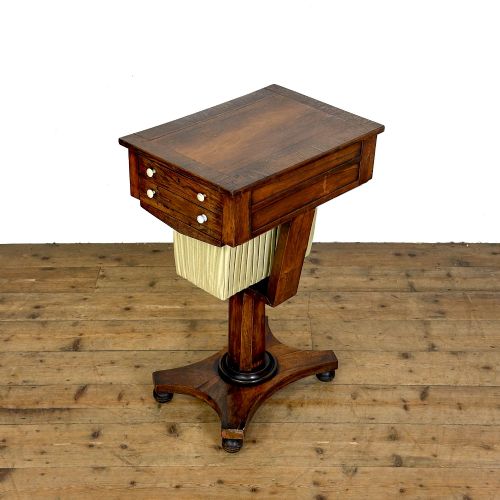
19th Century Desk Box
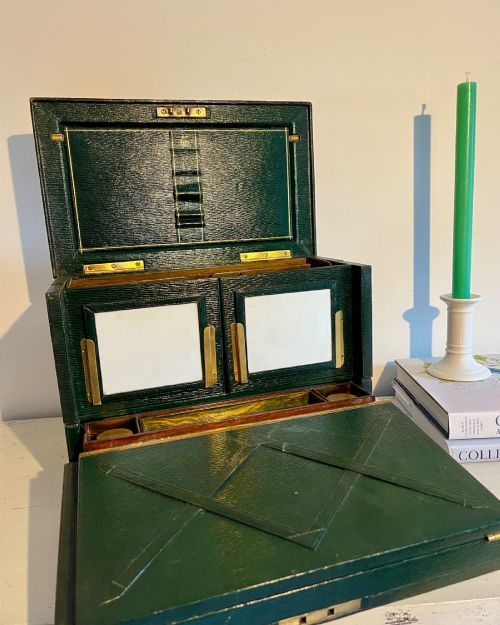
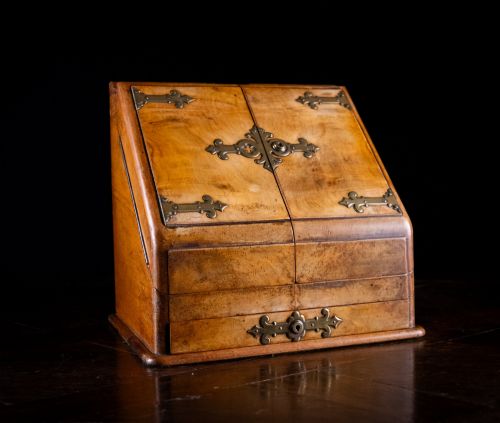
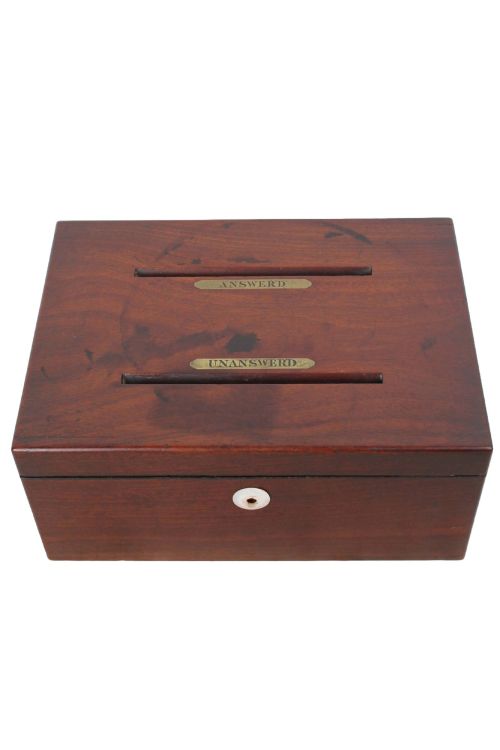
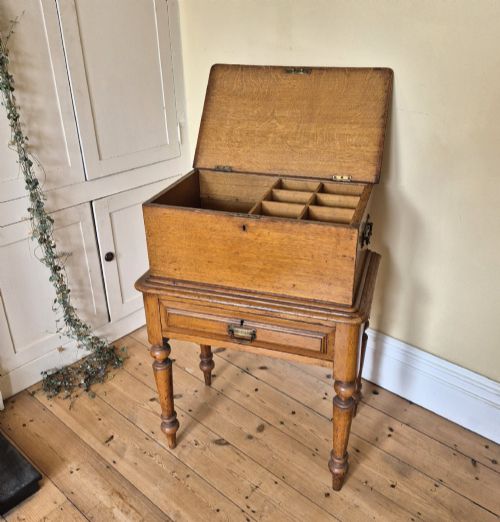
A 19th century desk box brings order to correspondence, offering a solid timber housing for pens, paper, and private documents.
19th Century Desk Box
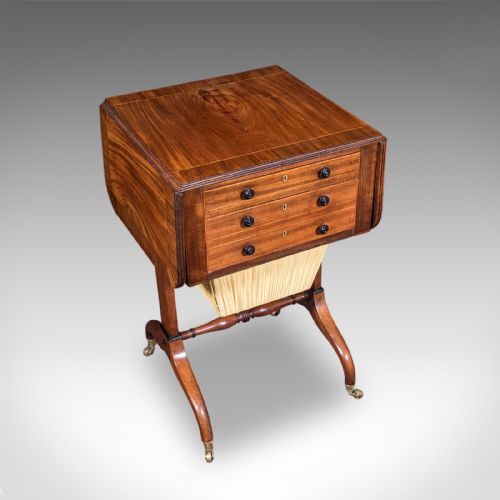
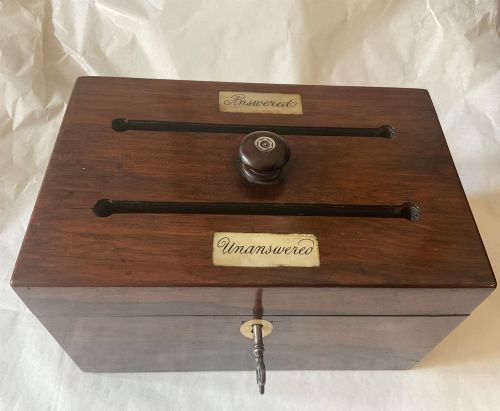
When searching for a 19th century desk box, buyers encounter an array of writing slopes, stationery cabinets, letter boxes, and campaign chests spanning the Georgian, Regency, and Victorian eras. These items served as portable or desktop secretaries for keeping correspondence organised before the era of mass-produced office furniture.
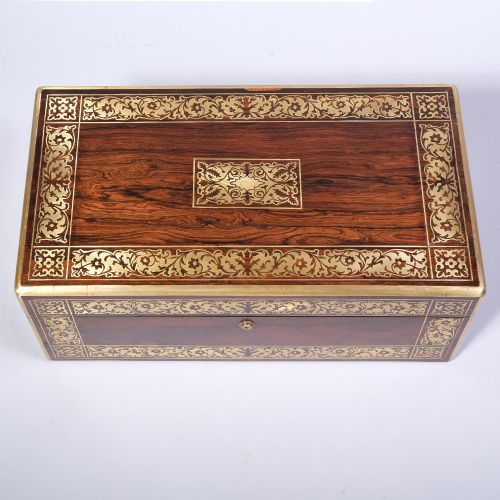
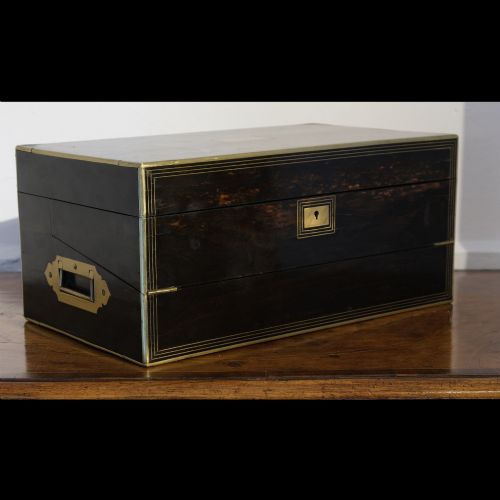
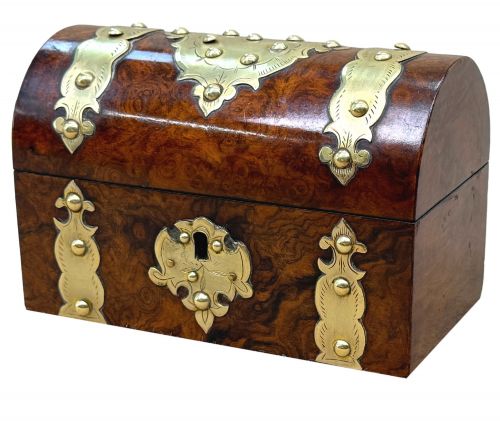
The most common examples on this page are rosewood and mahogany writing slopes, alongside burr walnut stationery boxes. Pieces frequently incorporate brass banding or inlay, reflecting the period's taste for decorative durability, particularly in military campaign styles designed for travel.
Materials and construction
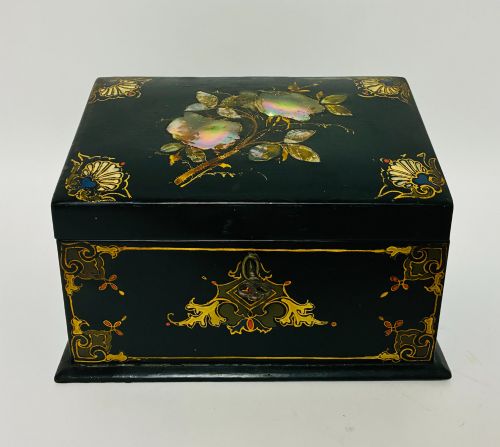
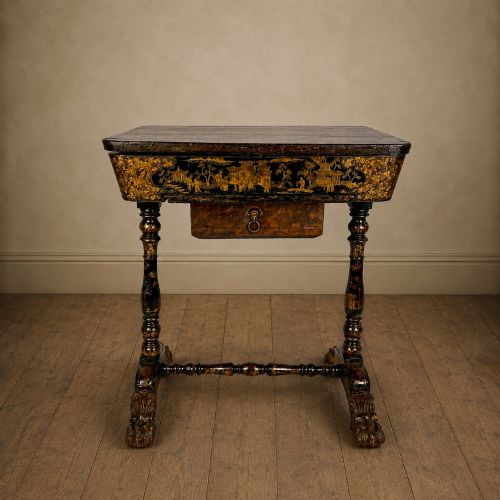
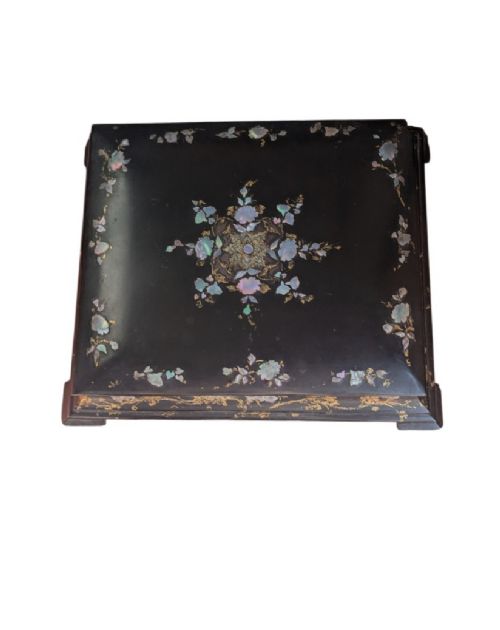
Cabinet makers built these pieces using dense hardwoods like mahogany, rosewood, and walnut, often accentuating the surfaces with burr walnut veneers or contrasting brass inlays. Specialised techniques such as Tunbridge Ware mosaic work and black-and-gilt lacquer also appear across the selection.
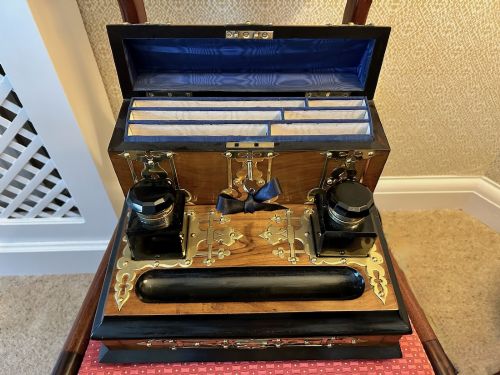
Internal fittings required precise joinery to accommodate folding writing surfaces lined in fabric, hidden compartments, inkwells, and pen trays. Brass corners, campaign handles, and lockable lids were integrated to withstand regular transport and secure private papers.
Materials in these listings include rosewood, mahogany, burr walnut, lacquer, camphor wood, and tortoiseshell.
Distinctions in quality
Quality rests in the choice of timber figure, the precision of the brass inlay, and the integrity of the internal compartments. Superior examples utilise densely grained burr walnut or heavily figured rosewood paired with thick brass mounts rather than thin plated alternatives.
The sophistication of the mechanism and internal layout separates standard utilitarian boxes from finer presentation pieces. Original fitted leather inserts, secret drawers, and robust locking systems indicate high-tier workshop production.
Edmund Nye
The 19th Century Desk Box Glossary
- Writing slope
- A portable box with a hinged, slanted lid that folds down to form a writing surface, often lined with fabric or leather.
- Campaign box
- A piece built for travel with recessed brass handles and reinforced corners to endure transit.
- Tunbridge Ware
- Small wooden items decorated with intricate mosaic patterns made from tiny wood blocks of various natural colours.
- Stationery box
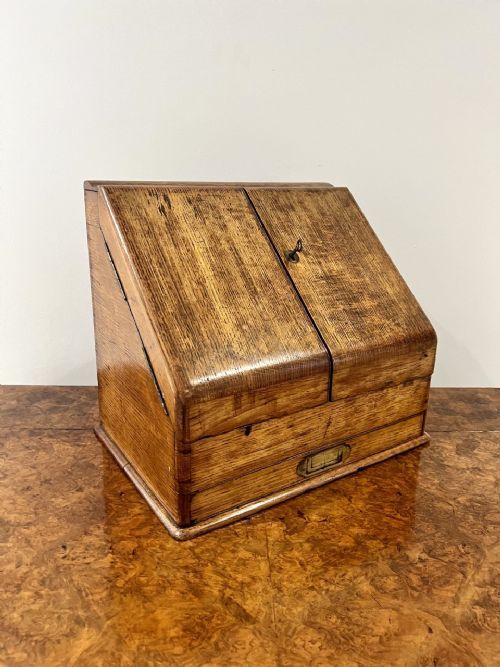
- A desktop cabinet designed to hold envelopes, paper, and writing implements upright in tiered compartments.
19th Century Desk Box: Frequently Asked Questions
How were writing slopes used?
Writing slopes served as portable writing desks that could be placed on a dining table or carried during travel. The hinged lid opened to reveal a slanted writing surface, compartments for inkwells, and storage for paper.
Many contained hidden drawers or secret compartments accessed by removing partition panels, securing private letters away from prying eyes.
What woods are common in these boxes?
Mahogany, rosewood, and walnut dominate the construction of these pieces, often selected for their deep grain and durability. Burr walnut and figured rosewood were frequently utilised on luxury examples to provide decorative surface patterns.
In addition to solid timbers, cabinet makers applied brass banding, tortoiseshell, and specialised decorative techniques like lacquer and Tunbridge Ware mosaic.
How do I identify campaign styles?
Campaign boxes feature structural elements designed for portability and military use during the 19th century. Look for flush-mounted brass handles, reinforced brass corners, and durable timber construction intended to withstand rough journeys.
These items are typically built in sections or fitted with robust locking mechanisms to protect contents while on the move.