


Desktop Specimen Cabinet
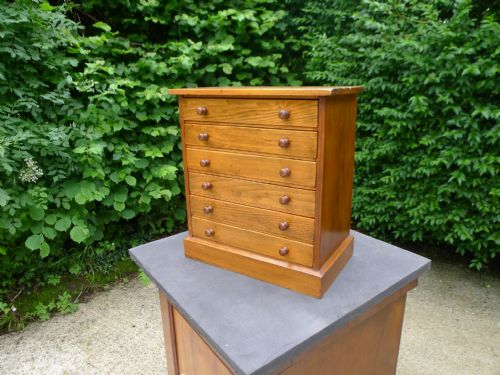
Desktop specimen cabinet pieces are compact tabletop chests designed to organise small treasures, offering period craftsmanship from walnut, oak and mahogany.
Desktop Specimen Cabinet
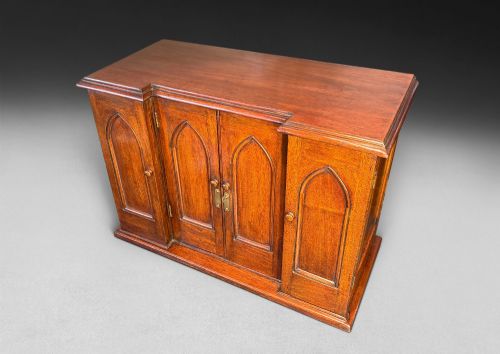
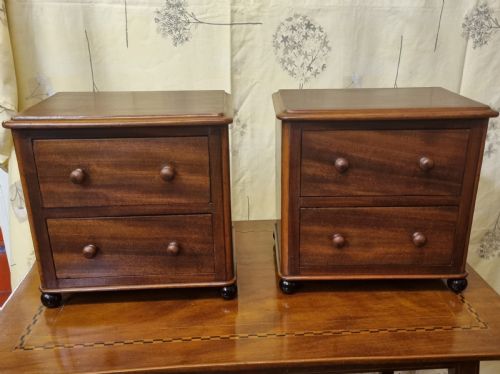
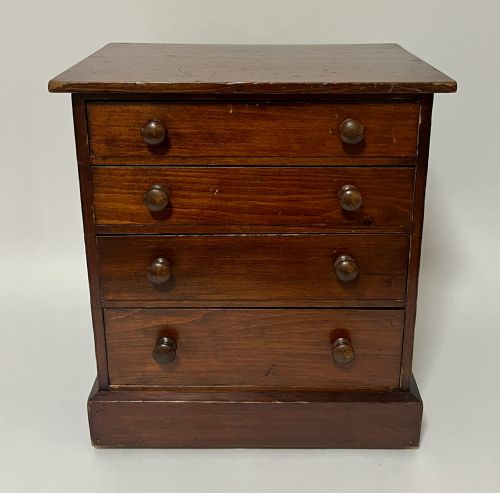
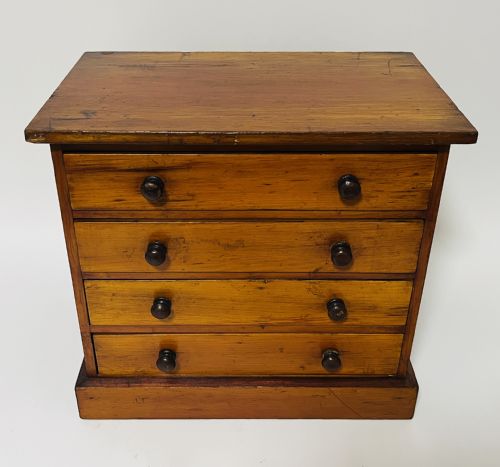
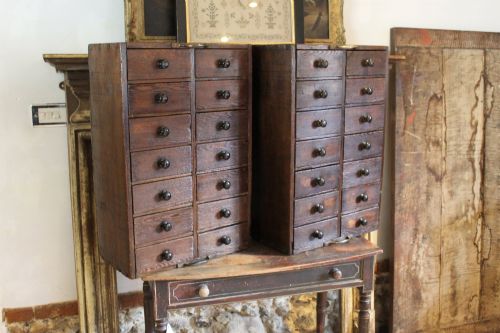
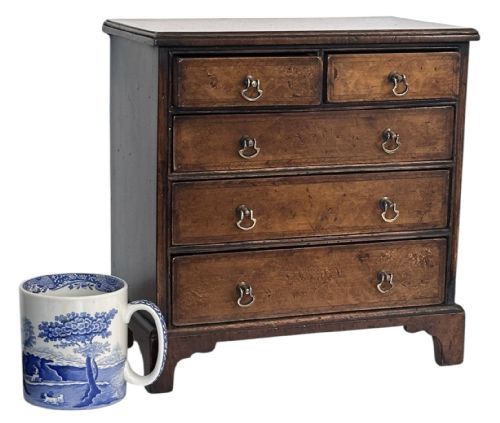
A desktop specimen cabinet takes the form of a miniature chest of drawers or tabletop cabinet, intended for holding natural history specimens, coins, or small collectables. You will find these pieces spanning Georgian, Victorian, Edwardian, and Regency periods, manifesting as collectors cabinets, miniature furniture, and tabletop chests.
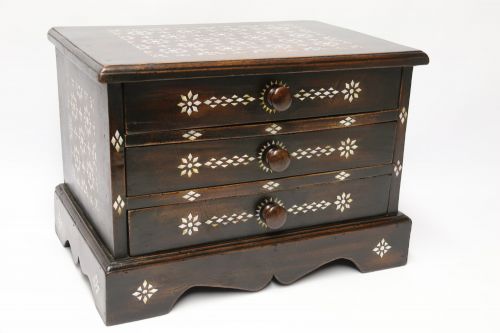
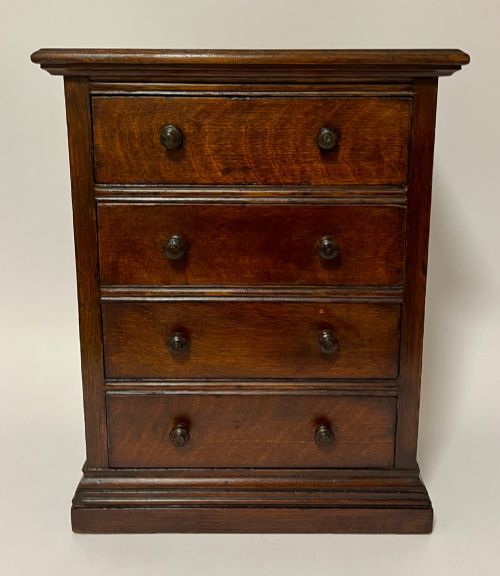
The materials span mahogany, oak, walnut, pine, and exotic woods like burr walnut and rosewood. Examples include Gothic oak designs, Arts and Crafts sentry chests, and inlaid Anglo-Indian chests from various nineteenth and early twentieth century dates.
Materials and Construction
Cabinet makers constructed these small storage cabinets using dense hardwoods such as mahogany, oak, and walnut, frequently selecting burr walnut or satinwood veneers for decorative effect. Carcases often feature tightly fitted multi-drawer banks designed to slide smoothly within confined dimensions.
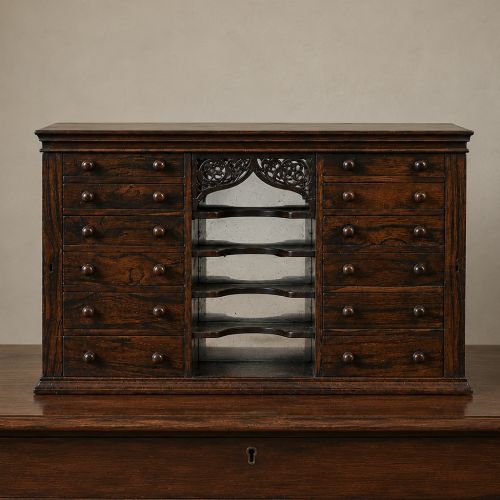
Hardware plays a functional role in construction, utilising brass drop handles, carrying side handles, and fitted locks with keys. Pine and deal appear internally as secondary woods for drawer linings, while glass panels and mirrored sections provide display capability in specific tabletop versions.
A tiny petrified wood specimen sits on a perspex stand, waiting out the millennia.
Craftsmanship and Proportion
Quality rests in the selection of timber figures, such as highly figured English oak or burr walnut, matched with precise veneer work and delicate inlay. Superior examples display fine dovetail joints on the drawers and well-fitted internal configurations that operate without binding.
Hardware selection also marks distinction, where heavy brass drop handles and integrated locking mechanisms with working keys indicate higher-grade production. The overall architectural proportion, from miniature Wellington chests to Gothic revival table cabinets, determines the refinement of the piece.
D Napier And Sons
The Desktop Specimen Cabinet Glossary
- Wellington chest
- A tall, narrow chest of drawers characterised by a hinged locking stile on one side that secures all drawers simultaneously. These compact versions sit easily upon a desk or tabletop.
- Specimen cabinet
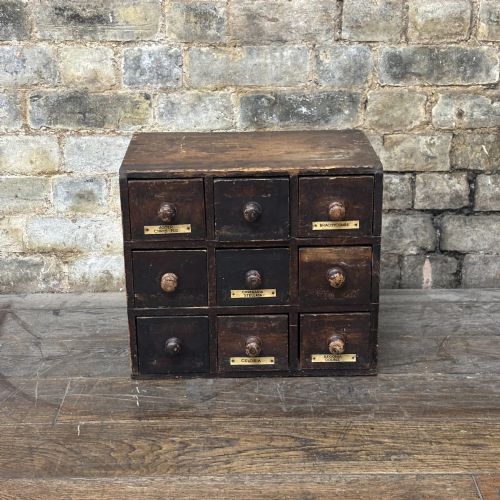
- A small chest fitted with numerous shallow drawers designed for housing natural history items, insects, minerals, or coins. They protect delicate objects behind closed doors or tightly fitted drawer banks.
- Deal
- A soft timber cut from pine or fir trees, frequently utilised for the secondary framing and internal drawer construction of nineteenth-century cabinet work.
- Apprentice piece
- A miniature item of furniture created by a craftsman to demonstrate skill and secure trade certification. These small chests mirror the joinery techniques of full-scale furniture.
- Inlay
- A decorative technique where contrasting woods, brass, or shell are embedded into the primary surface of the cabinet to create patterns.
Desktop Specimen Cabinet: Frequently Asked Questions
What were desktop specimen cabinets originally used for?
These cabinets served scholars and collectors as secure storage for delicate items including geological samples, botanical specimens, insects, and coins. The shallow drawers kept collections sorted and protected from light and dust.
Over time, owners also repurposed them for jewellery, cigars, and correspondence, adapting the multi-drawer interiors to personal domestic storage needs.
How do I date a Victorian specimen cabinet?
Dating relies on examining timber choices, construction methods, and hardware styles. Victorian pieces frequently employ solid mahogany, oak, or burr walnut with hand-cut dovetails and brass drop handles.
Stylistic cues such as Gothic revival mouldings or Arts and Crafts influences help narrow the manufacturing decade within the broader nineteenth-century span.
Where should I place one in my home?
Their compact tabletop proportions make them well suited for placement on top of desks, sideboards, or chests of drawers where they do not consume floor space. They function effectively as focal points in studies or libraries.
Position them away from direct sunlight and strong heat sources to protect historic wood finishes, veneers, and internal drawer linings from drying out.
How are miniature chests different from standard drawers?
Miniature chests replicate the exact proportions, joinery, and styling of full-size furniture on a reduced scale for desktop or tabletop use. They require specialised miniature hardware and precise carpentry to maintain structural integrity.
Many were built as apprentice pieces or traveller samples, meaning they share the same material quality and construction standards as larger period furniture.