
Antique Wood Collector Chest
An antique wood collector chest organises small specimens and curiosities, combining dense banks of drawers with disciplined historic timber work.
Antique Wood Collector Chest
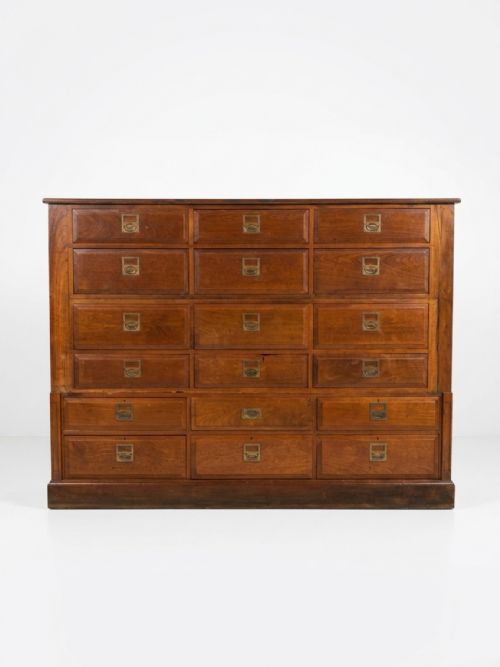
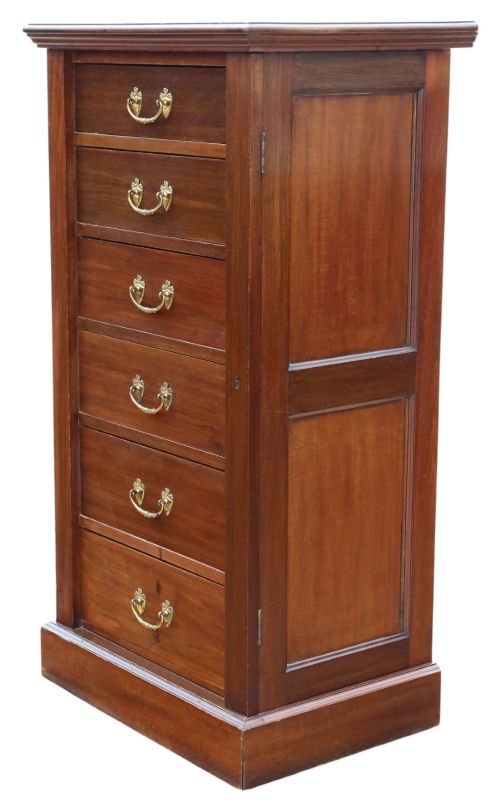
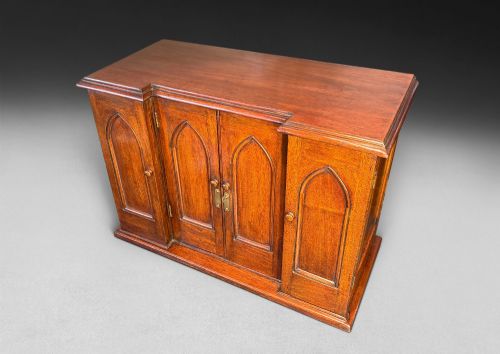
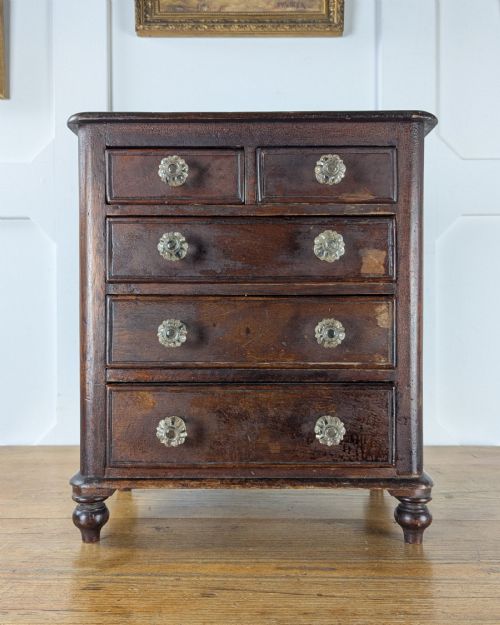
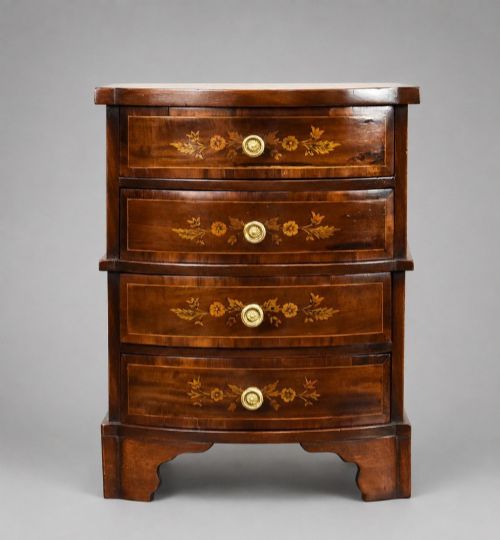
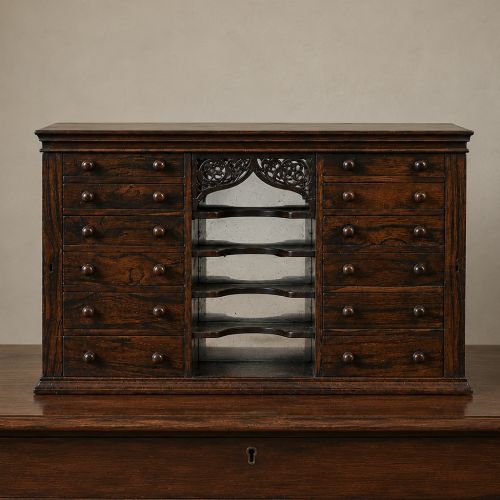
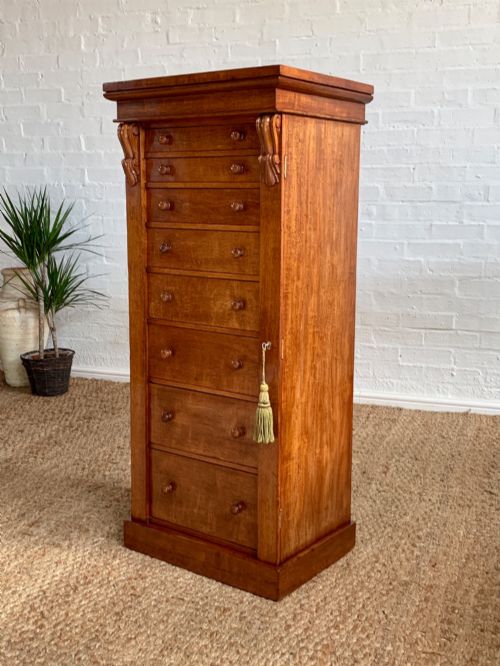
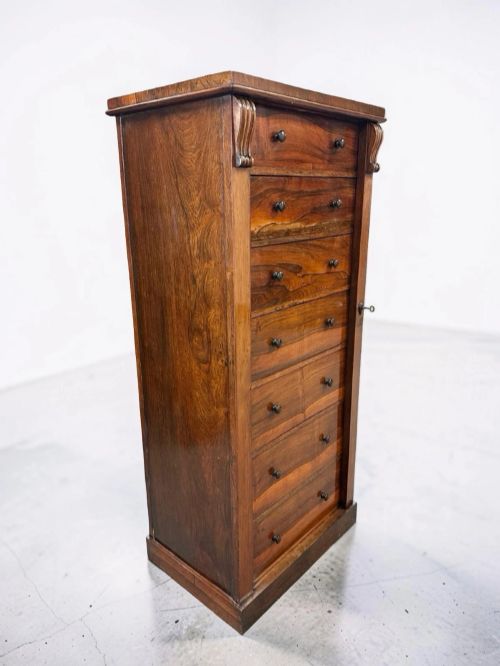
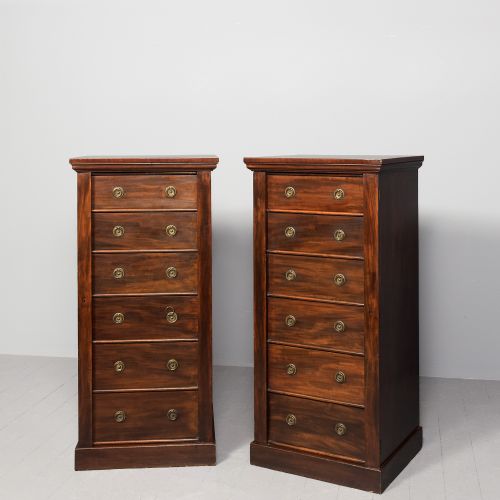
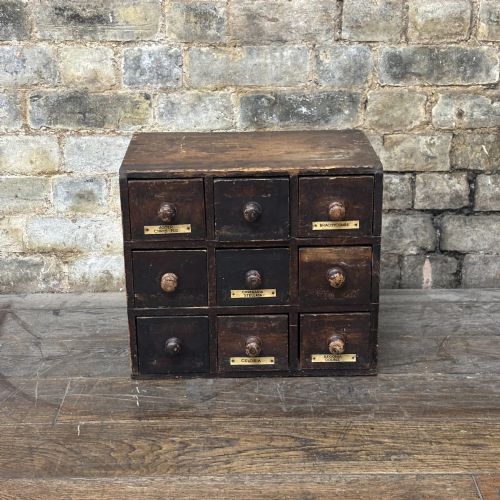
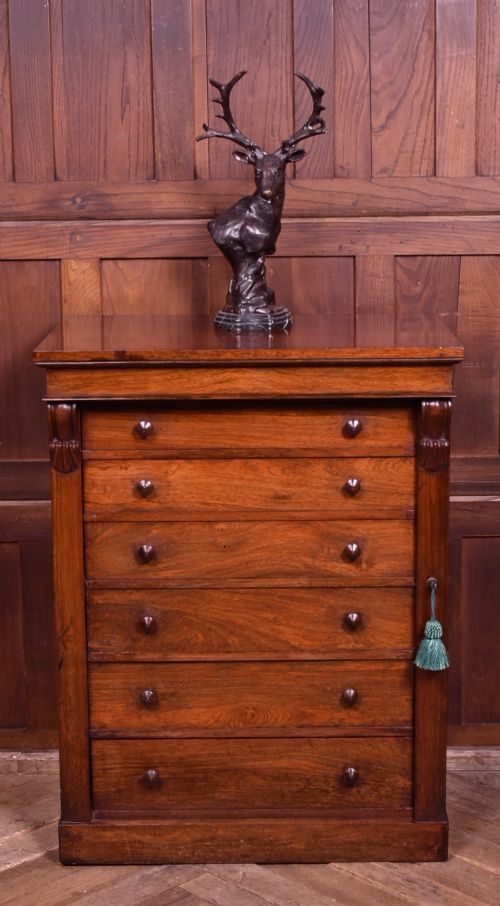
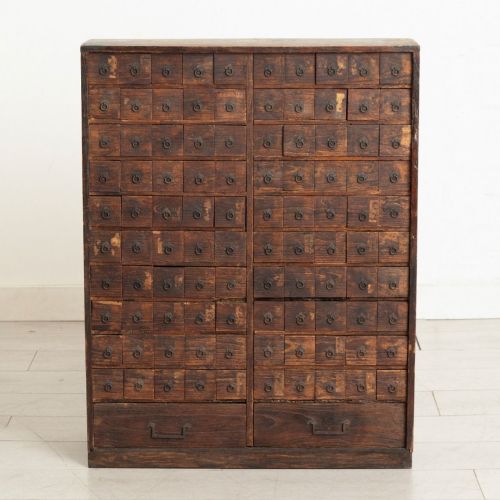
An antique wood collector chest brings together small-scale drawer units designed to house specimens, miniatures, and precious objects. These pieces range from towering Wellington chests and multi-drawer banks to compact table-top cabinets.
The versions most commonly met on this page belong to the Victorian and nineteenth-century periods, alongside Georgian and occasional seventeenth-century examples. Formats stretch from apothecary banks and watch repairer chests to dedicated microscope slide cabinets and floor-standing folio furniture.
Makers constructed these units in mahogany, rosewood, oak, walnut, and pine, often incorporating specialised internal locking mechanisms or label holders to sort contents with precision.
How these chests were made
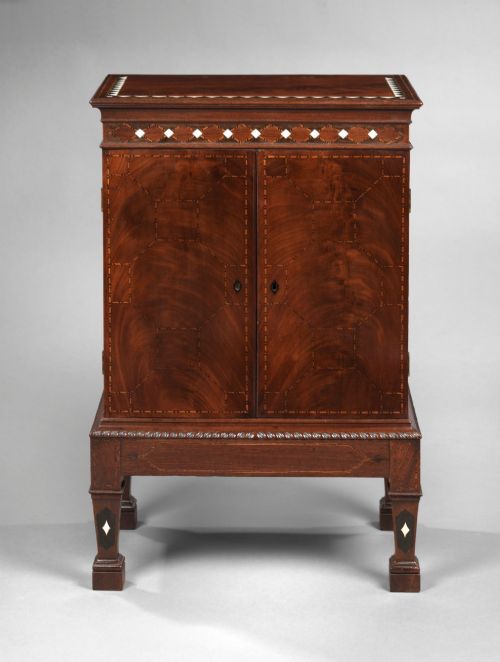
Cabinet makers utilised dense hardwoods such as mahogany, rosewood, and walnut, frequently selecting figured grains, burr veneers, and parquetry. These external timber choices provide stability and a decorative surface across small drawer fronts and panelled doors.
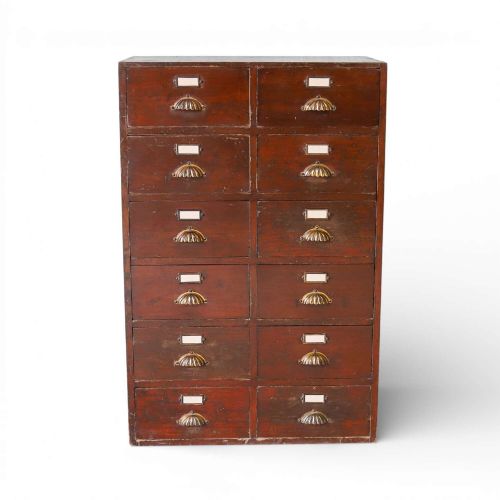
Construction relies on tight-fitting multiple drawer configurations, hinged locking stiles on Wellington designs, and occasional specialist additions like pewter inlay, mother of pearl, or brass shell pulls.
Surfaces receive hand-applied finishes that highlight the natural grain of the wood, while internal runs maintain exact tolerances to slide numerous small drawers smoothly without binding.
Listings feature woods including mahogany, rosewood, walnut, oak, pine, teak, amboyna, and burr yew across multiple centuries.
What varies in quality
The distinction between ordinary utility storage and exceptional cabinet work rests in timber selection and the complexity of internal arrangement. High-end examples feature figured mahogany, burr walnut, or exotic kingwood veneers paired with meticulous internal drawer fits.
Hardware and locking mechanisms separate standard production from finer workshop output. Original brass label holders, functioning locking stiles, turned knobs, and specialised bone or shell pulls indicate superior original commissioning.
The scale and ambition of the piece define its standing, moving from simple stained pine specimen boxes to multi-drawer folio cabinets and signed workshop productions boasting dozens of precisely fitted internal trays.
BRADY OF EDMONTON·CHARLES WILLIAM SCHOFIELD·S. MORDAN & CO
The Antique Wood Collector Chest Glossary
- Wellington chest
- A tall, slender chest of drawers featuring a hinged locking stile on one side that secures all drawers when locked. This locking mechanism prevents unauthorised access to valuable contents.
- Apprentice piece
- A miniature item of furniture created by a craftsman to demonstrate skill level for guild admission or trade qualification. These scale models replicate full-sized chests with exact joinery.
- Parquetry
- Geometric mosaic woodwork arranged in patterns using various coloured wood veneers. It creates decorative geometric surfaces on cabinet doors and drawer fronts.
- Specimen cabinet
- A specialised storage unit containing numerous shallow drawers designed to hold natural history items, coins, or small artefacts. Interiors often feature glass-topped trays or fitted compartments.
- Folio cabinet
- A large storage piece built to hold flat papers, prints, or drawings securely. These floor-standing or table units provide wide, shallow drawer space.
Antique Wood Collector Chest: Frequently Asked Questions
What were antique wood collector chests used for?
These chests stored delicate items such as natural history specimens, microscope slides, coins, jewellery, and watch parts. Their numerous shallow drawers kept small objects separated and organised.
Collectors and specialists relied on them to protect fragile items from light, dust, and handling while keeping extensive reference collections close at hand.
What is an apprentice piece chest?
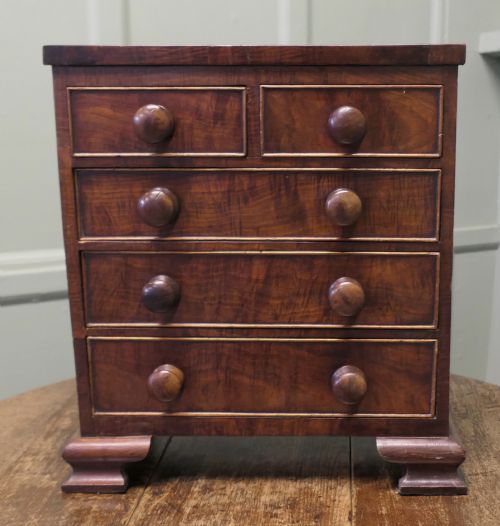
An apprentice piece is a small-scale model of a full-sized chest of drawers. Trainee craftsmen built them to prove their mastery of dovetailing, turning, and drawer fitting.
Despite their diminutive size, they display the exact same construction standards and timber choices as larger domestic furniture of the period.
How do I live with a multi-drawer cabinet?
These cabinets suit modern interiors as functional storage for small collections, desk supplies, or jewellery. Place them on sturdy tables or floor surfaces away from direct heat sources.
Ensure drawers are pulled straight out to preserve the internal runner guides and maintain the smooth operation of the historic timber work.
How do I tell periods apart in these chests?
Georgian and Regency pieces lean toward clean mahogany lines, brass bail handles, and architectural proportions. Victorian and Edwardian examples often introduce richer figured veneers, locking stiles, and specialised multi-drawer formats.
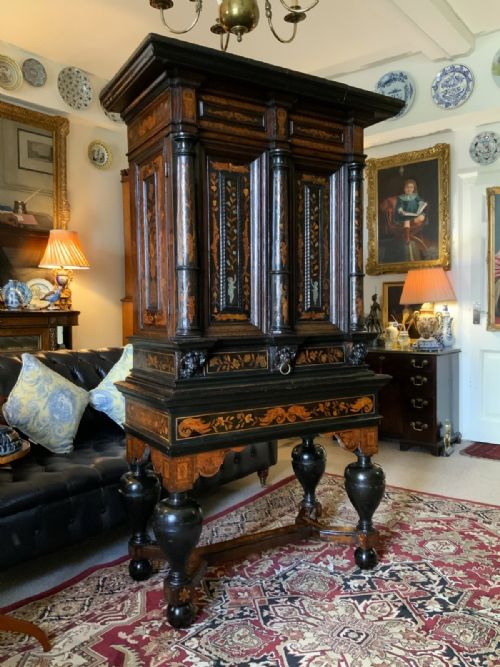
Earlier seventeenth-century formats utilise Dutch marquetry, ebony, and pewter inlay, showing heavier structural forms and panelled door configurations.