





Desktop Dressing Table Mirror
A desktop dressing table mirror brings practical elegance to a room, offering adjustable glass framed in rich woods like mahogany and walnut.
Desktop Dressing Table Mirror
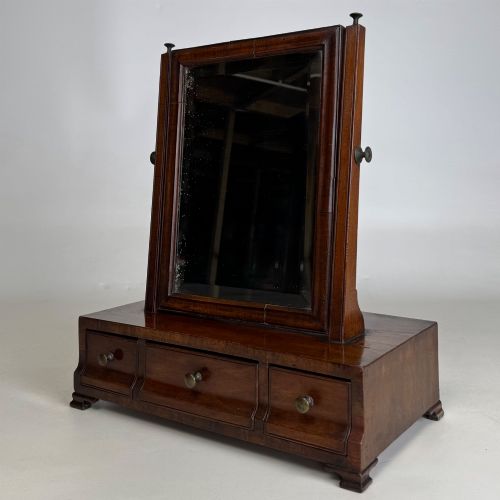
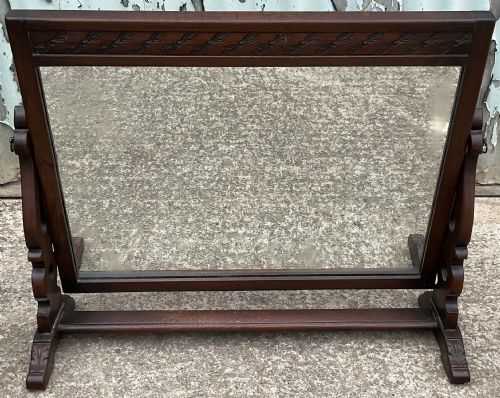
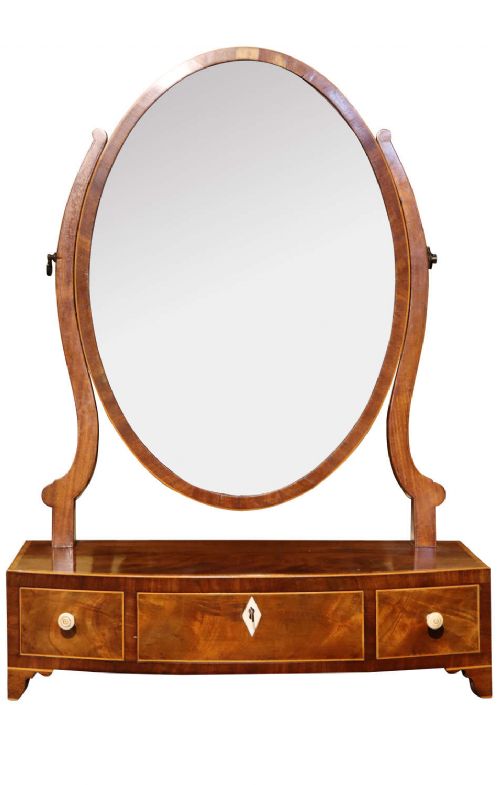
A desktop dressing table mirror provides a functional reflective surface designed to sit upon furniture, frequently taking the form of a swing mirror mounted on a small base or a set of drawers. Buyers seeking a desktop dressing table mirror encounter various historical iterations spanning from the eighteenth century to the early twentieth century.
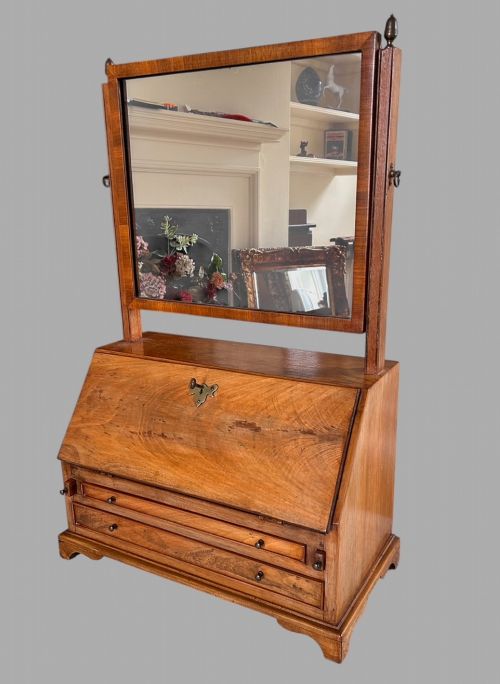
Examples on this page include traditional mahogany designs from the Georgian and Victorian eras alongside walnut pieces reflecting Queen Anne and Dutch Neo-Classical styles. Formats range from simple table mirrors to elaborate tabletop bureaus with integrated drawers and compartments.
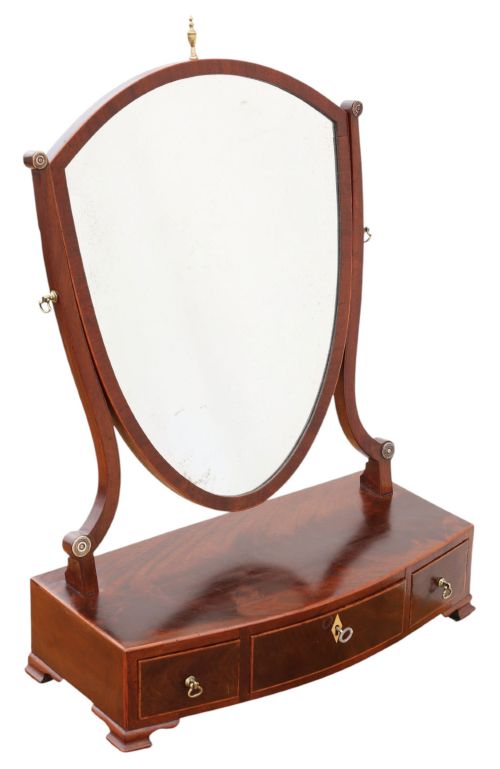
The most common finds combine a pivoting glass plate with a compact wooden stand, sometimes featuring serpentine fronts, crossbanding, or marquetry inlay. These objects served generations for daily grooming before evolving into decorative staples for modern interiors.
Materials and construction
Cabinetmakers constructed these mirrors primarily using dense hardwoods such as mahogany and walnut, frequently incorporating satinwood, oak, and brass hardware for support arms and adjustment screws. Timber selection dictated the weight and stability of the desktop frame, allowing the glass to tilt smoothly on its pivots.
Reflective plates utilised silvered glass, held securely within shaped wooden frames like shields, ovals, or rectangles. Decorative touches involved marquetry inlay, crossbanded borders, and carved mahogany details.
Joinery methods relied on traditional dovetailing for the small drawers housed in the bases, ensuring durability and precise alignment within compact furniture pieces.
Desktop Dressing Table Mirror Retail Price Guide 2026
Typical asking prices for desktop dressing table mirror among the pieces listed under this phrase on Sellingantiques today, from the lower quarter to the upper quarter. They describe what is for sale here now, not the wider market.
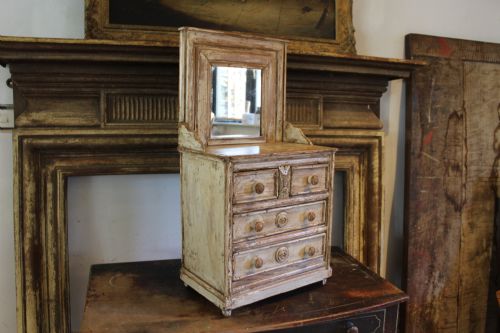
Miniature apprentice pieces show master craftsmen testing small hands on tiny drawers.
Assessing quality and craftsmanship
Quality in a desktop dressing table mirror depends upon the crispness of the cabinetwork, the selection of figured timber veneers, and the integrity of the original glass plate. Finer examples display meticulous dovetailing in the base drawers and well-proportioned woodwork that balances the weight of the pivoting frame.
The sophistication of decorative embellishments, such as fine crossbanding, marquetry inlay, and carved mahogany mouldings, separates standard utilitarian pieces from superior workshop productions. Original brass hardware and smooth-adjusting side arms also contribute significantly to the overall merit of an antique mirror.
The Desktop Dressing Table Mirror Glossary
- Swing mirror
- A glass plate mounted on vertical uprights that pivots to adjust the viewing angle. This mechanism sits atop a supportive box base or small chest of drawers.
- Crossbanding
- A decorative border technique where strips of veneer are laid perpendicular to the grain of the main surface. It frames panels of mahogany or walnut on the mirror base.
- Serpentine
- A gently undulating curved shape resembling a snake, frequently seen along the front edge of dressing mirror drawer bases. It adds visual fluidity to eighteenth-century designs.
- Marquetry
- Elaborate decorative inlay using various wood veneers to create pictorial or geometric patterns. Dutch examples often utilise this technique across the entire base.
- Toilet mirror
- The historical term for a small dressing mirror used during personal grooming at a table or stand. These often featured small drawers for storing cosmetics or trinkets.
Desktop Dressing Table Mirror: Frequently Asked Questions
What is a dressing mirror?
A dressing mirror is a tabletop or vanity glass designed to pivot within a frame for personal grooming. These portable pieces sat on chests or dressing tables.
Most surviving examples feature wooden stands equipped with small drawers for storing personal items.
How do I date an antique mirror?
Dating relies on observing timber choices, construction techniques, and decorative styles. Eighteenth-century pieces often feature mahogany with fine dovetailing.
Victorian and Edwardian versions introduce different wood grains, brass fittings, and oval or shield-shaped glass silhouettes.
Where should I place a table mirror?
These mirrors work well on dressing tables, chests of drawers, or sideboards in bedrooms and hallways. Their compact footprint requires minimal surface space.
Positioning them near a light source enhances their reflective utility while highlighting the wood grain.
Are the mirror plates original?
Mirror glass frequently experienced replacement over centuries due to silvering degradation or breakage. Examining the backboards and edge bevels helps determine age.
Many period frames retain original glass showing light foxing or consistent ageing marks.
What is a bureau mirror?
A bureau mirror combines a small sloping desk compartment with a pivoting dressing glass above. These multi-functional pieces served writing and grooming needs.
They represent more complex cabinetmaking from periods like the Georgian and Victorian eras.