




Oval Mahogany Vanity Mirror
An oval mahogany vanity mirror brings warmth and functional elegance to a room, offering the practical adjustability of a swing frame alongside rich timber grain.
Oval Mahogany Vanity Mirror
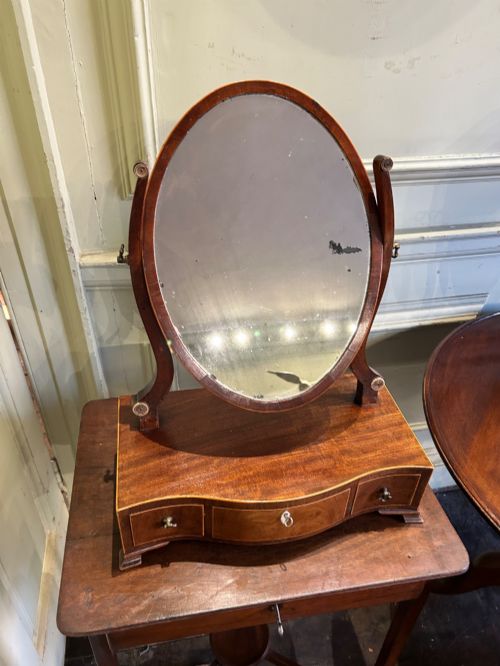
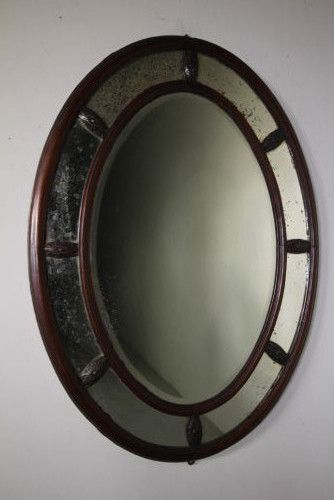
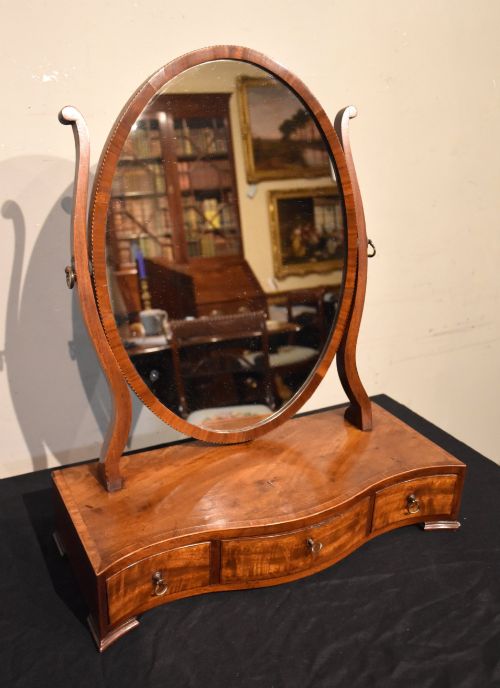
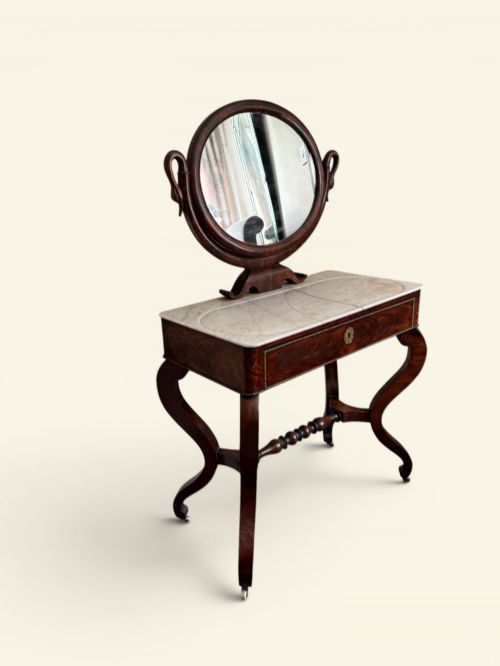
An oval mahogany vanity mirror is a tabletop or dressing table fixture designed for personal grooming, featuring a pivoting glass plate housed within a rich timber frame. When you search for this phrase, you encounter pieces intended to sit atop a chest or dedicated dressing table, alongside occasional wall-hanging variants. The form is historically rooted in the Georgian and Victorian eras, reflecting centuries of domestic utility.
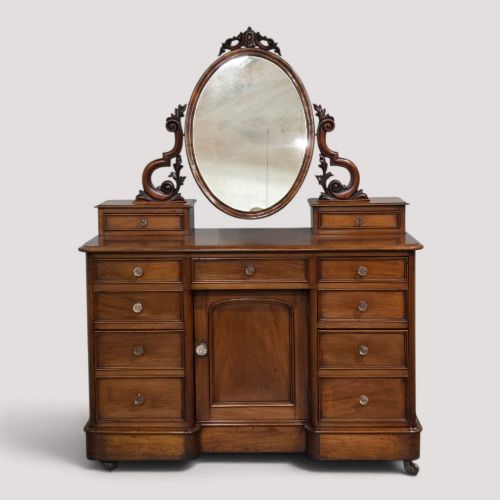
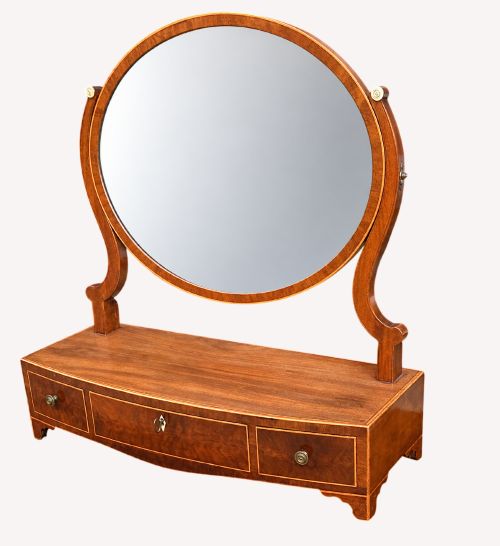
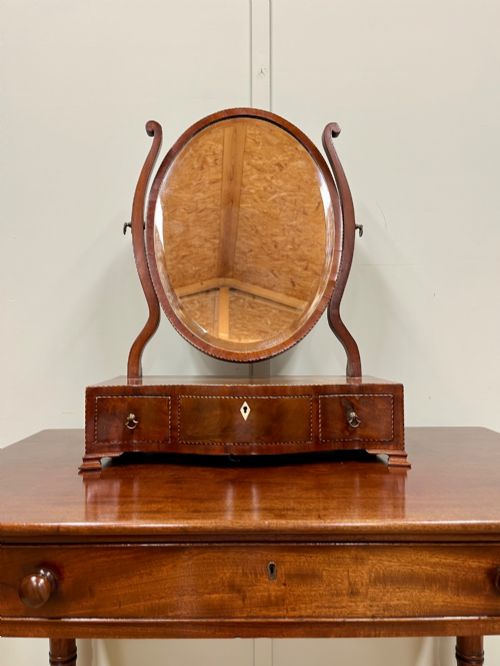
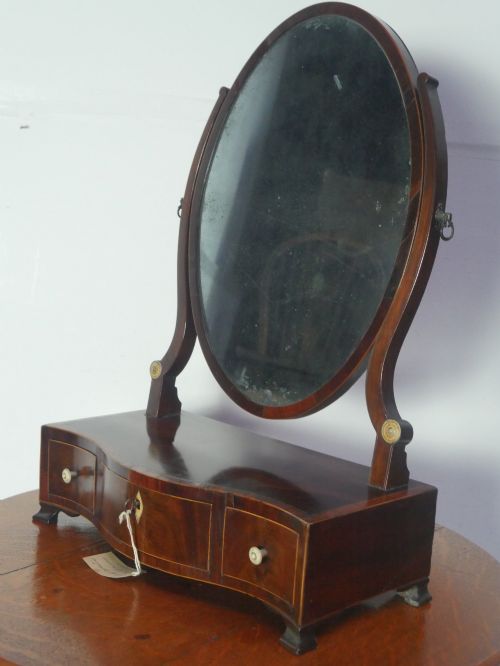
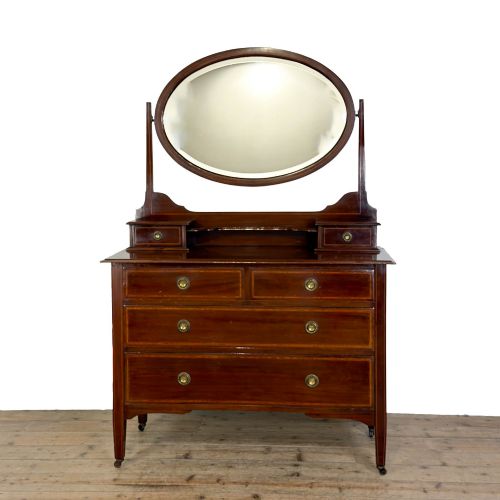
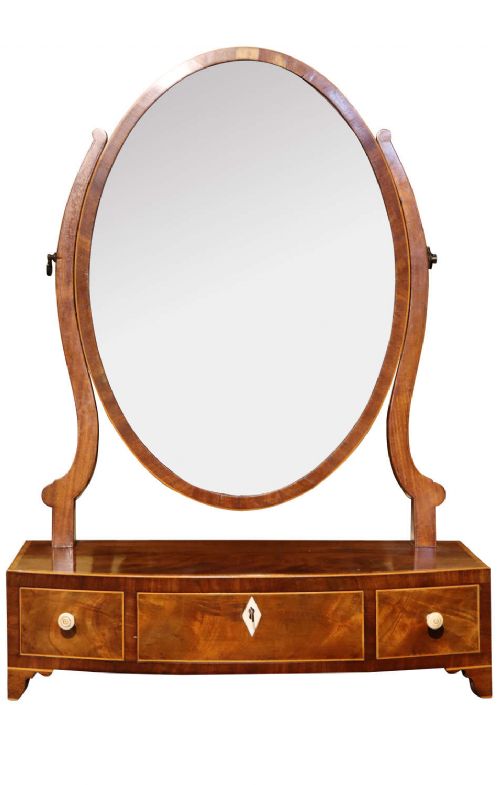
On this page, you are most likely to meet examples spanning the Georgian period through to the Edwardian era, with specific iterations including serpentine-fronted drawer bases and simple swing frames. Pieces range from compact toilet mirrors with small box bases to larger country house examples supported by shaped uprights. The presence of mahogany defines the group, often paired with glass plates and occasionally incorporating intricate inlay work.
Materials and construction techniques
Cabinet makers utilised solid mahogany and flame mahogany veneers over secondary timbers, often selecting boards with deep natural figures and warm reddish-brown tones. Frames were joined using traditional woodworking joints, and many examples incorporate boxwood inlay or satinwood stringing to accent the borders of the mirror and its supporting base. Brass fittings, including pivot screws and small drawer knobs, provide functional articulation and contrast against the dark wood.
The glass plates are held within rebated frames, sometimes retaining older mirror glass that displays characteristic subtle imperfections and age spots. Support structures frequently rely on curved upright arms mounted to a box base containing one to three small drawers, resting on feet such as squashed bun feet. Surface finishes were achieved through French polishing or traditional oil applications, sealing the grain while enhancing the depth of the mahogany.
Oval Mahogany Vanity Mirror Retail Price Guide 2026
Typical asking prices for oval mahogany vanity mirror among the pieces listed under this phrase on Sellingantiques today, from the lower quarter to the upper quarter. They describe what is for sale here now, not the wider market.
Secret compartments occasionally hide within the compact drawer bases of these mirrors, designed for stashing small treasures.
Distinctions in quality and execution
The standard of timber selection separates simpler items from superior examples, particularly the use of highly figured flame mahogany veneer on the drawer fronts and frame margins. Craftsmanship shows in the crispness of inlaid stringing, the precision of dovetail joints on the base drawers, and the elegance of the shaped upright supports. Top-tier pieces maintain proportion between the oval glass and the supporting base, whereas lesser examples may feel heavier or lack refined detailing.
The Oval Mahogany Vanity Mirror Glossary
- Toilet mirror
- A smaller tabletop dressing mirror designed to sit on a chest of drawers or washstand. These pieces typically feature a box base with small drawers beneath the pivoting glass.
- Serpentine front
- A furniture front characterised by a concave central section flanked by two convex curves, or the reverse. This undulating shape is frequently seen on the drawer bases of finer Georgian mirrors.
- Flame mahogany
- A wood veneer figure resembling flickering flames, created by cutting across the branch forks of the mahogany tree. Cabinet makers prized this grain pattern for prominent display surfaces.
- Crossbanding
- A strip of veneer applied perpendicularly to the surrounding grain along the edges of a panel or drawer front. It creates a neat visual border using contrasting wood tones.
- Swing mirror
- A mirror plate mounted on pivots between two upright posts, allowing the glass to tilt vertically. This mechanism forms the core operating principle of vanity and dressing mirrors.
Oval Mahogany Vanity Mirror: Frequently Asked Questions
What is a toilet mirror?
A toilet mirror is a portable tabletop glass designed for personal grooming, traditionally placed on a chest of drawers or dedicated dressing table. The term historicates pieces that predate modern plumbing, referring instead to the dressing ritual.
These items usually comprise a pivoting frame mounted above a small box base fitted with drawers for storing small personal effects. They offer practical utility while showcasing period cabinet-making techniques.
How do I date a mahogany mirror?
Dating relies on examining construction methods, timber choices, and hardware styles across different design periods. Georgian pieces often display fine dovetailing and subtle stringing, whereas Victorian examples tend to be heavier with bolder scrollwork.
Secondary woods, nail types, and the presence of original brass pivot screws provide further clues. Comparing the proportions and overall silhouette helps align the piece with documented eras like the Edwardian revival or Regency period.
Are the mirror plates original?
Many older pieces retain their original glass, which can be identified by slight distortions, oxidation spots, and thin silver backing. Replacing mirror glass was a common maintenance update over the centuries.
When examining a piece, look for consistency between the age of the frame and the condition of the glass. Period plates add authenticity, while modern replacements offer a clearer reflection.
How should I place a table mirror?
Table mirrors work best positioned on stable surfaces like antique chests, sideboards, or dedicated dressing tables where the height allows comfortable use. Ensure the supporting furniture matches the scale and period aesthetic of the mirror frame.
Keep them away from direct sunlight and excessive humidity to protect the mahogany finish and prevent degradation of the wood and mirror backing. Regular dusting with a dry cloth maintains the polish.