


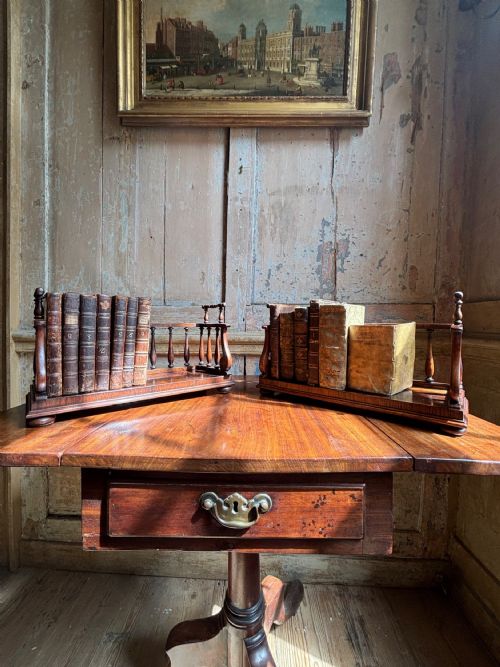


Desktop Book Slide Rack
A desktop book slide rack holds your working volumes upright while adding period character to a study.
Desktop Book Slide Rack
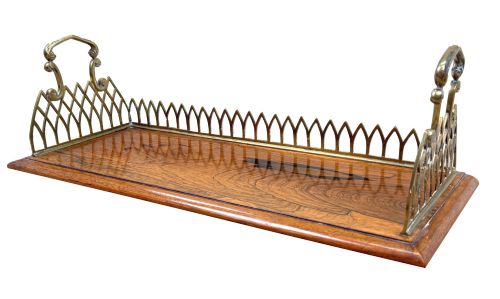
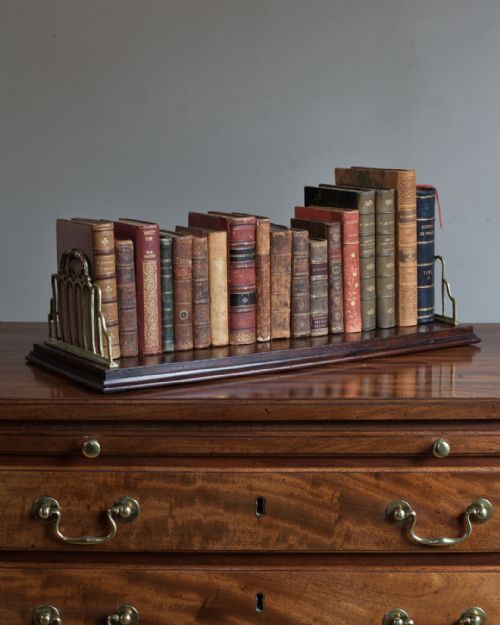
A desktop book slide rack provides an adjustable platform for holding volumes on a desk or table, expanding and contracting to fit a changing selection of books. These desk accessories appear in various forms, including expanding book slides, book stands, and book troughs.
The pieces on this page span the Victorian and Edwardian periods alongside the 19th Century, Regency, and 1930 eras. You will frequently encounter Victorian walnut and brass mounted sliding bookends, alongside simpler oak and mahogany examples.
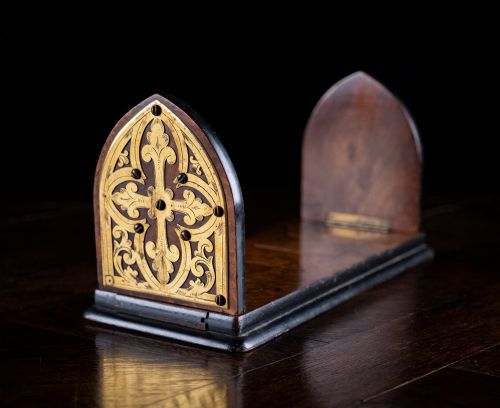
Originating from English workshops and international traditions such as Anglo-Indian and Kashmiri craft, these items range from plain utilitarian timber racks to ornate library book holders fitted with painted plaques or pietra dura.
Materials and construction
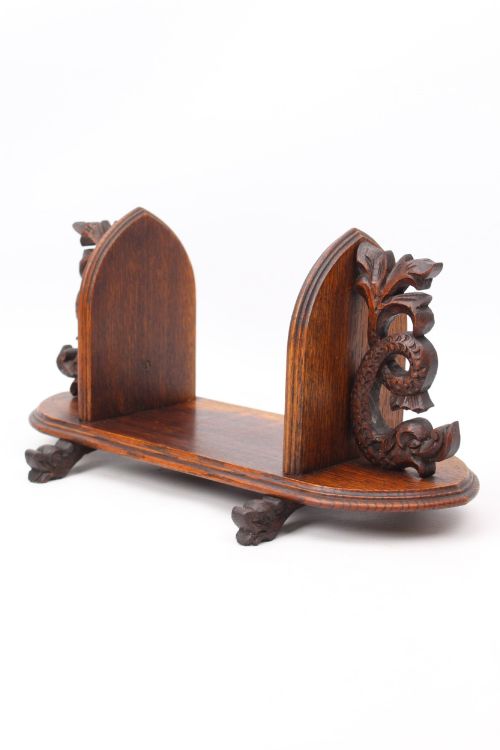
Cabinet makers utilised dense hardwoods such as walnut, rosewood, oak, coromandel, and ebonised wood to form the sturdy bases and expanding actions required for heavy volumes. Boxwood inlay, bone elements, and olive wood provide contrasting details across specific regional styles.
Brass mountings, hinges, and extending mechanisms reinforced the sliding actions, allowing the wooden ends to glide smoothly apart. Specialised techniques such as Tunbridge Ware mosaic work and pietra dura stone inlay decorated the panels of finer examples.
Desktop Book Slide Rack Retail Price Guide 2026
Typical asking prices for desktop book slide rack among the pieces listed under this phrase on Sellingantiques today, from the lower quarter to the upper quarter. They describe what is for sale here now, not the wider market.
Many Victorian examples feature patent extending actions, turning the simple act of tidying your novels into a satisfying mechanical puzzle.
Distinctions in quality
The refinement of the extending mechanism dictates the mechanical success of a desktop book slide rack, where superior versions move evenly without binding. Finely fitted brass hardware and smooth sliding actions separate standard production from more ambitious workshop pieces.
Decorative embellishment marks the upper tier of execution, evident in finely painted porcelain plaques, intricate Tunbridge Ware marquetry, and scarce materials like coromandel. The choice of dense, well-figured timber and crisp carving define the overall presence of the piece.
Betjemanns patent
The Desktop Book Slide Rack Glossary
- Book slide
- A desk accessory with an extending mechanism that holds a variable number of books upright between two end supports.
- Tunbridge Ware
- A type of woodworking characterised by minute mosaic tiles forming geometric or pictorial designs, popular on Victorian stationery items.
- Pietra dura
- An artistic technique using cut and fitted polished coloured stones to create inlay images on marble or wood surfaces.
- Coromandel
- A dense, heavily figured tropical hardwood prized by Victorian cabinet makers for luxury library accessories.
- Gothic Revival
- A design style drawing inspiration from medieval architecture, frequently seen on pieces featuring pointed arches and architectural brasswork.
Desktop Book Slide Rack: Frequently Asked Questions
How do extending book slides work?
An extending book slide uses a sliding track or nested wooden channels that allow the two ends to pull apart or push together. This mechanism alters the length of the base to accommodate varying numbers of volumes.
Most traditional designs rely on smooth wooden friction fits or guided brass hinges to maintain the chosen width while supporting the weight of the books.
Where were these book racks placed?
These accessories sat on library tables, writing desks, and bureau surfaces where working reference books needed to stay close at hand. They kept volumes organised without requiring heavy wall-mounted shelving.
Victorian studies and home libraries utilised them extensively to manage everyday reading material in a compact footprint.
What woods are most common?
Walnut and oak appear most frequently among the surviving pieces, offering durable surfaces and rich grain patterns suited to nineteenth-century interiors. Rosewood and mahogany also feature prominently across earlier examples.
More decorative items utilise exotic woods like coromandel and olive wood, often enhanced with brass mounts or inlaid details.
How do I date a book slide?
Dating relies on stylistic clues, timber selection, and mechanical patents, such as the extending hardware introduced by makers in the mid nineteenth century. Gothic Revival motifs point toward Victorian production, while simpler forms often align with Edwardian or later twentieth-century periods.
Materials like ebonised wood and specific decorative inlays also help narrow down the decade of manufacture.