


Desk with Brass Gallery
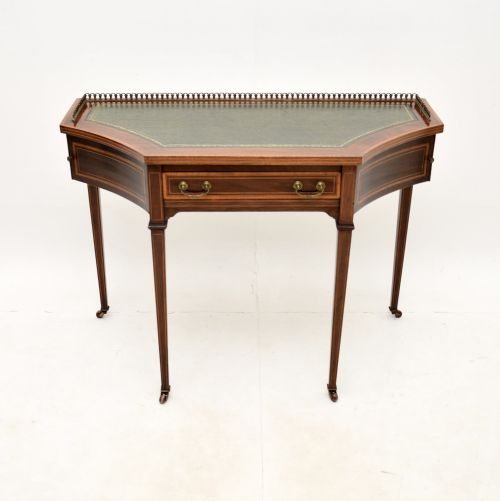
A desk with brass gallery brings refined metalwork and practical writing surfaces together, offering a stately addition to any study.
Desk with Brass Gallery
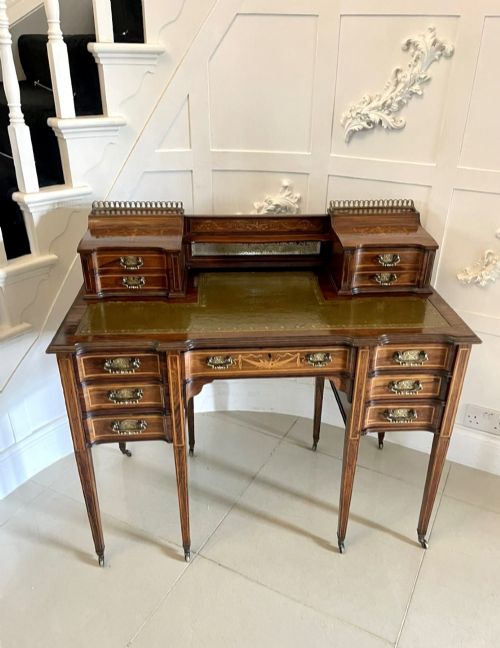
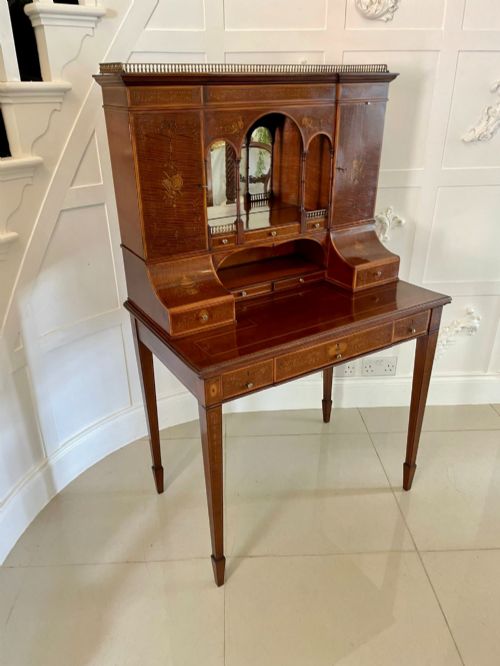
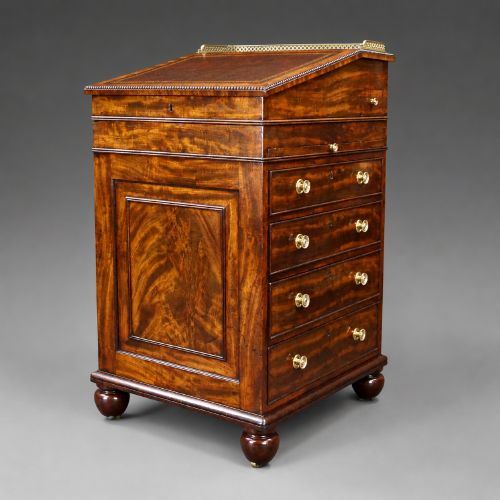
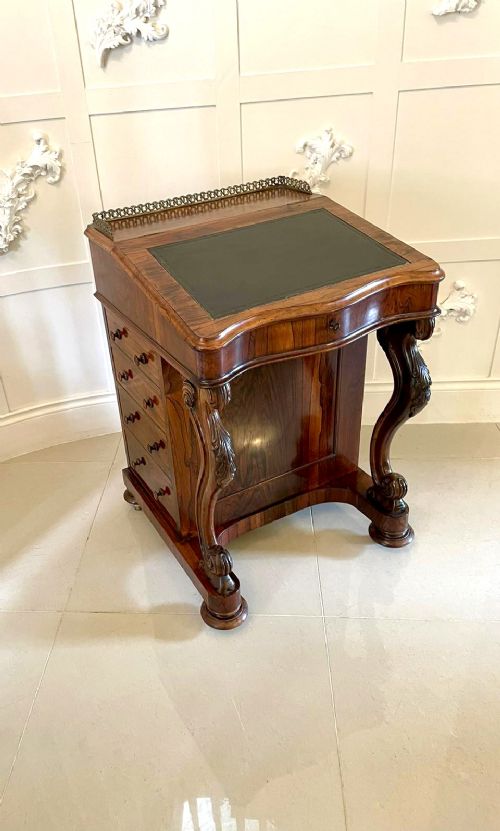
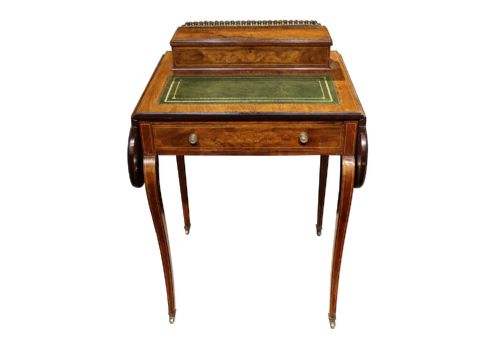
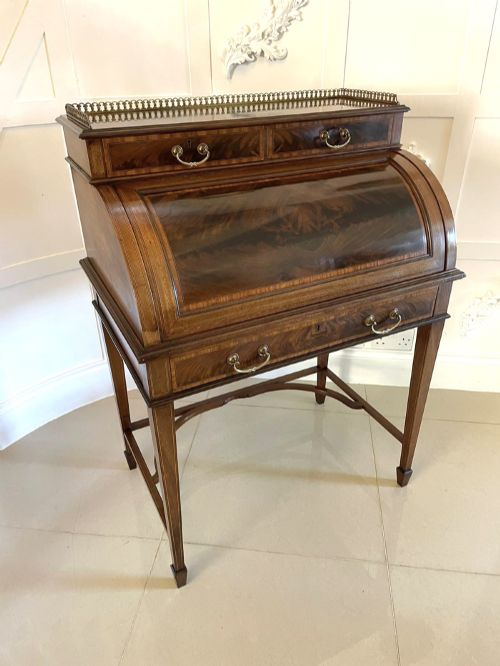
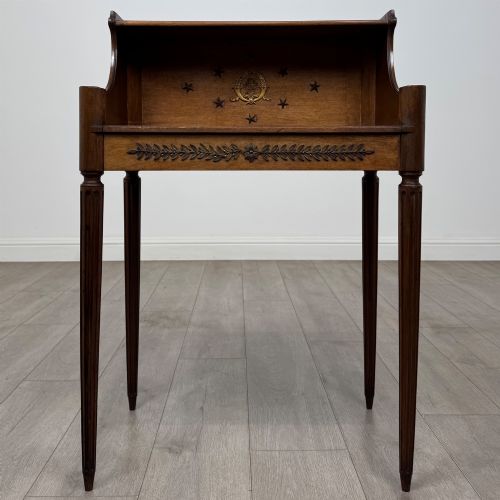
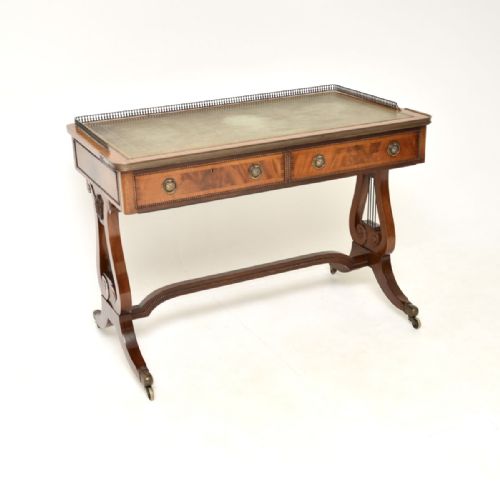
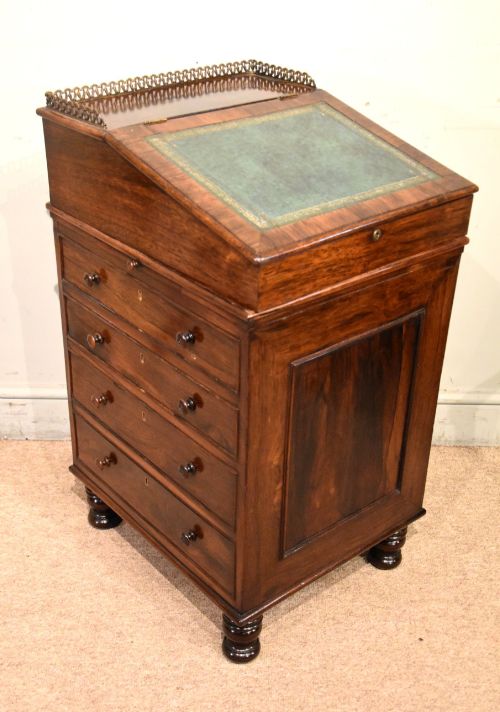
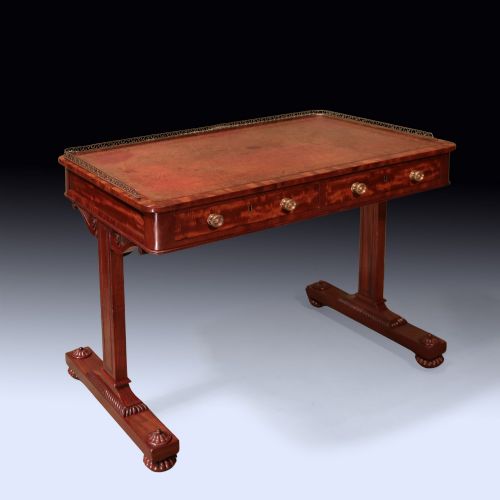
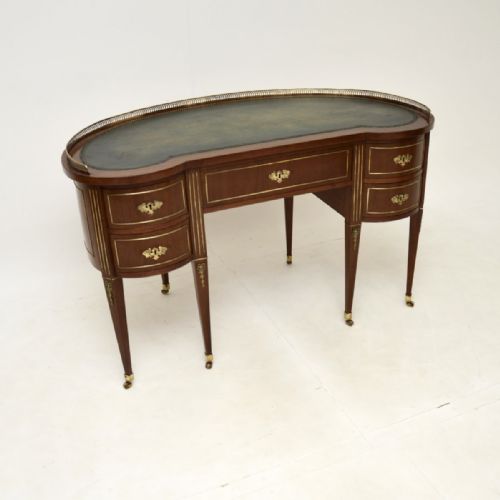
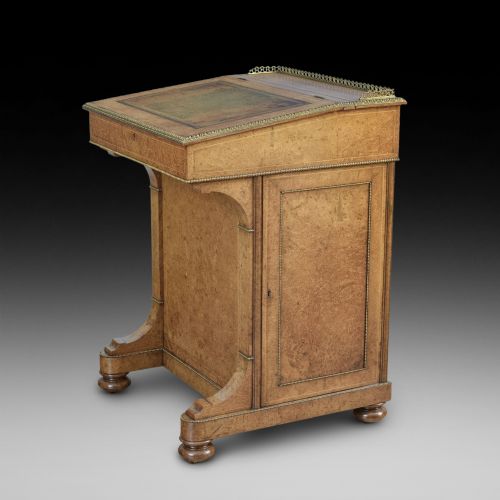
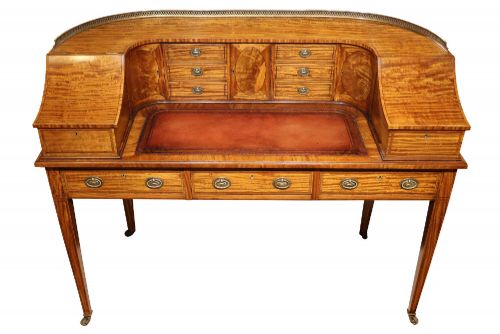
A desk with brass gallery combines functional timber writing furniture with an elevated metal rail designed to keep papers and inkwells secure. These pieces span periods from the Regency era through to Edwardian times, taking the form of writing tables, davenports, and pedestal desks.
The version most commonly encountered on this page is the mahogany writing table or davenport from the Regency and Edwardian periods, often featuring inlaid satinwood or rosewood details. Such items serve as dedicated writing stations that balance structural utility with decorative metalwork.
Makers utilised various secondary timbers alongside primary mahogany and walnut, ensuring sturdy construction for daily correspondence and administrative tasks. The presence of the brass gallery acts as both a visual boundary and a practical retainer for desk accessories.
Materials and construction methods
Cabinetmakers constructed these desks using dense primary hardwoods such as mahogany, rosewood, and kingwood, frequently enhanced by satinwood inlay and crossbanding. Drawers commonly feature oak linings, reflecting traditional joinery standards of the nineteenth and early twentieth centuries.
The characteristic brass gallery is secured to the upper edge of the writing surface or superstructure, occasionally accompanied by ormolu mounts and original brass handles. Leather inset tops provide a durable writing substrate framed by the surrounding timber and metalwork.
Listings feature mahogany, rosewood, and walnut desks alongside satinwood inlay and brass galleries dating from the Regency to the Edwardian period.
Distinctions in craftsmanship
Quality rests in the selection of figured timbers, such as flame mahogany or burr walnut, and the precision of contrasting satinwood inlay. The integration of the brass gallery and the execution of fitted interiors reveal the level of care invested by the original maker.
Subtleties in proportion and the retention of original hardware, including brass handles and fitted keys, distinguish superior examples from standard production pieces. The crispness of the woodwork and the integrity of the secondary linings determine the standing of each desk.
Gillows
The Desk with Brass Gallery Glossary
- Brass gallery
- A low metal rail fitted to the top of a desk or sideboard to prevent items from sliding off. It is typically cast or pierced.
- Davenport
- A compact form of Victorian or Regency desk featuring a sloped writing surface above a pedestal of drawers. The design often includes side drawers and a small superstructure.
- Crossbanding
- A narrow strip of veneer applied across the grain of the primary wood to form a decorative border. This technique highlights the edges of table tops and drawer fronts.
- Satinwood inlay
- Contrasting light-coloured wood inserted into recesses in a darker timber surface to create geometric or floral patterns. It was particularly favoured during the Sheraton Revival period.
- Ormolu
- Gilded bronze used for decorative mounts and decorative hardware on nineteenth-century furniture. It provides a bright metallic accent against dark woods like kingwood and mahogany.
Desk with Brass Gallery: Frequently Asked Questions
What is a desk with brass gallery?
A desk with brass gallery is a writing table or cabinet featuring a protective metal rail along the upper edge. This rail keeps small desk items from falling while adding a decorative border to the workspace.
Such pieces appear in various forms, including davenports and pedestal desks, spanning the Regency to Edwardian periods.
How were these desks used originally?
These desks served as private writing stations for correspondence, ledger entry, and the storage of writing implements. The fitted interiors and small drawers accommodated paper, ink, and pens.
The brass gallery kept items secure on the surface while the desk was in use or when the room was attended.
How do I identify the period of a desk?
Period identification relies on observing timber choices, construction techniques, and stylistic traits. Regency pieces often showcase clean mahogany lines, whereas Edwardian items frequently feature Sheraton Revival satinwood inlay.
Drawer linings, handle types, and secondary woods further clarify whether a desk originates from the nineteenth or early twentieth century.
Where should I place a gallery desk?
A gallery desk works well placed against a wall or freestanding within a study where the back and sides remain visible. The decorative brass rail provides a finished silhouette that suits traditional libraries and home offices.
Ensure the room has adequate lighting to appreciate the timber grain and the metallic detail of the gallery.