
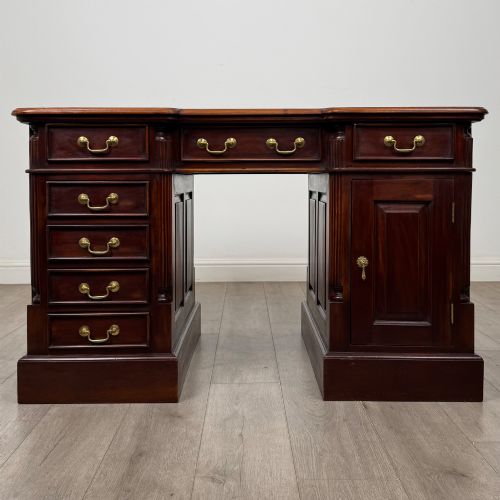

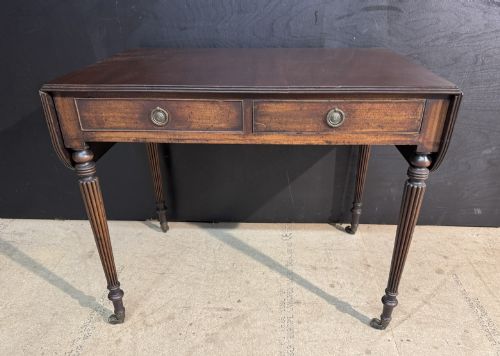
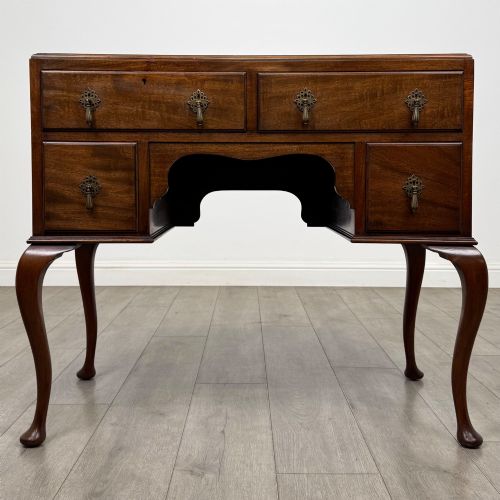
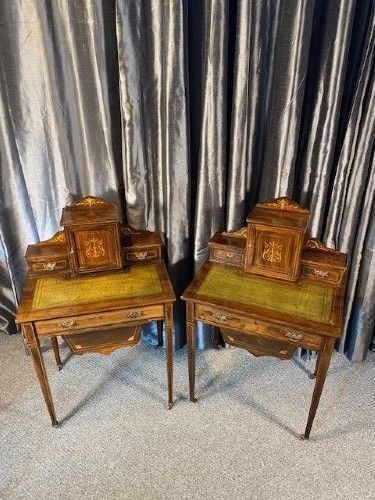
Edwardian Style Writing Desk
When you search for an edwardian style writing desk, you are tracking down a piece of timber craftsmanship built for correspondence, drawing heavily on earlier revivals.
Edwardian Style Writing Desk
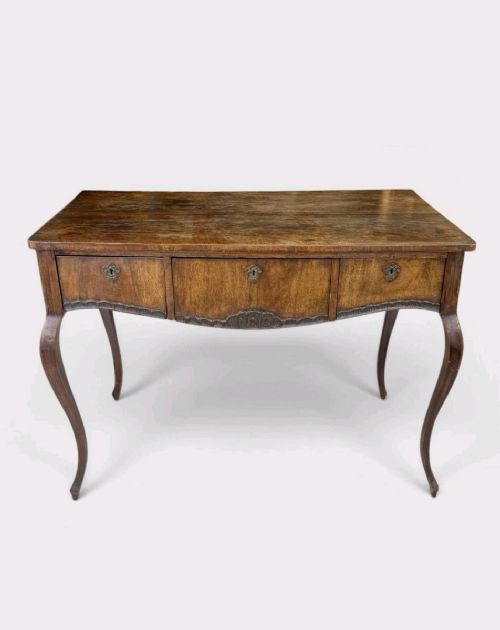
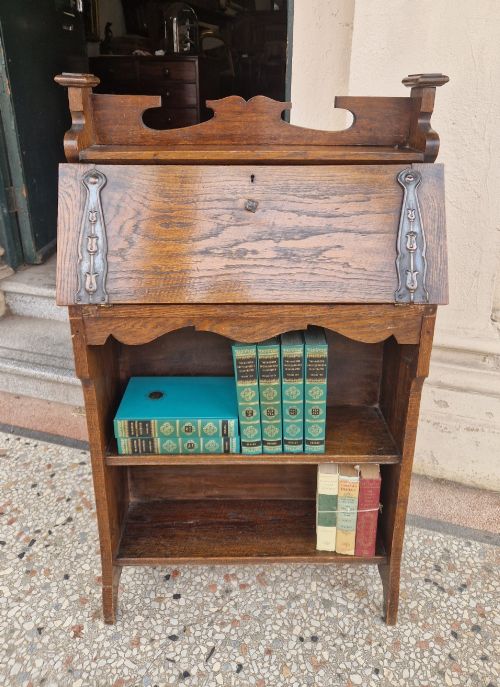
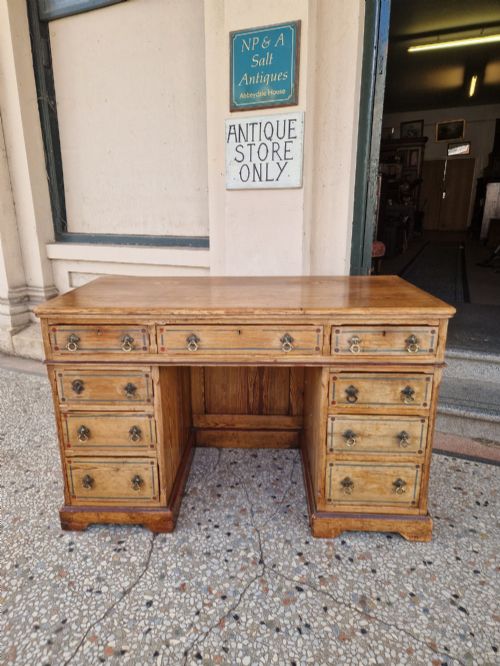
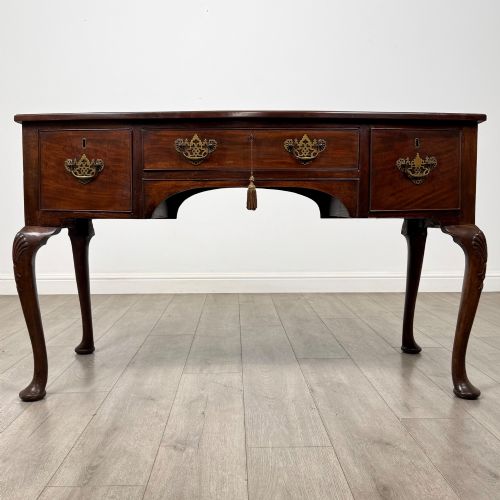
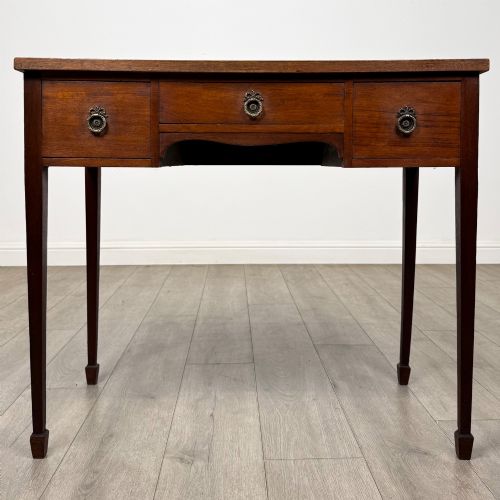
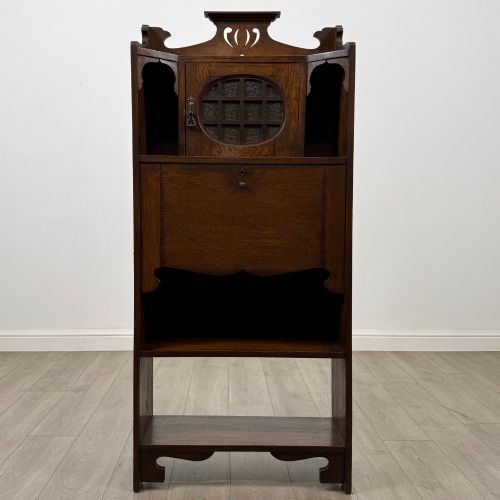
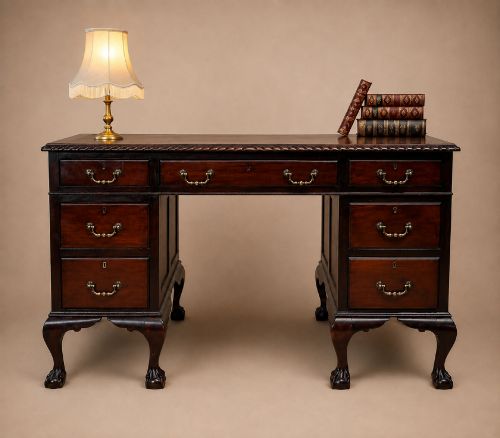
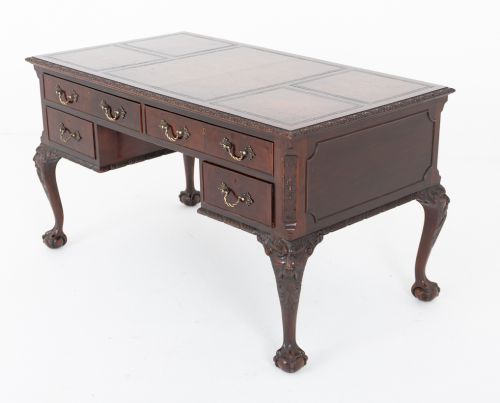
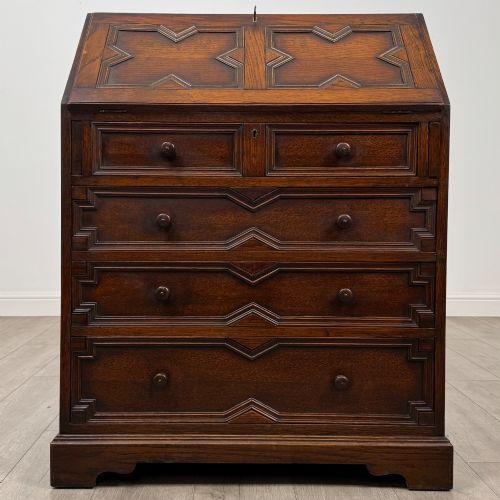
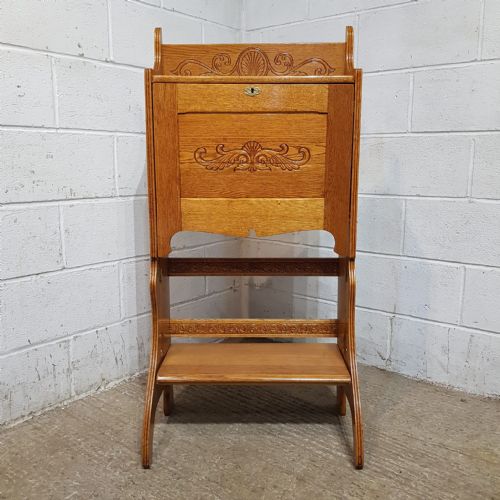
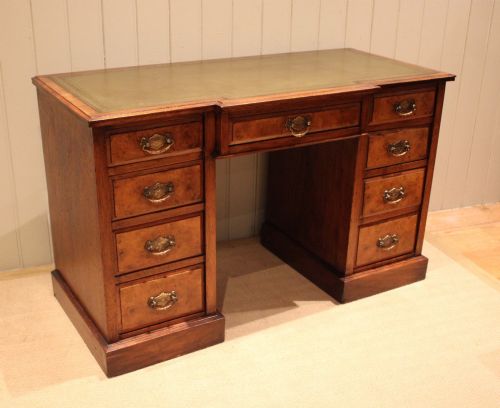
An edwardian style writing desk encompasses freestanding writing tables, fitted bureaux, pedestal desks, and distinctive forms like the Carlton House desk and cylinder top desk. The selection bridges the Edwardian era proper with Victorian origins and later twentieth-century pieces, spanning walnut, mahogany, satinwood, and oak.
Most pieces you encounter on this page reflect either straightforward Edwardian manufacture or revivals of earlier stylistic periods such as Georgian, Chippendale, Sheraton, and Queen Anne. These range from compact ladies writing tables and kneehole desks to substantial pedestal and bureau bookcase forms.
Makers and workshops of the period drew upon established historical idioms while adapting them to domestic interiors of the early twentieth century. You will find simpler Arts and Crafts oak pieces alongside finely inlaid mahogany and burr walnut desks fitted with leather writing surfaces.
How They Were Made
Cabinet makers relied primarily on solid timbers and fine veneers of mahogany, walnut, satinwood, and oak, often reinforced with brass hardware and fitted with leather writing inserts. Construction techniques combined traditional joinery with decorative inlays, marquetry, and polished finishes that emphasised the natural grain of the wood.
Specialised writing furniture utilised clever internal architecture, including pigeonholes, small drawers, drop-side flaps, and tambour or cylinder lids. Larger pedestal desks and bureau bookcases employed modular carcases with multiple drawer tiers, whilst lighter tables featured slender tapered legs and delicate brass handles.
Several desks manage to be Georgian, Edwardian, and Sheraton all at once, which is quite an identity crisis for a piece of timber.
What Varies in Quality
The distinction between ordinary and exceptional examples rests upon the selection of timber figures, such as burr walnut or figured mahogany, and the precision of the cabinet work. Superior pieces display harmonious proportions, crisp inlay work, and carefully matched grain patterns across every visible surface.
Internal execution separates standard commercial output from workshop pieces bearing maker attributions. Thoughtful secondary woods in drawer linings, finely cut dovetail joints, and original leather writing surfaces with blind tooling indicate a higher grade of manufacture.
Wylie & Lochhead Glasgow·Tudor & Burrey Shrewsbury·S & H Jewell of London
The Edwardian Style Writing Desk Glossary
- Bureau
- A sloping desk with a hinged flap that opens to reveal internal pigeonholes and small drawers. It often sits above a chest of drawers.
- Carlton House Desk
- A distinctive form of writing table featuring a curved superstructure of small drawers and compartments rising behind the leather-lined writing surface. It typically has a horseshoe-shaped arrangement.
- Pedestal Desk
- A heavy freestanding desk comprising two supporting pedestals of drawers with a central recess, usually topped with a leather insert. They offer substantial storage and a large writing area.
- Escritoire
- A writing cabinet or desk, often with a drop-front panel enclosing fitted compartments. The term derives from French vocabulary for writing furniture.
- Satinwood
- A pale, lustrous hardwood imported from tropical regions, frequently used for veneers and delicate inlays during revival periods. It provides a striking contrast against darker timbers like mahogany.
Edwardian Style Writing Desk: Frequently Asked Questions
What is a Carlton House desk?
A Carlton House desk is a specialised writing table defined by a curved bank of small drawers and compartments that encloses three sides of the writing surface. This layout appeared during the Georgian period and was revived with enthusiasm by Edwardian cabinet makers.
Such desks often feature fine mahogany or satinwood veneers, delicate brass pulls, and leather writing inserts. They were designed for correspondence and stationery organisation in private studies and drawing rooms.
How do I distinguish Edwardian from Victorian desks?
Victorian desks generally tend to heavier proportions, darker finishes, and robust construction using solid mahogany, walnut, or oak. Edwardian desks often embrace lighter, more refined revival styles, incorporating satinwood, subtle string inlays, and brighter polished surfaces.
While both eras drew heavily on Georgian and Chippendale precedents, Edwardian examples frequently reflect the Edwardian taste for elegant, less oppressive domestic furniture. The transition between the periods is bridged by pieces built around the turn of the century.
Where were these desks used?
These desks served primarily in private libraries, home studies, drawing rooms, and ladies boudoirs for managing correspondence and household accounts. Smaller writing tables and bon-heur-du-jour desks were frequently placed in reception rooms or bedrooms.
Larger pedestal desks and bureau bookcases were built for professional studies and offices, providing ample storage for ledgers and stationery. Their versatile forms allowed them to function both as practical work surfaces and decorative reception furniture.
What woods were commonly used?
Mahogany remains the most prevalent timber across these listings, appearing in solid form and as fine veneers on both Edwardian and revival pieces. Walnut and burr walnut were also widely utilised for their rich, figured grain patterns.
Additional materials include satinwood for lighter, decorative surfaces and oak for Arts and Crafts and Jacobean revival pieces. Brass handles, leather writing panels, and glass cabinet doors frequently complement these primary timbers.