



Delftware Wall Platter
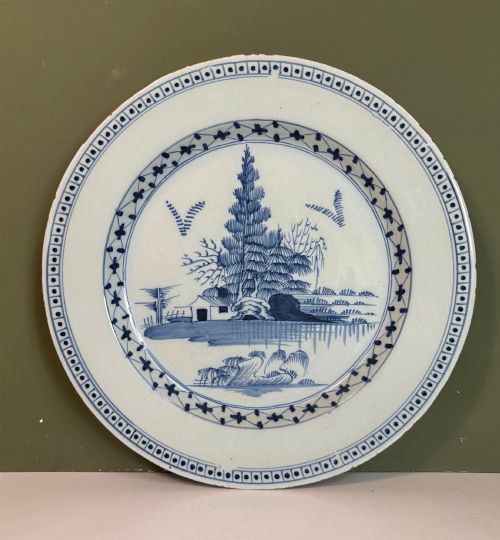
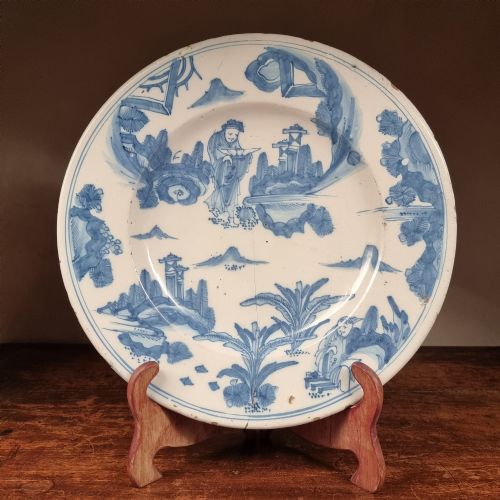
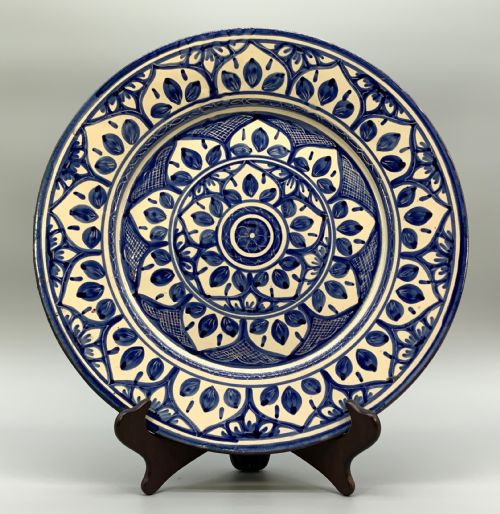
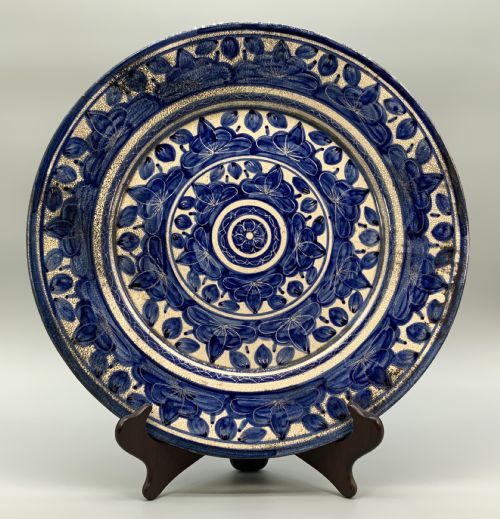
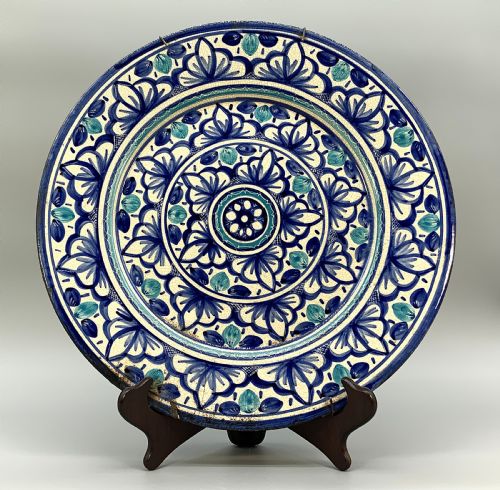
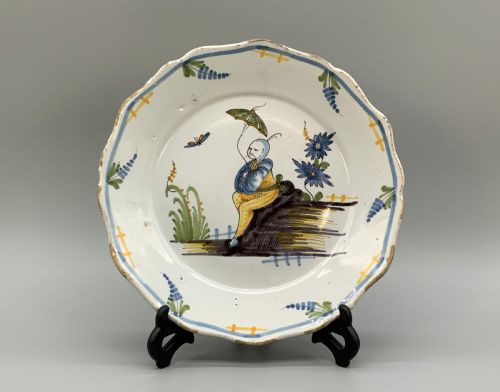
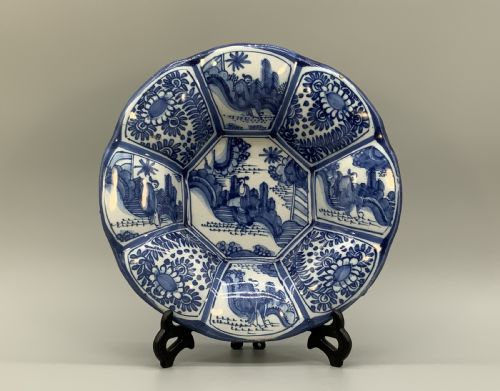
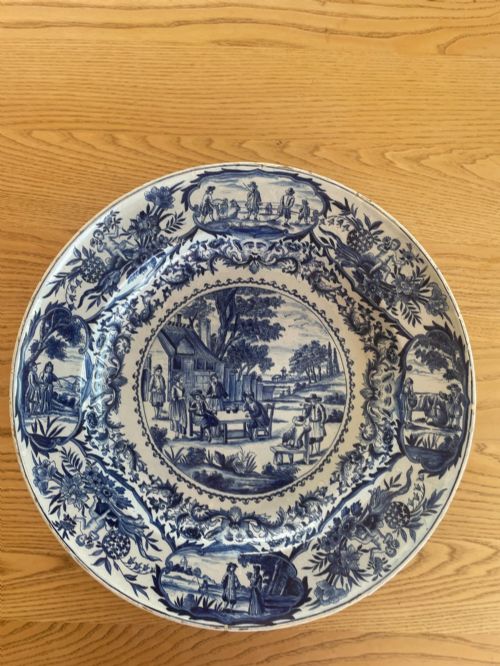
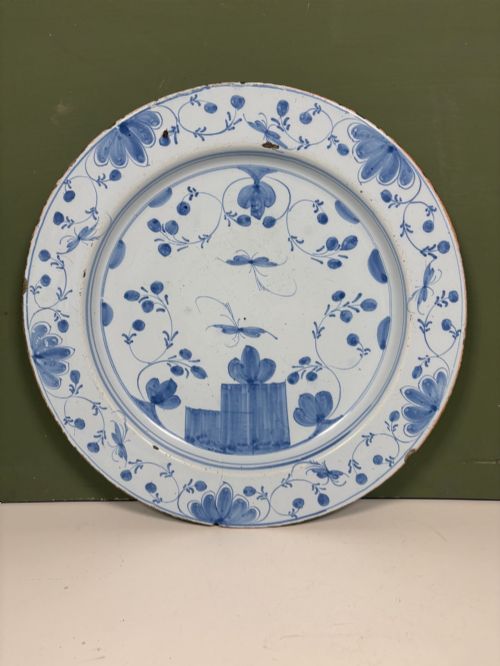
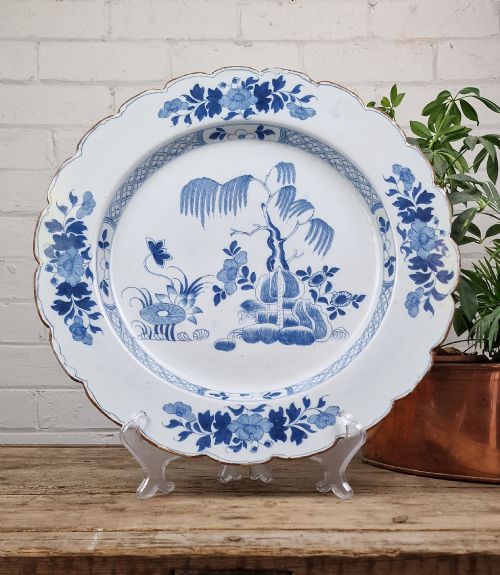
These delftware wall platters are tin-glazed earthenware chargers bearing blue and white or polychrome designs that transform plain walls into displays of historic craft.
Delftware Wall Platter
A delftware wall platter is a substantial ceramic dish designed primarily for display rather than dining, appearing here in forms such as decorative chargers, wall plates, and large platters. When searching for this phrase, a buyer encounters pieces spanning the seventeenth, eighteenth, and nineteenth centuries, alongside mid-twentieth-century continental interpretations.
The version most commonly met on this page is the eighteenth-century charger, originating from English and Dutch potteries. These pieces frequently measure across a wide diameter, offering a broad surface for painted decoration.
Makers utilised tin-glaze earthenware to achieve an opaque white ground, upon which artists painted scenes in cobalt pigment, manganese, and yellow. Regional variations range from Dutch Baroque and Kraak-style layouts to Moorish Revival motifs and French Chinoiserie compositions.
How they were made
Potters shaped earthenware bodies from local clays, which were then fired to create a porous biscuit base ready for decoration. This body received an opaque tin glaze, usually containing lead and tin oxides, producing the characteristic milky-white surface.
Painters applied cobalt oxide, manganese, and polychrome pigments directly onto the unfired or raw glaze through absorption, demanding swift and confident brushwork since mistakes could not be corrected. Grand feu techniques involved firing the pigments simultaneously with the glaze at high temperatures, fusing the colours permanently into the surface.
Materials recorded across the inventory include tin-glazed earthenware, cobalt pigment, manganese, and polychrome enamels.
What varies in quality
Quality rests in the crispness of the cobalt painting and the depth of the tin glaze, where smoother, more even surfaces with minimal bubbling distinguish superior examples. The ambition of the design matters greatly, separating standard blue and white geometric borders from lively polychrome Chinoiserie scenes or intricate Kraak-style compartmentalisation.
The physical weight and balance of the earthenware body also play a part, as finer platters achieve a generous diameter without excessive thickness, maintaining a clean profile when hung upon a wall.
De Witte Ster
The Delftware Wall Platter Glossary
- Charger
- A large decorative plate or platter traditionally displayed on walls or sideboards rather than used at the dining table. These substantial dishes provide the primary canvas for historic delftware painting.
- Tin-Glazed Earthenware
- Pottery covered with a lead glaze made opaque by the addition of tin oxide. This technique creates the white background essential for traditional delft decoration.
- Grand Feu
- A firing method where pigments are applied directly to the raw tin glaze and fired once at high temperatures. This process fuses the colours deeply into the glaze, producing a glossy and durable finish.
- Kraak Style
- A decorative layout originating from Chinese porcelain exports, featuring panelled borders surrounding a central motif. Seventeenth-century delftware makers frequently adopted this compartmentalised composition.
- Manganese
- A metallic oxide used by ceramic painters to produce purple, brown, or plum-coloured tones. It appears alongside cobalt blue or as the primary pigment in specific regional platters.
Delftware Wall Platter: Frequently Asked Questions
How were delftware wall platters displayed?
Historic interiors utilised these large chargers as decorative centrepieces on walls, dressers, and mantelpieces to catch the light and showcase wealth. Their substantial diameters made them ideal for visual impact within formal rooms.
Modern settings continue this tradition by hanging them securely using specialised wire plate brackets or placing them upon sturdy plate stands for sideboard display.
What is the difference between English and Dutch delft?
English and Dutch potteries both produced tin-glazed earthenware using cobalt blue pigments, yet subtle distinctions appear in their clay bodies, glaze tones, and stylistic influences. Dutch pieces often lean towards formal Baroque or exported Chinese Kraak patterns.
English production, particularly from centres like Bristol and London, frequently exhibits softer glaze textures and distinct local interpretations of floral or landscape subjects.
How do I identify a grand feu charger?
Grand feu platters are characterised by pigments that have melted directly into the wet tin glaze during a single high-temperature firing. This technique causes the colours to soften slightly at the edges where they fuse with the white background.
Such pieces often display a brilliant gloss and remarkable durability across their manganese and polychrome surfaces.
Can these platters be hung safely on walls?
Hanging antique delftware requires properly fitted spring-loaded brass or coated wire hangers that distribute the weight evenly across the rim and footring. It is essential to mount the fixture securely into wall studs or utilise appropriate wall anchors.
Regularly checking the tension of the hanger ensures the earthenware remains stable and secure in its display position.