
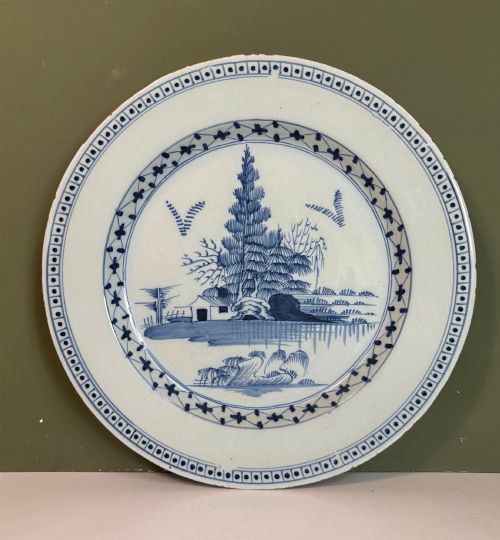

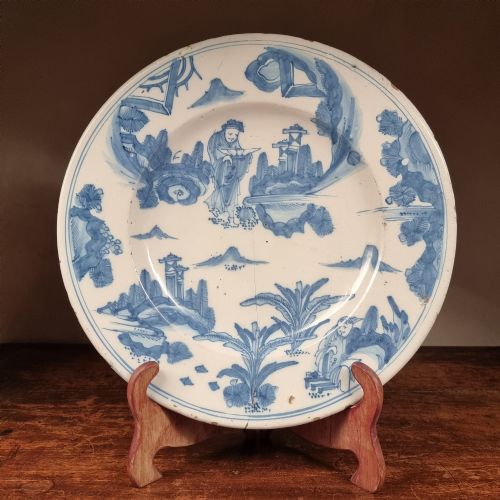
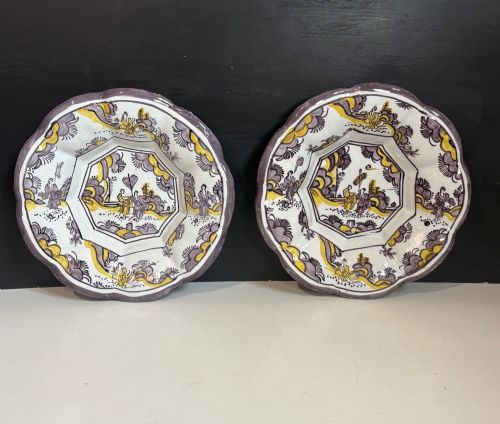
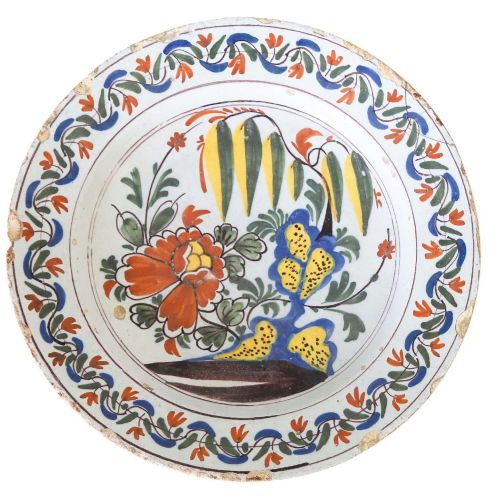


Delftware Wall Display Plate
A delftware wall display plate brings centuries of tin-glazed earthenware and hand-painted blue and white pigment directly to your wall.
Delftware Wall Display Plate
A delftware wall display plate is a tin-glazed earthenware dish formed as a charger or plate, intended primarily for visual presentation rather than daily service. Buyers searching for this phrase seek historical ceramic dishes bearing hand-painted decoration.
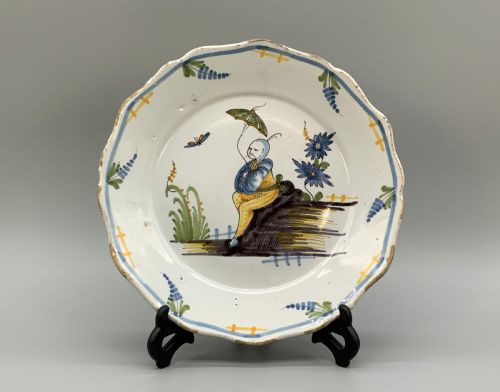
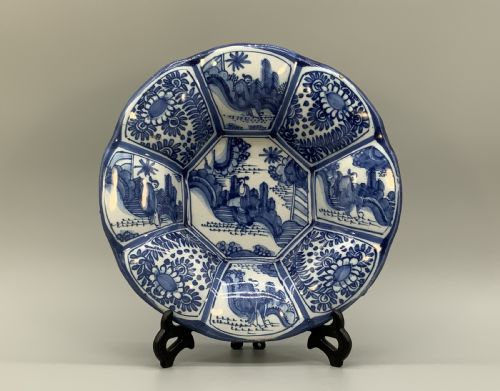
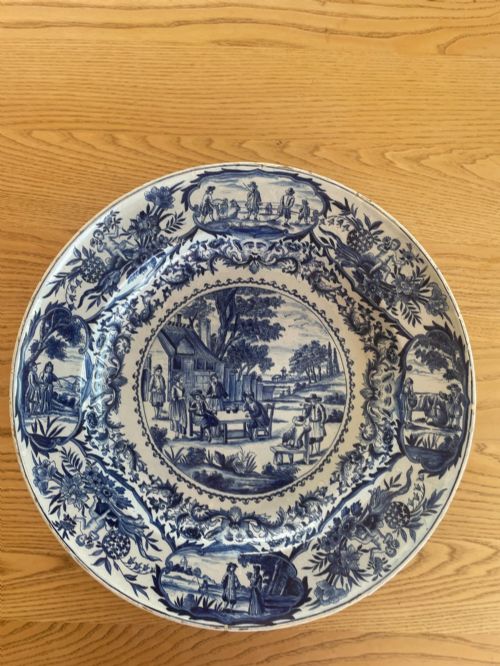
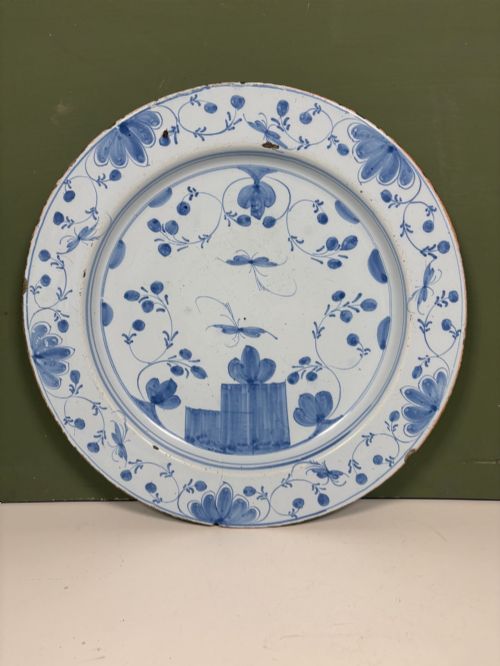
The pieces on this page span the seventeenth, eighteenth, and nineteenth centuries, originating from Dutch, English, and French potteries. The most common forms are large chargers and plates featuring traditional floral, geometric, and Chinoiserie motifs.
How they were made
Potters shaped earthenware bodies and coated them in a white tin glaze that provided an opaque, smooth canvas for subsequent brushwork. Artisans applied cobalt pigment and manganese directly onto the absorbent unfired glaze.
Grand feu techniques integrated pigments into the glaze during a single high-temperature firing, while polychrome details often required secondary firings. This method created the characteristic glossy surface seen on antique chargers and dishes.
Some eighteenth-century chargers bear named workshop origins on their reverse, linking a dusty wall plate directly to historic Dutch guilds.
What varies in quality
Quality depends upon the clarity and precision of the hand-painted brushwork, with finer pieces displaying confident, fluid lines in the floral or Chinoiserie motifs. The depth and brilliance of the cobalt pigment or polychrome glazes further distinguish superior examples from simpler ones.
The overall preservation of the tin glaze and the crispness of the earthenware form dictate the standing of a charger. Pieces exhibiting well-balanced compositions and intact glazes represent the upper tier of the range.
The Delftware Wall Display Plate Glossary
- Tin-Glazed Earthenware
- Earthenware pottery covered with an opaque white glaze containing tin oxide. This surface serves as the background for painted decoration.
- Charger
- A large decorative plate traditionally used for display on walls or sideboards rather than for dining. These substantial dishes measure larger than standard tableware.
- Chinoiserie
- European artistic styles reflecting Chinese motifs and landscapes. Artisans painted these imaginative Eastern scenes onto tin-glazed plates and chargers.
- Polychrome
- Decoration utilising multiple colours rather than a single pigment. These pieces incorporate manganese, yellow, and other hues alongside traditional blue.
- Grand Feu
- A high-temperature firing technique used for ceramics. Pigments fuse directly into the tin glaze during this single intense heat application.
- Kraak Style
- A seventeenth-century aesthetic characterised by panelled borders and central medallion scenes. Dutch delftware makers frequently adopted this decorative arrangement.
Delftware Wall Display Plate: Frequently Asked Questions
How do I hang a delftware wall display plate safely?
Utilise a professionally fitted, spring-loaded wire hanger designed specifically for heavy earthenware plates and chargers. Ensure the hardware grips the rim securely without applying excessive pressure to the tin glaze.
Position the piece away from direct sunlight and areas prone to significant temperature fluctuations to protect the ceramic body. Check the security of the wall fastening periodically to maintain stability.
How can I tell English delftware apart from Dutch delftware?
English delftware often exhibits softer earthenware bodies and distinct glaze tones developed in workshops around London, Bristol, and Lambeth. Dutch delftware frequently displays crisper blue and white painting influenced by imported Asian porcelain.
Examining the foot ring and the characteristics of the tin glaze reveals subtle variations in manufacturing techniques between the regions.
Were these plates actually used for dining?
Large chargers and specific display plates were primarily manufactured for visual presentation on walls or dressers in wealthy households. Their substantial size and delicate tin-glazed surfaces made them ill-suited for everyday kitchen use.
Smaller plates occasionally saw service at table, but surviving antique examples generally owe their preservation to their decorative function.
What causes crazing on antique delftware?
Crazing occurs when the tin glaze contracts at a different rate than the underlying earthenware body over long periods. This network of fine lines develops naturally as the ceramic material ages.
Environmental changes and humidity can influence the visibility of these microscopic surface fissures across older chargers and dishes.