



Delftware Pottery Charger
These delftware pottery charger examples bring centuries of hand-painted tin-glazed earthenware directly to your walls and tables.
Delftware Pottery Charger
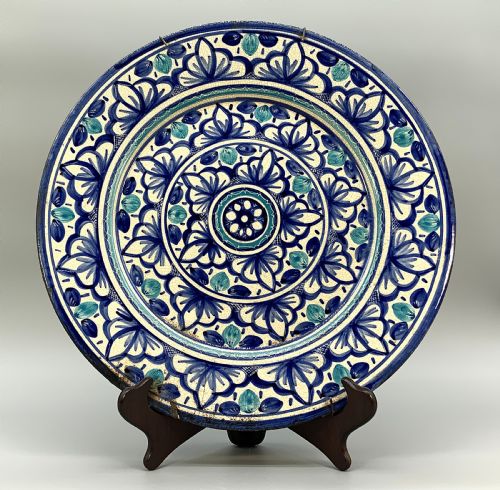
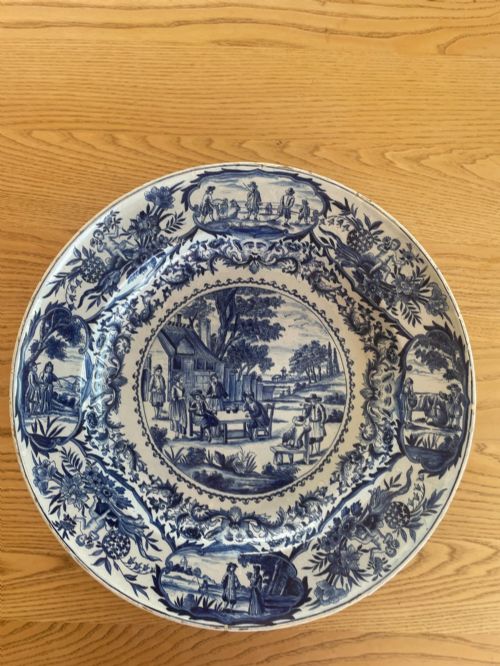
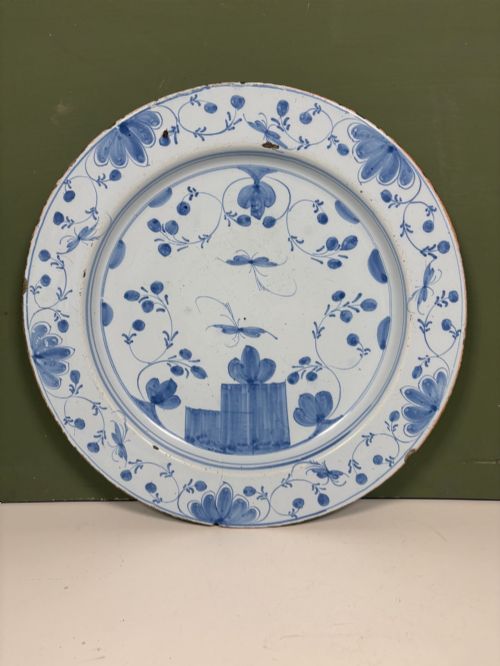
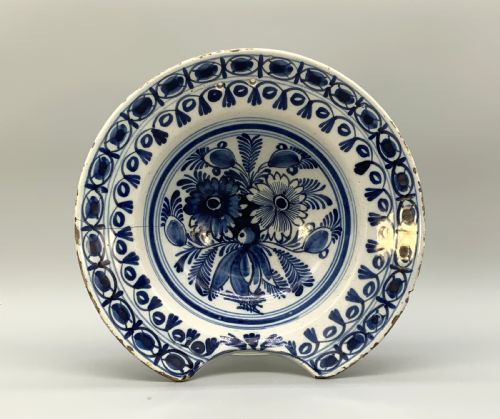
A delftware pottery charger is a broad, shallow decorative plate designed primarily for display rather than everyday dining. When searching for this phrase, collectors encounter various forms including large dishes, barber's bowls, and lobed plates spanning the seventeenth and eighteenth centuries.
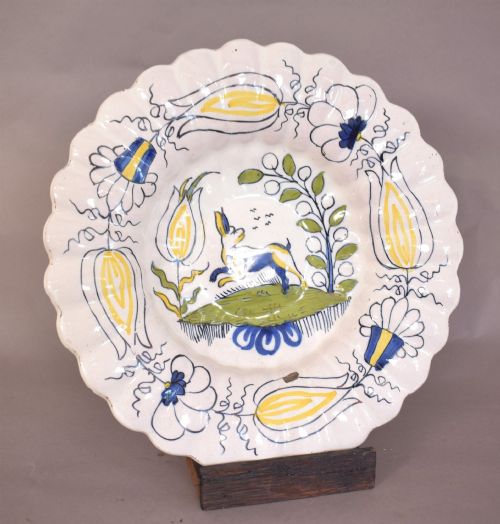
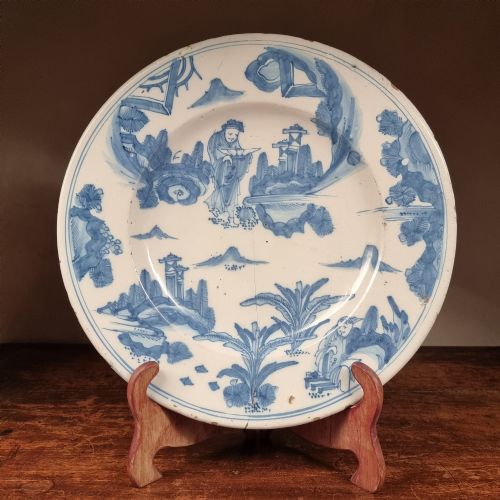
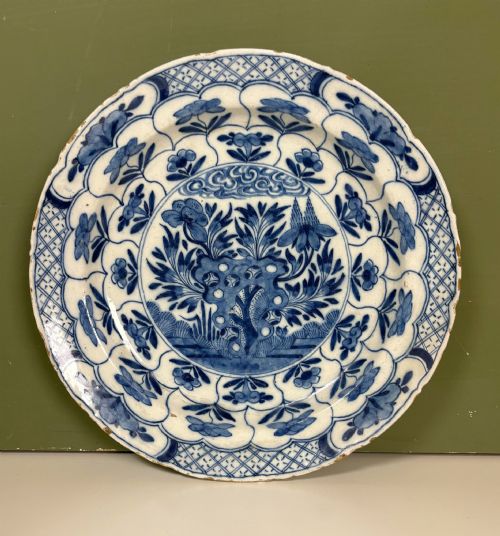
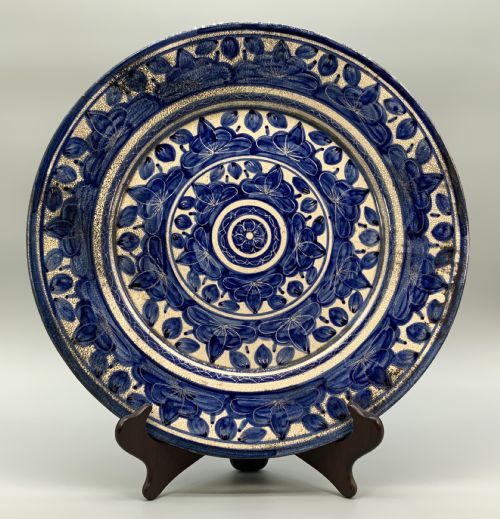
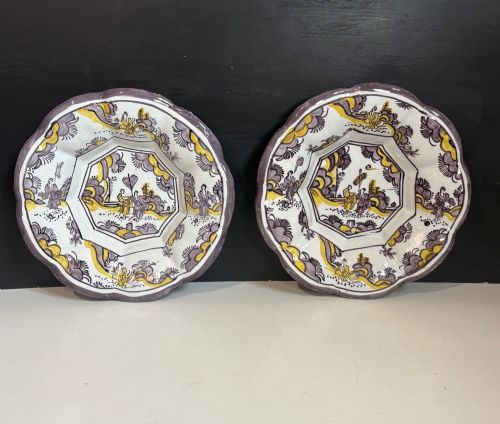
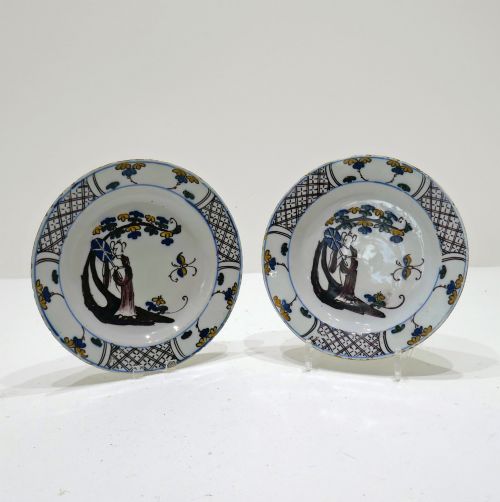
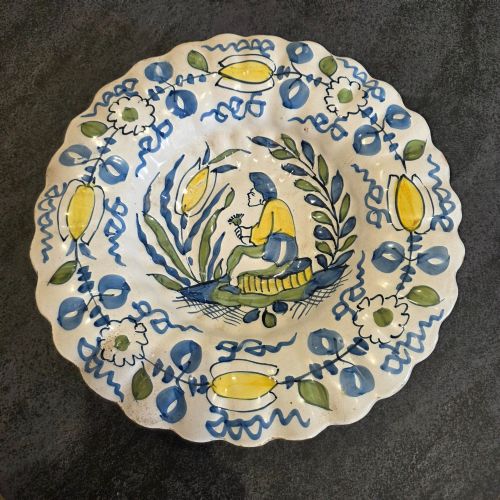
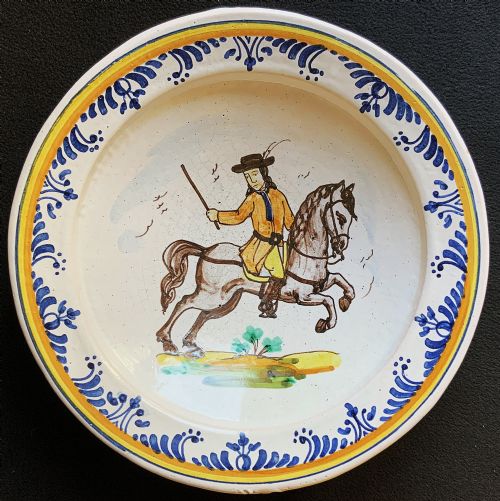
Dutch and English workshops dominate the available selection, alongside pieces from Spanish and continental makers. The forms range from plain blue and white domestic plates to expansive polychrome chargers featuring floral or Chinoiserie motifs.
How they were made
Potters shaped earthenware from ordinary clay before coating the biscuit body in a white tin glaze that provided an opaque, smooth canvas for painting. Artisans applied cobalt pigment and other metallic oxides directly onto the absorbent unfired glaze.
Firing took place in traditional kilns where the pigments fused into the liquid tin layer, resulting in characteristic gloss and subtle surface pooling. Workshops often utilised grand feu techniques or added low-temperature polychrome overglaze details.
Certain barber's bowls retain curved cutouts specifically shaped to rest comfortably beneath a seventeenth-century gentleman's chin.
What varies in quality
Execution of the painted brushwork separates basic utility vessels from exceptional studio works. Fine specimens display confident, fluid cobalt strokes and balanced polychrome compositions rather than hurried or muddy detailing.
The density and brilliance of the tin glaze itself dictate visual depth. Superior examples possess an even, luminous white ground that enhances the contrast of the painted decoration.
The Delftware Pottery Charger Glossary
- Tin-glazed earthenware
- Pottery covered in an opaque white glaze containing tin oxide. This technique originated in the Middle East before spreading through Europe via Spain and the Netherlands.
- Polychrome
- Decoration employing multiple colours rather than a single pigment. Painters utilised mineral oxides to produce yellows, greens, and manganese purples alongside standard cobalt blue.
- Grand feu
- A high-temperature kiln firing used to set cobalt blue designs directly into the tin glaze. This method produced durable decoration where the pigment sank deep into the surface.
- Barber's bowl
- A specialised dish featuring a semicircular cutout designed to fit against a customer's neck. These vessels frequently doubled as bleeding bowls in historical medical practices.
- Chinoiserie
- European artistic interpretations of Chinese and East Asian visual motifs. Artisans painted imaginative landscapes and figures onto domestic ceramics during successive trade booms.
Delftware Pottery Charger: Frequently Asked Questions
How were delftware chargers displayed?
Historic households typically mounted these large plates on dresser shelves or hung them directly on walls using pierced foot rings or wire attachments.
They served primarily as ornamental centerpieces to showcase wealth and taste rather than serving dishes for food.
What is the difference between a plate and a charger?
Chargers are significantly larger in diameter than standard dining plates, generally measuring upwards of thirty centimetres across.
Their substantial size provided painters with a broad surface area for intricate pictorial scenes and floral borders.
How do I clean an antique tin-glazed dish?
Dust these fragile ceramic pieces gently with a dry, soft cloth to prevent accumulation without introducing moisture to historical earthenware.
Water and commercial cleaning solutions can penetrate old glaze fractures and destabilise the porous clay body beneath.
How can I distinguish English delft from Dutch pieces?
English workshops often employed distinct clay bodies and colour palettes influenced by local pottery traditions and imported wares.
Examinations of the unglazed foot rim frequently reveal clues regarding regional manufacturing techniques and kiln furniture marks.