
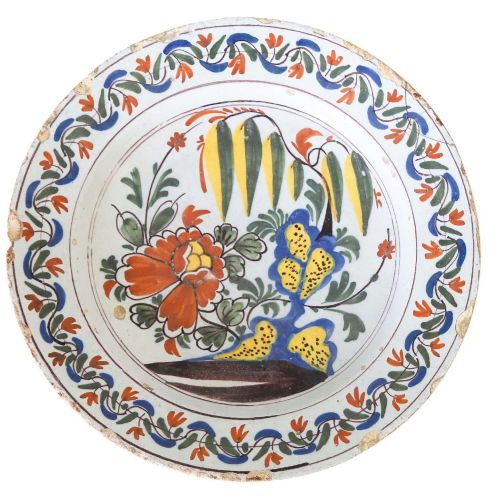


Delft Floral Ceramic Plate
These delft floral ceramic plate examples combine tin-glazed earthenware with hand-painted cobalt pigment to bring centuries of European craft straight to your wall or table.
Delft Floral Ceramic Plate
A delft floral ceramic plate brings centuries of European tradition into your home, drawing from 18th century styles and techniques. You will find chargers, platters, and smaller decorative plates spanning periods from 1700 through the 19th century.
The pieces on this page lean heavily into Dutch and English origins, showcasing geometric floral patterns and traditional painting methods. Whether you encounter a large charger or a small decorative plate, each item reflects the distinct aesthetic of 18th century European workshops.
Materials and production methods
Makers shaped these objects using earthenware bodies covered in a characteristic tin glaze that provided a smooth, opaque white surface for painting. Artisans then applied cobalt pigment and polychrome colours by hand.
Firing techniques such as grand feu styles allowed pigments to fuse directly into the wet glaze, creating durable surfaces with rich manganese and blue tones.
Listings feature 18th century and 19th century periods, incorporating earthenware, tin glaze, and walnut materials.
Distinguishing quality across pieces
Quality shows in the precision and fluidity of the hand-painted floral decoration, where confident brushwork separates standard output from superior examples. The consistency of the tin glaze and the complexity of polychrome or manganese palettes also dictate the visual strength of the object.
Larger chargers and items displaying intricate geometric floral layouts generally demand greater skill from the decorator than smaller, simpler plates do.
De Witte Ster
The Delft Floral Ceramic Plate Glossary
- Tin Glaze
- An opaque white ceramic glaze containing tin oxide that creates a pale background for painted decoration. This coating defines the classic appearance of delftware.
- Charger
- A large decorative plate traditionally used for display or formal service rather than daily dining. These substantial pieces often feature the most elaborate painted scenes.
- Cobalt Pigment
- A metallic colourant producing deep blue hues under high-temperature kiln firings. It remains the primary pigment used across traditional delft ceramics.
- Grand Feu
- A high-temperature firing technique where pigments merge directly into the raw glaze. This method produces distinctive soft edges on the painted motifs.
- Polychrome
- The use of multiple colours beyond standard blue within a single painted design. This approach often incorporates vibrant floral hues.
Delft Floral Ceramic Plate: Frequently Asked Questions
What is a delft floral ceramic plate?
A delft floral ceramic plate is a tin-glazed earthenware piece featuring hand-painted botanical or geometric decoration, typically originating from 18th century Dutch or English kilns.
These items range from large display chargers to smaller domestic plates, capturing traditional European craftsmanship.
How were these plates used historically?
Large chargers served primarily as decorative wall hangings or sideboard centrepieces during the 18th century, while smaller plates saw occasional use at table.
Their tin-glazed surfaces were somewhat vulnerable to chipping, which encouraged display over heavy everyday utility.
How do I care for antique delft?
Keep your pieces away from direct moisture and handle them with care to protect the historic tin glaze from impact or abrasion.
Display them securely using appropriate plate hangers or stands designed for antique ceramics.
How can I tell the age of a plate?
Dating relies on examining the characteristics of the earthenware body, the tone of the tin glaze, and the style of the hand-painted floral motifs.
Eighteenth-century examples often exhibit specific glaze pooling and pigment behaviours distinct from later 19th-century productions.