


Delft Blue Charger Plate
A delft blue charger plate brings bold tin-glazed earthenware into a room, offering large display surfaces painted in rich cobalt pigment.
Delft Blue Charger Plate
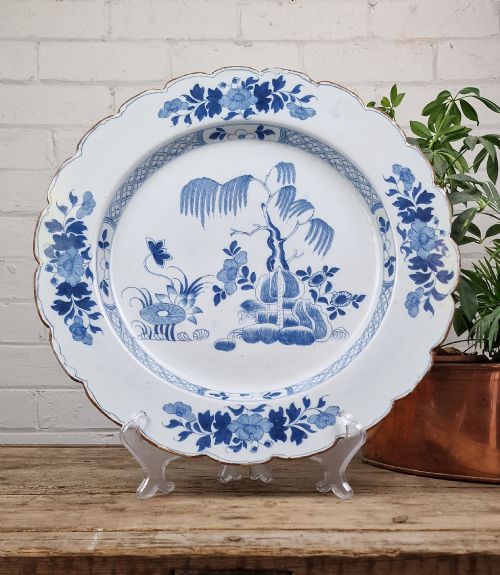
When you search for a delft blue charger plate, you encounter wide tin-glazed earthenware dishes designed primarily for wall display or grand table service. These large plates span several centuries of ceramic production, originating from workshops in England, the Netherlands, and continental Europe.
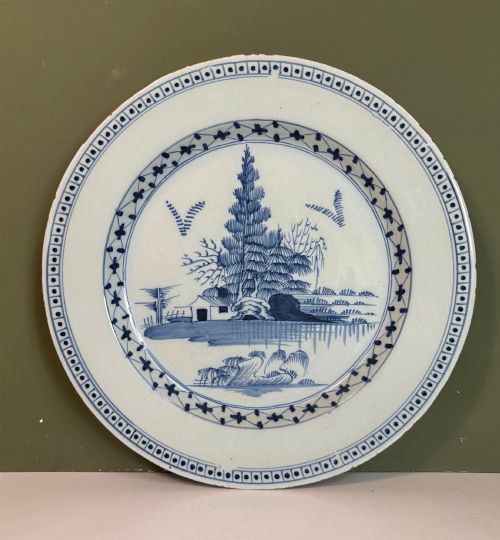
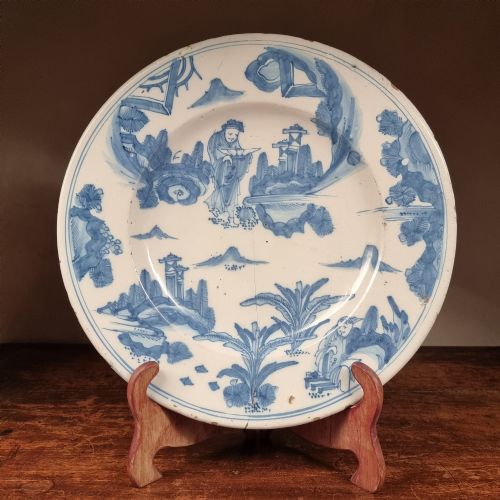
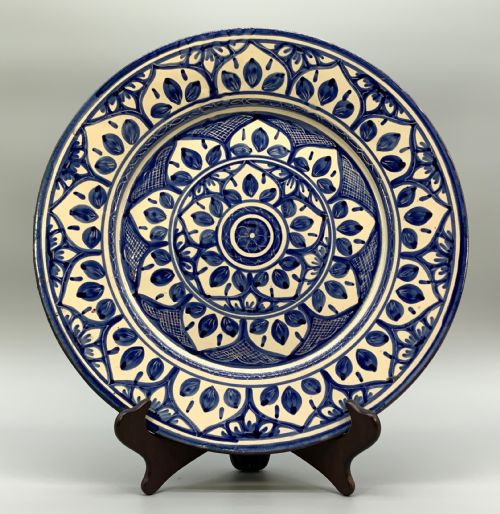
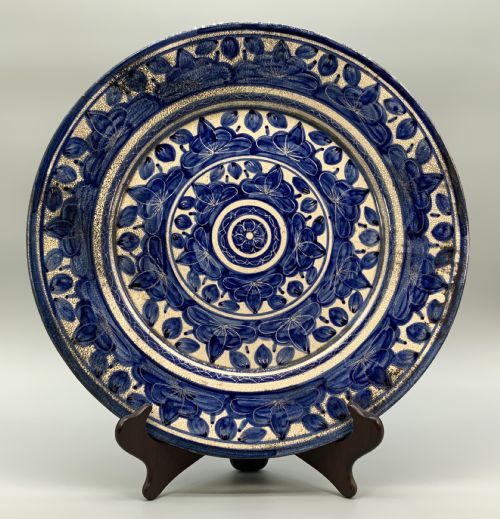
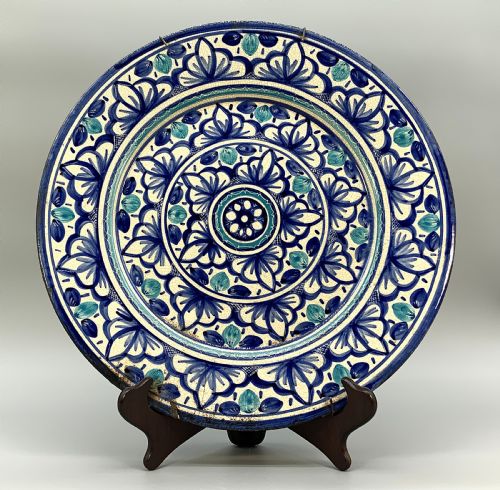
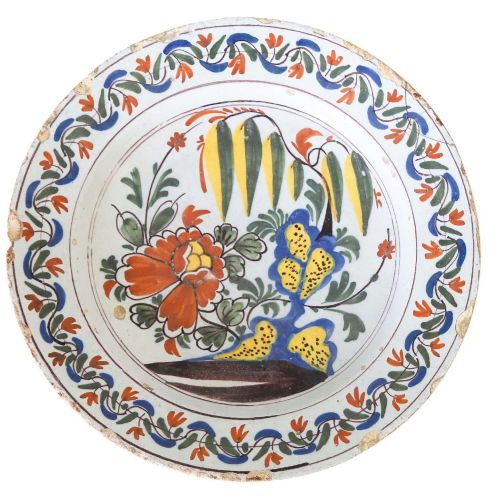
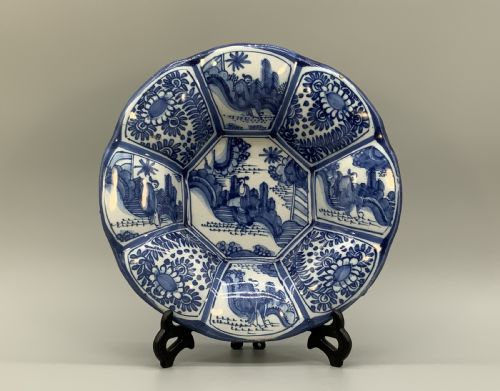
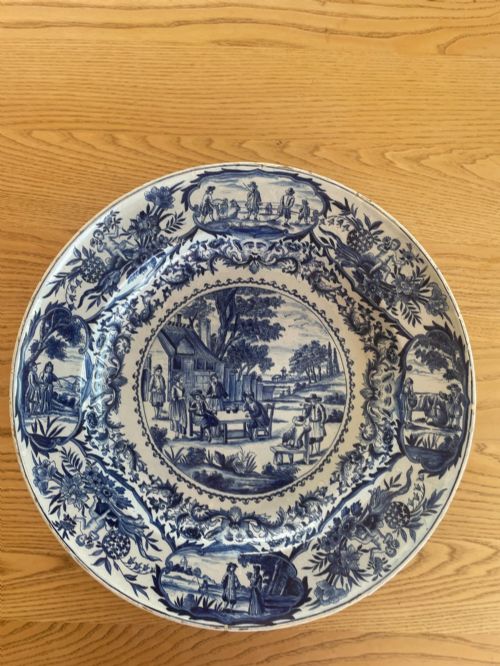
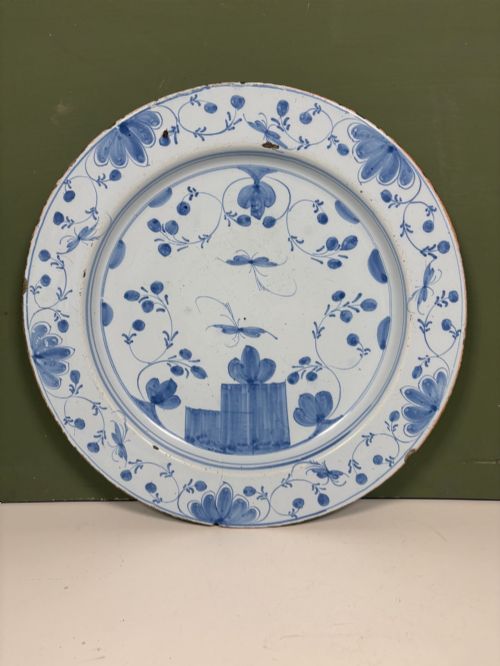
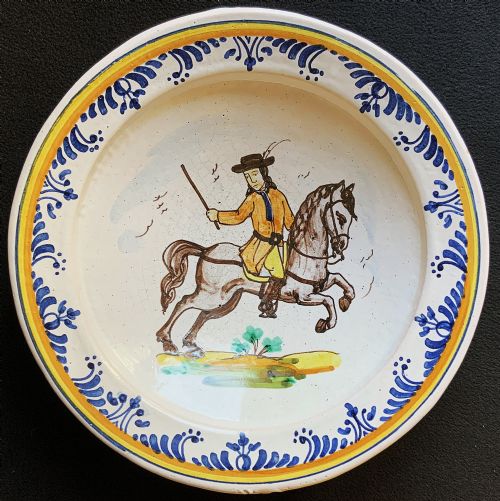
The version you meet most often on this page is the eighteenth-century charger, painted in cobalt blue with floral motifs, chinoiserie scenes, or geometric patterns. Alongside these, seventeenth-century examples and nineteenth-century revivals appear, showing how potters continually returned to this tin-glazed tradition.
How they were made
Potters shaped earthenware bodies from local clay, firing the piece once before applying an opaque white glaze containing tin oxide. This tin glaze provided a smooth, milky white background that absorbed subsequent mineral pigments.
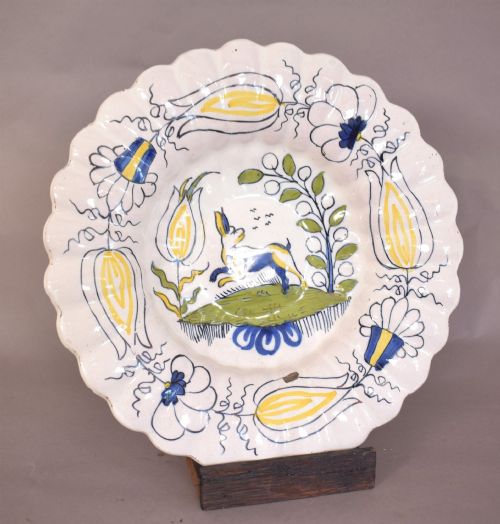
Painters applied cobalt pigment or polychrome oxides directly onto the unfired glaze, allowing the colour to sink into the porous surface during the final high-temperature kiln firing. This technique created soft, slightly blurred edges around the painted brushstrokes.
Listings feature earthenware chargers spanning from the seventeenth century through to nineteenth-century revivals and twentieth-century Moorish style interpretations.
What varies in quality
The refinement of the painted brushwork dictates visual success, separating hastily decorated utility wares from ambitious charger plates painted by skilled hands. Crisp cobalt pigment control and well-composed floral or figurative designs elevate a piece significantly.
The stability and thickness of the tin glaze also matter, as even coverage without excessive crawling or pooling preserves the clarity of the underlying earthenware body and its painted decoration.
Van Genden
The Delft Blue Charger Plate Glossary
- Charger plate
- A large decorative plate, traditionally exceeding thirty centimetres in diameter, used for ceremonial dining or wall display rather than individual service. These expansive surfaces provided potters with wide canvases for pictorial decoration.
- Tin-glazed earthenware
- Pottery covered in an opaque white glaze made by adding tin oxide to a lead glaze base. This technique originated in the Middle East before spreading through Moorish Spain, Italy, and eventually to Dutch and English potteries.
- Cobalt pigment
- A mineral colourant yielding deep blue tones when fired under high kiln temperatures. It remained the primary pigment used on delftware because it withstood the heat required for tin-glaze maturation without burning away.
- Chinoiserie
- European artistic styles reflecting Chinese decorative motifs, popular on eighteenth-century ceramics. Painters rendered imaginative landscapes, pagodas, and figures using blue pigment on white tin glaze.
- Polychrome
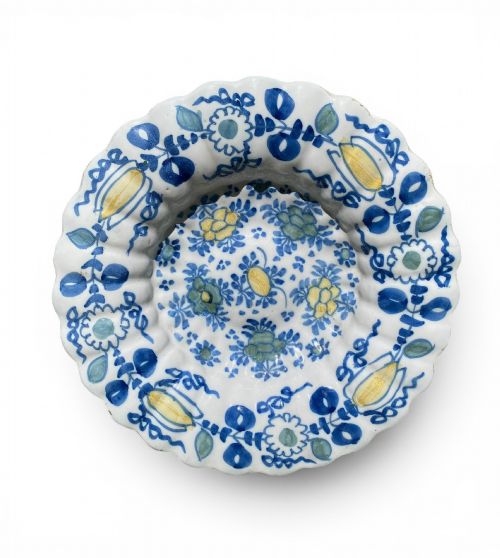
- Decoration employing multiple colours alongside the standard blue pigment, typically incorporating manganese purple, copper green, and iron yellow. These multi-coloured palettes appeared frequently on English and continental delftware.
Delft Blue Charger Plate: Frequently Asked Questions
How were charger plates used?
Large delft plates functioned primarily as decorative chargers displayed on walls, sideboards, or dresser shelves rather than for everyday dining. Their substantial diameter and fragile tin glaze made them prestige objects for wealthy households.
Over time, many of these dishes transitioned entirely into ornamental items, hung using wire frames or displayed upright in plate rails to showcase the hand-painted cobalt designs.
How do I hang a delft charger safely?
Displaying a large earthenware plate requires a properly fitted brass spring hanger or a dedicated plate display groove. The weight of the charger means hanging systems must support the rim evenly without putting pressure on historic glaze chips or hairline cracks.
Ensure the wall fixing is secure and positioned away from direct sunlight or heavy vibrations, which can gradually loosen wall-mounted ceramics over the years.
How do I tell seventeenth and eighteenth century pieces apart?
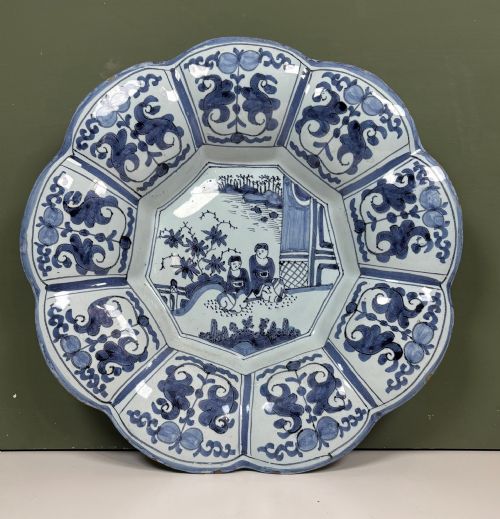
Seventeenth-century chargers often display heavier earthenware bodies influenced by Kraak porcelain imports, featuring lobed rims and deep well profiles. The tin glaze on these earlier examples frequently shows greater thickness and minor surface pitting.
Eighteenth-century plates generally present lighter bodies, flatter rims, and more refined floral or chinoiserie brushwork executed with controlled cobalt pigment. Examining the foot ring and the exposed earthenware biscuit underneath clarifies the manufacturing period.
Can I wash tin glazed earthenware?
Cleaning these antique plates requires gentle dusting with a soft dry cloth rather than immersion in water. The porous earthenware body and historic tin glaze remain vulnerable to moisture infiltration, which can cause staining or destabilise old repairs.
Avoid chemical detergents and running taps entirely, treating the surface with the care appropriate for fragile centuries-old ceramics.