
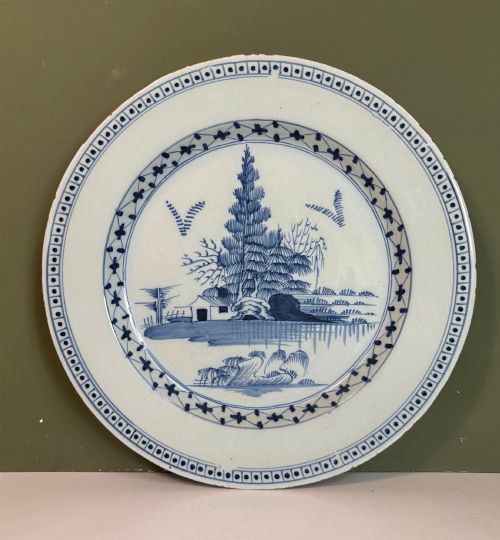
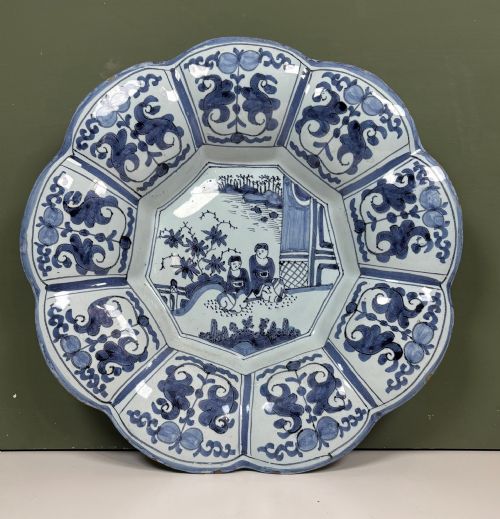
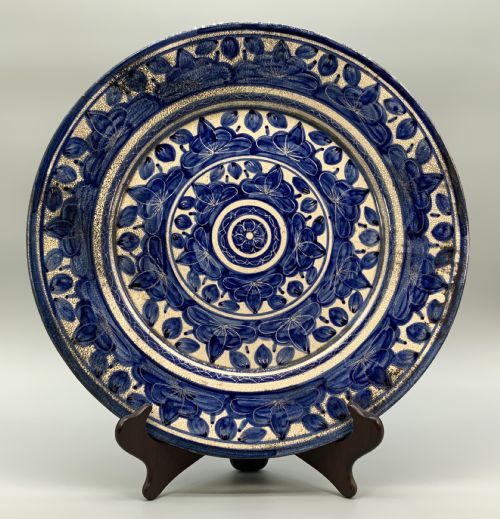


Cobalt Blue Faience Dish
A cobalt blue faience dish brings rich tin-glazed earthenware into a room, offering striking blue pigments painted across historic ceramic forms.
Cobalt Blue Faience Dish
A cobalt blue faience dish unites tin-glazed earthenware with deep blue pigment, taking forms such as decorative plates, chargers, and centrepiece bowls. Buyers seeking a cobalt blue faience dish will find pieces spanning the eighteenth century through to later revivals like the nineteenth century and nineteen-forties.
The selection here draws heavily from eighteenth-century English and Dutch delftware, alongside continental Moorish style charger plates and French majolica Gien faience. These varied origins mean that plates and chargers share tin glazes while differing slightly in their painted motifs and regional workshops.
Many items date directly to the seventeen-hundreds, presenting early earthenware surfaces that show centuries of handling. Alongside these chargers and plates, collectors encounter centrepiece bowls shaped in the nineteenth century or nineteen-forties under Renaissance Revival and Moorish influences.
Materials and construction methods
Potters built these wares using basic ceramic earthenware bodies, which provided a porous base suitable for absorbing heavy fluid glazes. This foundation was shaped into broad plates, deep chargers, and centrepiece bowls before receiving further chemical preparation.
Makers applied an opaque tin glaze over the earthenware to create a smooth white surface, onto which artists painted cobalt pigment by hand. The interaction between the cobalt and the tin glaze during firing produced the characteristic deep blue tones seen across these historic dishes.
Listings feature tin-glazed earthenware and ceramic objects spanning the eighteenth century, nineteenth century, and nineteen-forties.
Assessing quality in tin-glazed ceramics
Quality rests upon the crispness of the hand-painted cobalt pigment and the evenness of the tin glaze across the earthenware body. Superior examples display confident brushwork and a stable glaze layer that covers the ceramic evenly without excessive pooling.
The finesse of the original moulding defines the distinction between standard plates and grander chargers or centrepiece bowls. Better items maintain balanced proportions and clear definition along their rims, reflecting the skill of the potter and painter alike.
The Cobalt Blue Faience Dish Glossary
- Faience
- Tin-glazed earthenware produced in Europe, typically featuring painted decoration over an opaque white glaze. This term covers various regional traditions including Dutch delftware and French majolica.
- Tin Glaze
- An opaque ceramic glaze containing tin oxide that turns white and glossy upon firing. It provides the traditional reflective background for blue painted pigments.
- Delftware
- Tin-glazed earthenware originating from towns in the Netherlands, most notably Delft, though the term also extends to English counterparts. It is famous for cobalt blue painting.
- Charger
- A large decorative plate intended for display on walls or sideboards rather than everyday dining. These wide ceramic pieces provide a generous canvas for painted scenes.
- Cobalt Pigment
- A metallic colourant used to achieve deep blue hues on ceramic surfaces. It withstands high firing temperatures without losing its intense shade.
Cobalt Blue Faience Dish: Frequently Asked Questions
What is a faience dish?
A faience dish is an earthenware vessel coated in an opaque tin glaze and decorated with coloured pigments. These pieces range from eighteenth-century plates to later continental chargers.
Potters shaped these ceramics to serve as both functional tableware and decorative display items for homes. Their glazed surfaces protected the porous clay beneath while showing off hand-painted blue designs.
How old are these ceramic dishes?
The pieces available span several eras, with many originating in the eighteenth century alongside later nineteenth-century and nineteen-forties examples. Early items often date back to seventeen-hundred delftware production.
Different periods introduced distinct regional styles, moving from traditional Dutch delftware to Moorish and Renaissance Revival revivals. Each era brought subtle changes in plate sizing and glaze thickness.
Where were these plates made?
Production centres include England and the Netherlands, alongside continental European workshops responsible for Moorish style and French Gien faience. English and Dutch delftware dominates the earlier eighteenth-century examples.
Regional variations appear in the choice of earthenware body and the specific shade of cobalt pigment used by the painters. Local ceramic traditions shaped how each charger or plate was formed and glazed.
How should I display a charger plate?
Charger plates and large centrepiece bowls work well mounted securely on walls or supported safely on sturdy plate stands. Their wide surfaces and deep blue painted motifs make them natural focal points in a room.
Keeping them away from high-traffic edges prevents accidental knocks against their historic tin-glazed earthenware edges. Proper display highlights the hand-painted details without risking structural strain.