
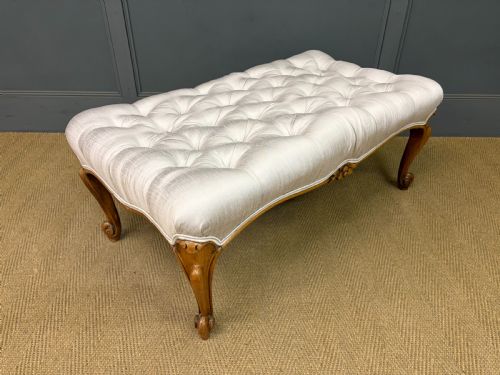
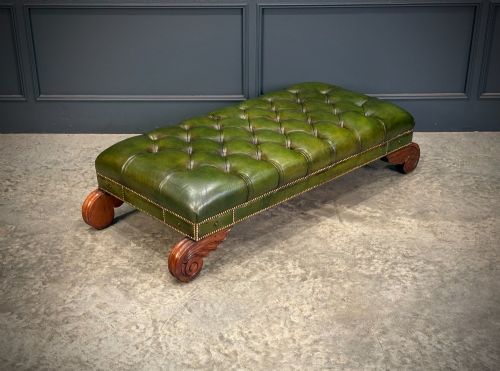
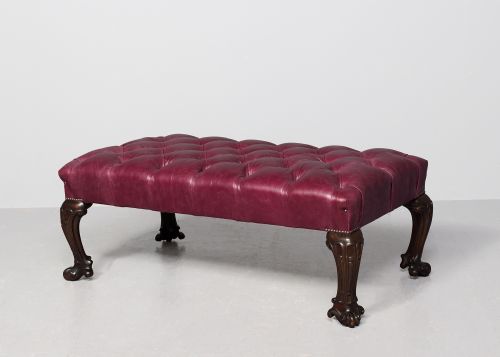
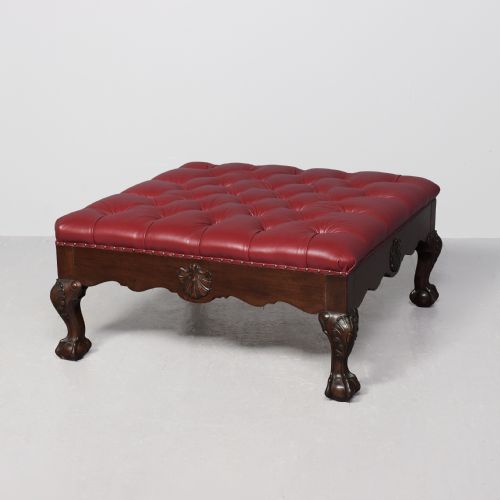



Deep Buttoned Stool
A deep buttoned stool offers practical comfort, combining rich leather upholstery with traditional timber frames from Victorian and Regency periods.
Deep Buttoned Stool
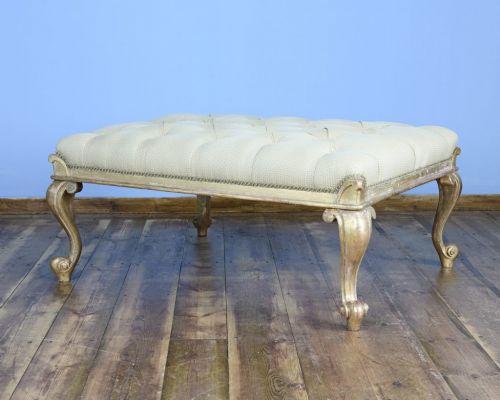
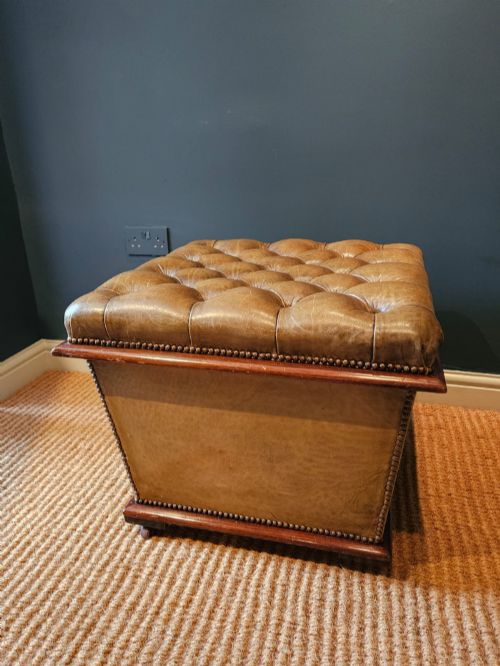
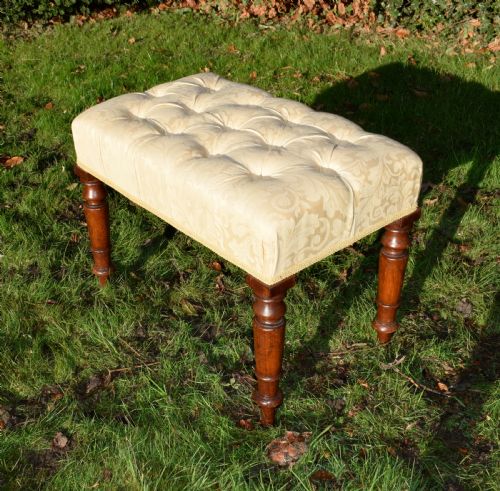
A deep buttoned stool is a padded low seat designed for drawing rooms, libraries, and country houses. These pieces range from compact footstools to grand library ottomans and long window seats.
The most common examples on this page date from the nineteenth century and the Victorian era, typically combining substantial timber frames with upholstered tops.
Makers utilised sturdy woods such as mahogany, walnut, and oak to support heavy upholstery and frequent use.
How They Were Made
Craftsmen built timber frames from mahogany, walnut, oak, and giltwood, often shaping the legs in cabriole or tapered styles.
Upholstery involved securing leather, hide, damask, or silk over deep padding, pulled into place with tensioned buttons and frequently finished with brass studding along the edges.
Deep Buttoned Stool Retail Price Guide 2026
Typical asking prices for deep buttoned stool among the pieces listed under this phrase on Sellingantiques today, from the lower quarter to the upper quarter. They describe what is for sale here now, not the wider market.
Some nineteenth-century libraries required these grand stools simply because reading heavy calfskin tomes demanded serious foot elevation.
What Varies in Quality
The distinction between standard examples and superior pieces rests on the weight of the timber frame, the choice of hardwoods like mahogany or walnut, and the depth of the buttoning.
Fine items display meticulous hand-stitching in the leather or hide, solid brass studwork, and robust structural joinery that maintains stability across grand scales.
James Shoolbred
The Deep Buttoned Stool Glossary
- Cabriole leg
- A furniture leg that curves outward at the knee and inward at the ankle, often terminating in a pad or scroll foot. This form appeared frequently on Victorian walnut and mahogany stools.
- Buttoning
- An upholstery technique where strings or twine pull the surface deep into the padding to secure filling and create a geometric pattern of tufts. It provides both structural support and texture.
- Library stool
- A large, low seating form designed for reading rooms and studies, typically upholstered in leather. These sturdy pieces often served double duty as coffee tables or footrests.
- Giltwood
- Timber coated with a thin layer of gold leaf or gold paint. This decorative finish appears on grander nineteenth-century frames.
- Damask
- A reversible figured fabric traditionally woven on a jacquard loom with patterns formed by contrasting warps and wefts. It adds formal texture to Victorian and French seating.
Deep Buttoned Stool: Frequently Asked Questions
What is a deep buttoned stool used for?
These low seats function as footrests, window seats, and library ottomans in traditional interiors. Their sturdy upholstered tops provide comfortable auxiliary seating in living spaces.
They also serve as low central tables when topped with a tray or used in front of large sofas.
How do I date a Victorian footstool?
Dating relies on timber choice, leg style, and upholstery methods recorded across nineteenth-century examples. Victorian pieces frequently employ mahogany or walnut with cabriole legs or castors.
Later adaptations and twentieth-century reproductions often feature simplified frames and machine-stitched leather.
Are these stools comfortable?
The deep buttoning technique creates a firm, supportive surface with dense padding underneath the leather or fabric. This traditional construction prevents the filling from shifting during regular use.
Larger library and centre stools offer ample space for resting feet or sitting comfortably.
What woods were used for frames?
Cabinetmakers selected durable hardwoods including mahogany, walnut, and oak to construct the structural bases. These dense timbers supported heavy upholstered tops and frequent weight.
Some grander examples incorporated parcel gilt or giltwood finishes for formal reception rooms.