





Decorative Wooden Storage Box
A decorative wooden storage box gathers centuries of joinery and inlay into a single compact container for keepsakes or tea.

Decorative Wooden Storage Box
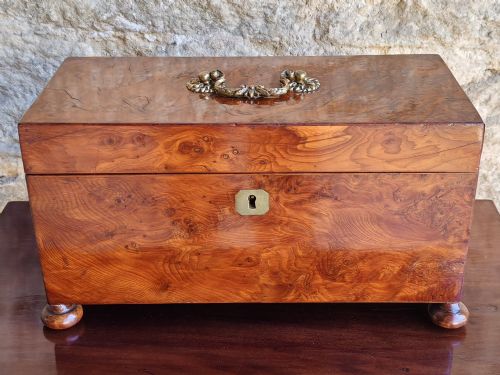
A decorative wooden storage box serves multiple domestic functions across different centuries, spanning tea caddies, trinket cases, and larger chests. The pieces found here range from Georgian satinwood containers to Victorian rosewood workboxes inlaid with mother-of-pearl.
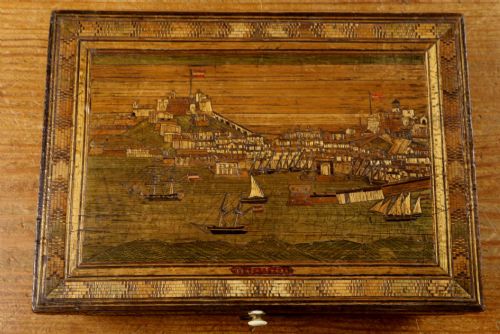
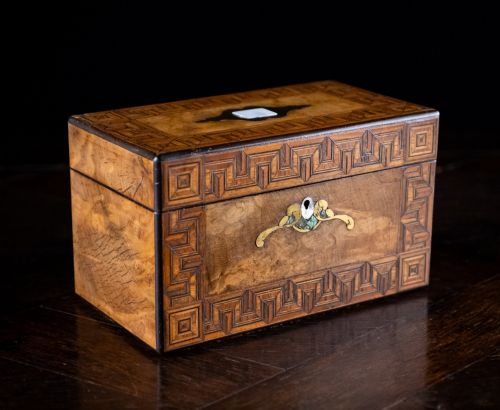
Tea caddies and small jewellery cases dominate the selection, often taking geometric sarcophagus shapes or taking the form of miniature book-shaped caskets. Regional examples include Anglo-Indian ebony work and Tunbridge ware mosaic decoration.
The objects originate from British workshops alongside continental European and Asian centres, reflecting global trade in exotic timbers during the eighteenth and nineteenth centuries.
How They Were Made
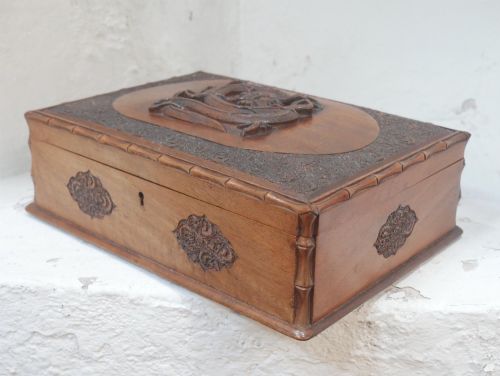
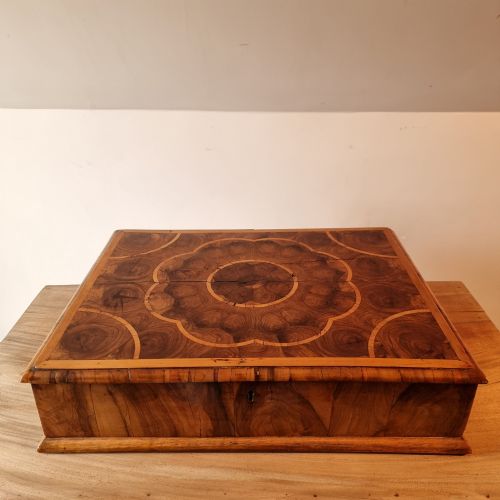
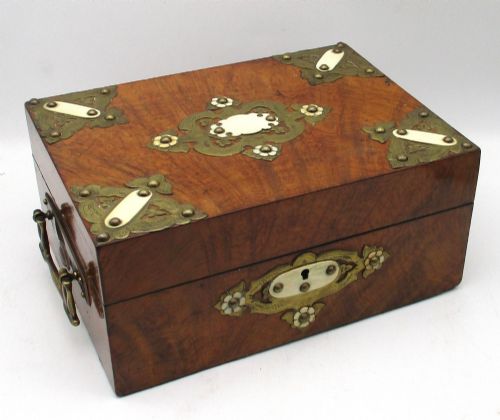
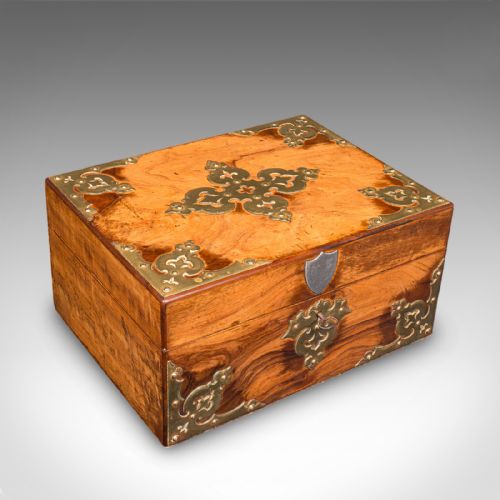
Carpenters constructed these boxes using solid native and exotic hardwoods such as mahogany, walnut, rosewood, and satinwood, often applying thin veneers over secondary framing timbers. Surface decoration relied heavily on precision cutting, using brass, bone, boxwood, and mother-of-pearl to create contrasting parquetry and marquetry patterns.
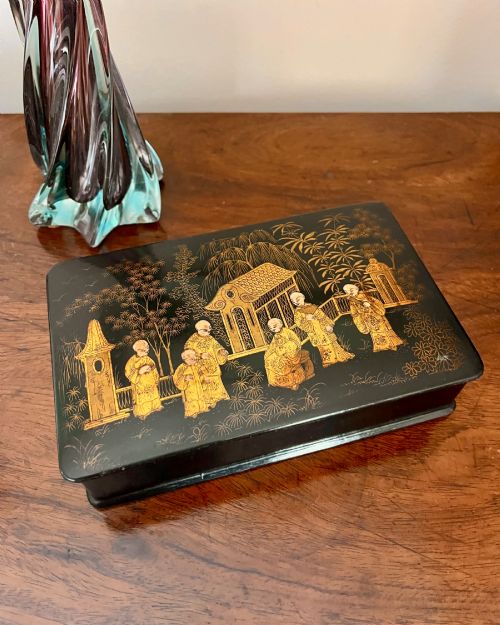
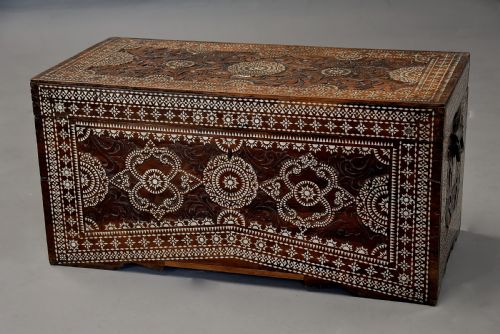
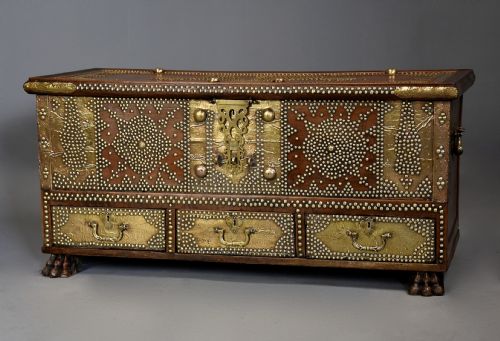
Specialist techniques defined regional outputs, from the tiny coloured wood mosaics characteristic of Tunbridge wells to the intricate brass studwork seen on Zanzibar traders chests. Hand painting, gilding, and tortoise shell application completed the surface treatments on finer caskets.
Decorative Wooden Storage Box Retail Price Guide 2026
Typical asking prices for decorative wooden storage box among the pieces listed under this phrase on Sellingantiques today, from the lower quarter to the upper quarter. They describe what is for sale here now, not the wider market.
Listings feature eighteenth and nineteenth-century boxes utilising rosewood, walnut, and mother-of-pearl across Georgian and Victorian periods.
What Varies in Quality
The distinction between standard containers and exceptional examples rests upon the precision of the timber matching and the intricacy of the inlay work. Finer boxes display continuous grain alignment across joints and tightly secured decorative veneers without lifting edges.
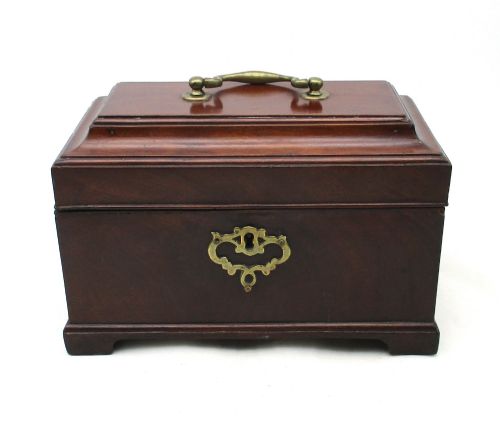
Internal fittings dictate the grade of many caskets, particularly in tea caddies and sewing boxes where original glass mixing bowls, velvet linings, and compartmentalised trays remain intact. The sophistication of the brass locking mechanisms and escutcheons further separates everyday utility boxes from high-status salon pieces.
Tahan of Paris
The Decorative Wooden Storage Box Glossary
- Tea Caddy
- A small box designed specifically for storing dry tea leaves, often fitted with internal lidded compartments. These containers frequently utilised precious woods to safeguard expensive imported contents.
- Tunbridge Ware
- A form of British woodwork characterised by tiny wooden mosaic tiles arranged to form pictorial or geometric surface patterns. Artisans assembled thousands of microscopic cross-sections of dyed wood to create these detailed exterior scenes.
- Marquetry
- The art of applying decorative veneer pieces to a structural wooden surface to form intricate pictures or abstract patterns. Craftsmen combined contrasting timbers like amboyna, satinwood, and walnut for visual depth.
- Parquetry
- Geometric wood inlay work arranged in repeating patterns such as cubes, triangles, or stripes. This technique decorated box lids and borders using varied grain directions to catch the light.
- Sarcophagus
- A box shape featuring a domed or steep-sided sloping lid resembling an ancient stone coffin. Regency and Georgian makers favoured this architectural profile for substantial tea caddies.
Decorative Wooden Storage Box: Frequently Asked Questions
How were antique tea caddies used?
Tea leaves were extremely expensive commodities during the eighteenth and nineteenth centuries, requiring secure storage under lock and key to prevent servants or guests from helping themselves. The master of the house kept the key, dispensing the leaves personally into the teapot for each social gathering.
Many caddies included an internal glass mixing bowl where black and green teas were blended together before brewing. Separate lidded compartments kept the distinct leaf varieties from mixing prematurely.
What is Tunbridge ware?
Tunbridge ware refers to a specialised form of mosaic woodwork originating from Kent during the nineteenth century. Craftsmen glued together thousands of microscopic strips of naturally coloured woods, then sliced the block crosswise to produce intricate pictorial bands.
These mosaic veneers decorated small trinket boxes, stamp cases, and writing slopes with detailed geometric patterns or rustic landscape views. The resulting surfaces showcased the natural tones of dozens of different British tree species without using artificial stains.
How do I date a wooden box?
Dating relies heavily on the primary timber choices, construction methods, and hardware styles. Eighteenth-century examples often utilised solid mahogany or walnut with hand-cut dovetail joints, while Victorian iterations frequently employed rosewood or coromandel veneers over pine.
Interior linings and paper remnants also offer clues, alongside the evolution of brass hinges and lock plates. Earlier locks tended to be hand-wrought iron, whereas nineteenth-century pieces featured stamped brass mechanisms bearing patent stamps.