


Decorative Walnut Desk Box
A decorative walnut desk box brings rich timber grain and period craftsmanship straight to the tabletop.
Decorative Walnut Desk Box
When you search for a decorative walnut desk box, you encounter a refined group of antique containers designed for correspondence, writing implements, and personal valuables. These pieces span several centuries, with particular strength in Victorian creations alongside earlier examples.
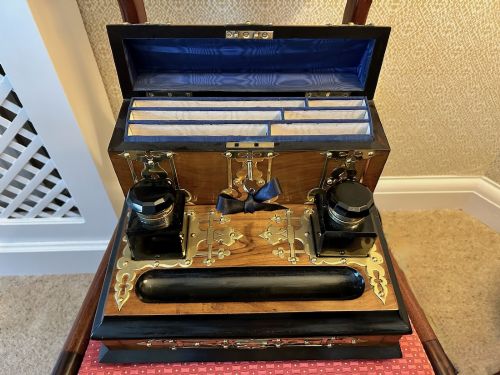
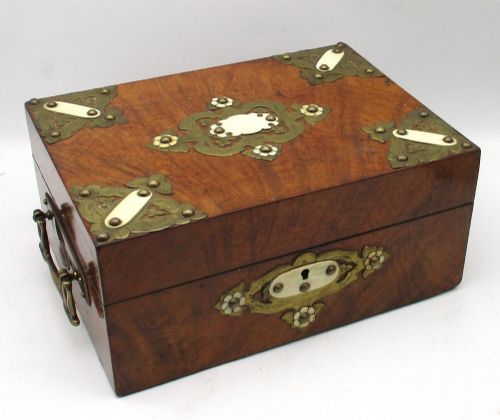
The selections on this page encompass various forms including writing slopes, table cabinets, jewellery boxes, and inkstands. Walnut and burr walnut dominate the timber palette, frequently enhanced by brass mounts and marquetry inlay.
Originating across different European centres, these boxes range from English Tunbridge ware writing slopes to French table boxes and seventeenth-century walnut table cabinets. Each form reflects the specific writing and organisational needs of its era.
Materials and construction
These items utilise solid walnut and burr walnut veneers applied to stable secondary woods such as oak, creating surfaces with deep figuring and warm tones. Artisans selected timber for its natural decorative qualities, often framing the grain with contrasting stringing or marquetry.
Construction frequently incorporates brass hardware, including escutcheons, corner brackets, and hinges, which provided structural reinforcement alongside ornamental contrast. Detail work relies on traditional methods such as bone and mother-of-pearl inlay, ebony detailing, and specialised mosaic techniques like Tunbridge ware.
Some Victorian boxes incorporate secret drawers that reveal themselves only when you press a hidden spring.
Judging the range
Quality in these pieces rests upon the precision of the cabinetwork and the selection of the timber. Finely figured burr walnut veneers and intricate marquetry inlay distinguish superior examples from simpler utilitarian boxes.
The complexity of the interior fittings and the sophistication of the hardware further separate standard items from exceptional ones. Well-preserved original surfaces and integrated locking mechanisms indicate higher standards of original manufacture.
The Decorative Walnut Desk Box Glossary
- Burr walnut
- A specialised timber cut from the abnormal growth of a walnut tree, yielding highly swirled and mottled grain patterns. Cabinetmakers prized this veneer for principal exterior surfaces.
- Marquetry
- The art of applying small pieces of veneer to a structure to form decorative patterns or pictorial scenes. Artisans used various woods to achieve contrasting natural tones.
- Writing slope
- A portable desk featuring a sloping lid that opens to reveal a slanted writing surface and compartments for stationery and ink. Many include hidden drawers.
- Tunbridge ware
- A form of mosaic woodwork produced in Kent, featuring minute geometric or pictorial motifs built from thousands of tiny coloured wood blocks. This technique adorned specialised boxes.
- Table cabinet
- A small, multi-drawer case designed to rest upon a desk or table for storing documents or valuables. These pieces often feature substantial architectural detailing.
Decorative Walnut Desk Box: Frequently Asked Questions
What is a decorative walnut desk box used for?
These boxes served historical functions for storing writing paper, inkwells, letters, and small personal valuables. Today, they continue to function as practical desktop storage or decorative focal points.
Their compartmented interiors accommodate modern small items while preserving period character on a table or shelf.
How do I date an antique walnut box?
Dating relies on examining the construction methods, interior fittings, timber choices, and decorative styles visible on the piece. Secondary woods and hardware types also provide key chronological indicators.
Comparative analysis against documented examples from periods like the Victorian era or seventeenth century helps establish the decade of origin.
How should I care for antique walnut wood?
Maintain these pieces by keeping them away from direct sunlight and fluctuating humidity sources to protect the wood and veneer. Occasional dusting with a soft, dry cloth preserves the finish.
Avoid commercial liquid polishes, relying instead on traditional wax formulations sparingly applied if the timber appears dry.
Are these boxes suitable for daily desk use?
Many examples remain robust enough for daily service, particularly writing slopes and table boxes with sound hinges and functional lids. Careful handling ensures the historical structure endures.
Delicate marquetry or intricate bone inlay requires gentler treatment to prevent surface loss over time.