


Inlaid Walnut Storage Casket
An inlaid walnut storage casket brings rich dark timber and fine geometric banding straight into a room, offering a tactile place to keep small valuables.
Inlaid Walnut Storage Casket
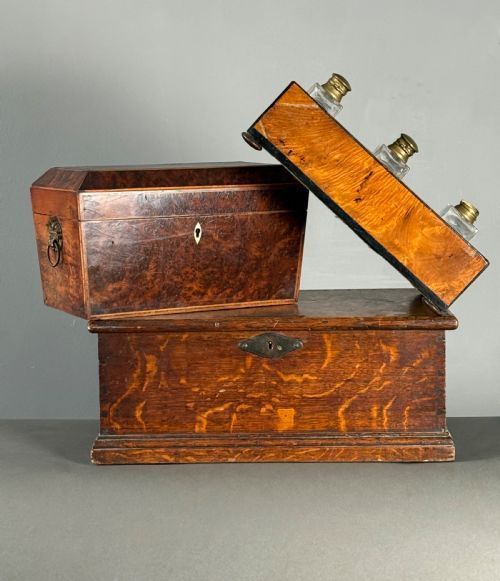
An inlaid walnut storage casket is a small containment piece built from walnut or burr walnut, featuring decorative contrasting inserts. When you search for this phrase, you find various enclosed forms including tea caddies, games boxes, jewellery boxes, and work boxes.
The pieces on this page span several periods, from the Regency era through to the Victorian period, including specific dates such as 1840, 1880, 1890, and around 1900. They encompass styles like Arts and Crafts, Italian Renaissance Revival, and Tunbridge Ware.
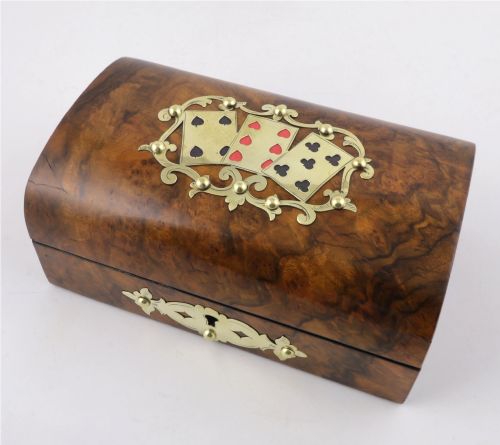
Most items are designated as boxes and caskets, serving specific historical domestic functions such as holding playing cards, poker dice, or sewing implements. The fundamental form remains a lidded wooden container designed to sit on a table.
Materials and construction
Walnut and burr walnut form the primary structural and decorative body of these caskets, providing a deeply figured brown grain. Artisans frequently select figured walnut for its rich swirling patterns on the main surfaces.
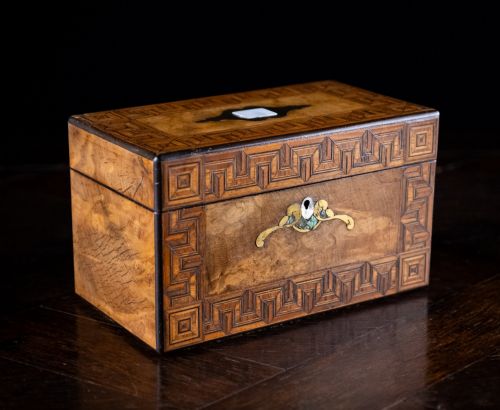
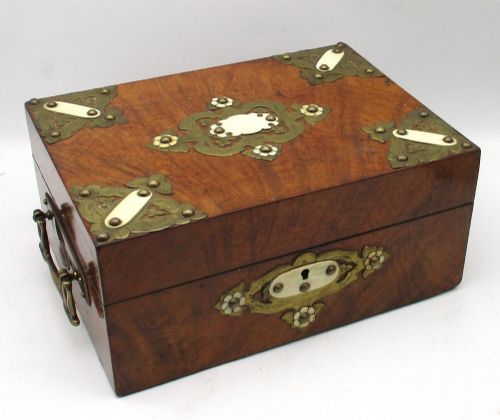
Contrasting timbers and materials such as boxwood, ebony, fruitwood, and rosewood are utilised for parquetry and linear banding. In addition, makers integrate brass handles or escutcheons alongside mother-of-pearl and bone inlay to create complex geometric or pictorial motifs.
Several boxes double as gaming companions, fitted out specifically to house playing cards and poker dice for Victorian evening entertainment.
Assessing quality and execution
Quality in an inlaid walnut storage casket reveals itself in the precision of the parquetry and the tightness of the joints where different timbers meet. Sharp, flush alignment between the walnut body and the delicate bone, ebony, or boxwood inserts separates disciplined workshop production from simpler output.
The choice of surface veneer heavily influences the visual weight of the piece, with highly figured burr walnut commanding attention through natural grain movement rather than applied ornament. Furthermore, the integration of supplementary materials like mother-of-pearl and detailed brasswork indicates the original maker's investment of time and cost.
The Inlaid Walnut Storage Casket Glossary
- Parquetry
- A geometric mosaic of wood pieces used for decorative veneering on surfaces. This technique creates repeating patterns like cubes or bricks across the lid of a box.
- Burr walnut
- A prized growth deformity in walnut timber that yields swirling, mottled grain patterns. Cabinet makers slice this wood into thin veneers to cover primary box surfaces.
- Tunbridge Ware
- A type of woodworking originating from Tunbridge Wells featuring tiny mosaic tiles made from multiple natural woods. These mosaics depict landscapes or geometric bands.
- Escutcheon
- A flat plate of brass surrounding a keyhole on the front of a casket. It protects the surrounding walnut timber from wear caused by the key.
Inlaid Walnut Storage Casket: Frequently Asked Questions
What were these caskets used for originally?
These caskets served specific domestic storage needs in the nineteenth century, holding items like loose tea leaves, playing cards, dice, jewellery, or sewing gear. Their compartmentalised interiors kept delicate personal possessions organised and secure.
Over time, owners repurposed them as general decorative boxes on tables and desks. Today, they continue to function as safe containers for modern trinkets and daily carry items.
How do I date a walnut storage casket?
Dating relies on observing stylistic markers, construction methods, and the specific types of inlay present. Pieces from the Regency era show different proportions compared to later Victorian or Arts and Crafts examples.
Additionally, reference points like Tunbridge Ware or Italian Renaissance Revival motifs help narrow down the decade of production. Examining the secondary woods and lining materials inside provides further clues to the manufacturing period.
What is the difference between a box and a casket?
In historical terminology, a box typically denotes a straightforward lidded container with simple geometric angles. A casket often implies a more formal, decorated container, frequently associated with valuables or ritual use.
In marketplace listings, these terms frequently overlap to describe hinged wooden storage receptacles. Both categories include specialised interiors designed for specific pastimes or accessories.
How do I care for antique walnut and inlay?
Keep walnut furniture and boxes away from direct sunlight and rapid humidity changes to prevent the timber from drying out or splitting. Maintaining a stable indoor climate protects the delicate boxwood, ebony, and bone inlays from lifting.
Apply a microcrystalline wax sparingly to nourish the walnut surface without building up residue. Avoid harsh chemical cleaners that can damage the historical polish and loosen tiny inlaid elements.