


Vintage Parquetry Box
A vintage parquetry box combines precise geometric woodwork with practical storage, offering a tangible piece of historical craftsmanship that suits modern interiors.
Vintage Parquetry Box
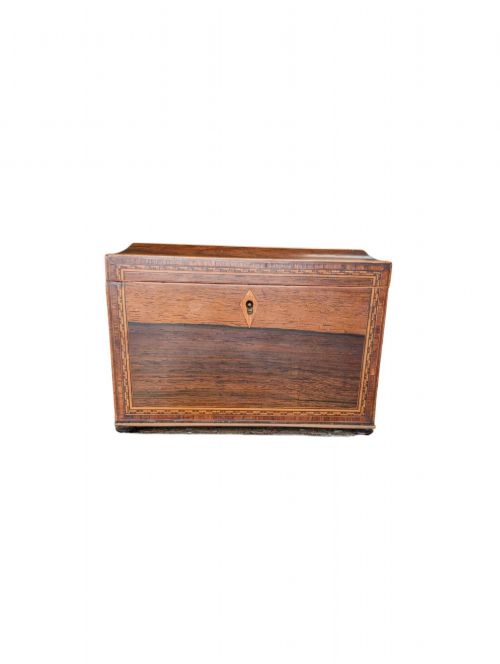
A vintage parquetry box is a small wooden container decorated with geometric arrangements of wood veneers. Buyers searching for this phrase encounter items ranging from tea caddies and sewing boxes to games boards and miniature desks.
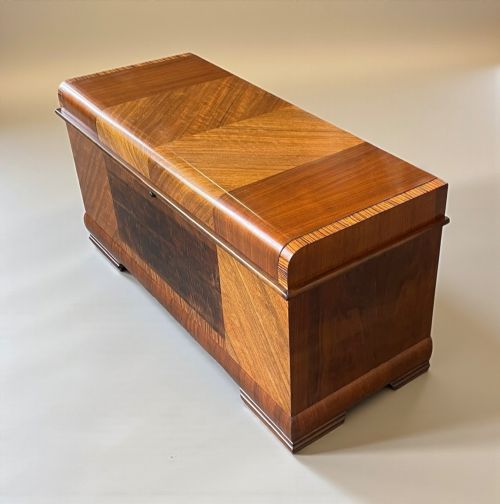
The pieces listed on this page span from the seventeenth century through the Regency and Victorian periods up to the art deco era of the nineteen thirties. Form follows function closely, with lidded caskets, fitted work boxes, and travelling chests representing the most common surviving shapes.
Origins vary across British workshops and continental makers, incorporating regional techniques such as Tunbridge ware alongside French apprentice chests. Each box served a domestic purpose, whether holding tea, storing sewing implements, or keeping writing slopes secure.
How they were made
These boxes rely on the careful application of contrasting wood veneers laid onto a solid timber carcase. Craftsmen selected materials like walnut, rosewood, boxwood, kingwood, and mahogany to create geometric patterns through the interplay of natural grain and colour.
Inlaid elements frequently incorporate bone, brass, or fruitwood to accentuate borders and pictorial panels. Specialised examples, particularly Tunbridge ware, utilise thousands of tiny wood blocks assembled to form intricate mosaic designs before being sliced and applied to the box surface.
Materials documented across these listings include walnut, brass, rosewood, boxwood, bone, kingwood, mahogany, and fruitwood.
What varies in quality
Quality in these pieces depends on the precision of the geometric layout and the alignment of the veneer across corners and lids. Superior examples demonstrate meticulous planning where patterns meet seamlessly without gaps or awkward trimming.
The choice of secondary timbers and the complexity of internal fittings also separate standard containers from finer work. Boxes featuring original brass mounts, intact velvet or silk linings, and functioning locks with matching keys retain higher integrity.
The Vintage Parquetry Box Glossary
- Parquetry
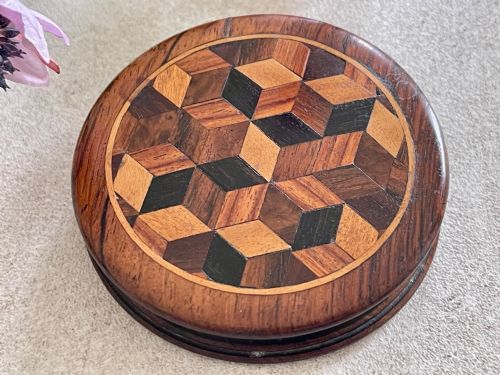
- A geometric mosaic of wood veneers used to cover a surface, creating patterns such as cubes, triangles, and squares. It differs from marquetry by strictly utilising geometric rather than pictorial motifs.
- Tunbridge Ware
- A specialised form of woodwork originating in Kent, characterised by mosaic designs built from contrasting woods to depict local flora, geometric bands, or architectural scenes.
- Veneer
- A thin slice of figured or decorative wood applied over a stable base timber to provide visual richness while preventing warping.
- Tea Caddy
- A lidded box or chest originally designed for storing loose tea leaves securely, often featuring internal compartments and a locking lid.
- Writing Slope
- A portable desk featuring an angled writing surface that opens to reveal storage compartments for paper, ink, and pens.
Vintage Parquetry Box: Frequently Asked Questions
How are these boxes dated?
Dating relies on stylistic markers, construction methods, and the types of timber favoured during specific design periods. Regency pieces often display classical brass detailing, while Victorian examples lean towards burr walnut and elaborate internal fittings.
Examining the hinges, locks, and secondary woods inside provides further clues. Earlier seventeenth and eighteenth-century pieces show hand-cut joinery and simpler carcase construction compared to later nineteenth-century production methods.
What were tea caddies used for?
Tea caddies served to store expensive tea leaves under lock and key in the domestic household. Because tea was a valuable commodity, these boxes featured internal compartments and secure lids to ration consumption.
Servants or householders kept the key close at hand. Over time, the function evolved from purely practical storage into a decorative parlour accessory.
How do I care for wooden parquetry?
Maintain these pieces by keeping them away from direct sunlight and sudden shifts in temperature or humidity. Excessive dryness causes veneers to shrink and lift from the base timber.
Apply a microcrystalline wax sparingly to nourish the wood surface and protect the polish. Avoid using liquid cleaners or household polishes that can seep into tiny veneer joints.
What is the difference between parquetry and marquetry?
Parquetry consists strictly of geometric patterns formed by interlocking pieces of wood veneer. The emphasis lies on symmetry, angles, and the natural contrast of different timber species.
Marquetry, by contrast, creates pictorial scenes, scrolls, and floral designs using varied veneers like painting with wood. Both techniques decorate fine boxes, but their visual effect remains distinct.