



Decorative Walking Stick
A decorative walking stick is a functional accessory and a collector's piece, combining fine craftsmanship with distinctive materials like silver, horn, and hardwood.
Decorative Walking Stick
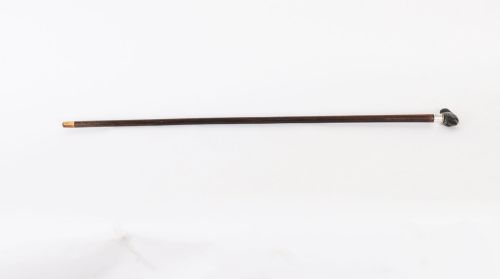
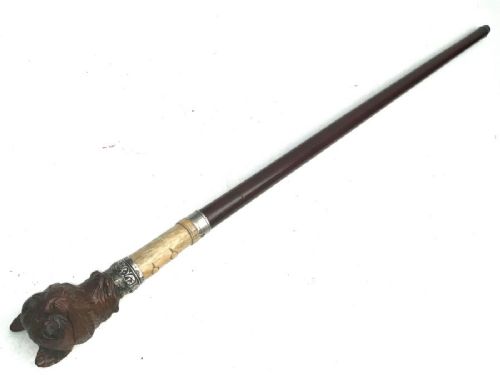
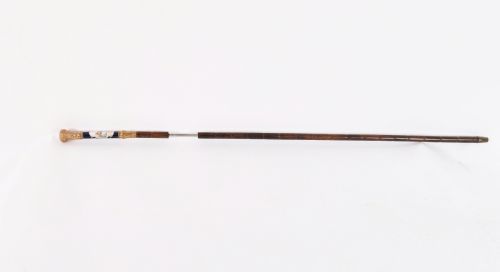
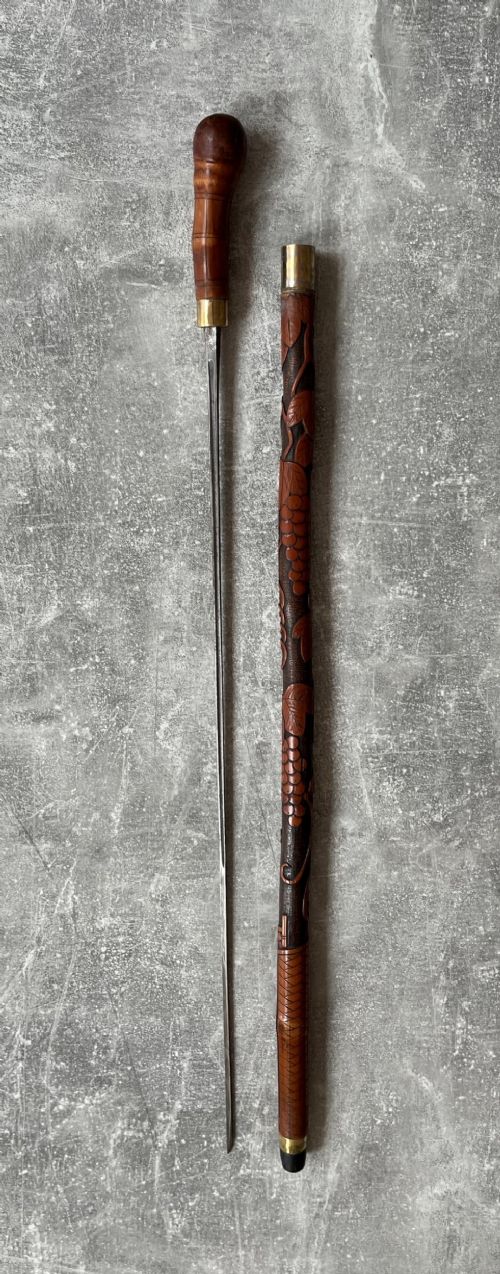
A decorative walking stick serves as both a gentleman's accessory and a piece of wearable art, frequently featuring carved handles and specialised hafts. When searching this category, buyers encounter diverse forms ranging from everyday walking canes to concealed sword sticks.
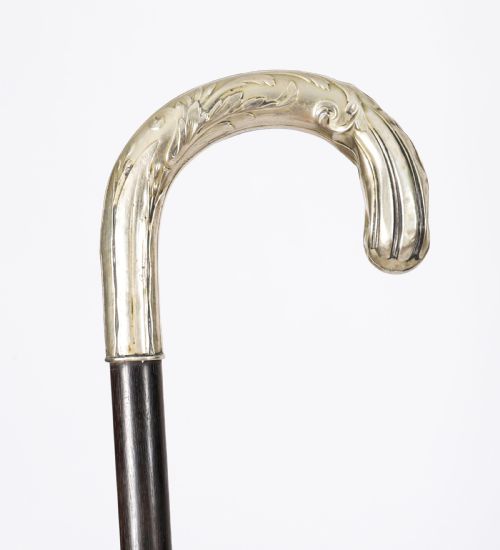
The pieces available span multiple eras, with Victorian and nineteenth-century examples appearing alongside Art Nouveau, Art Deco, and Arts and Crafts designs. Materials vary widely from simple wood to embossed silver handles and porcelain mounts.
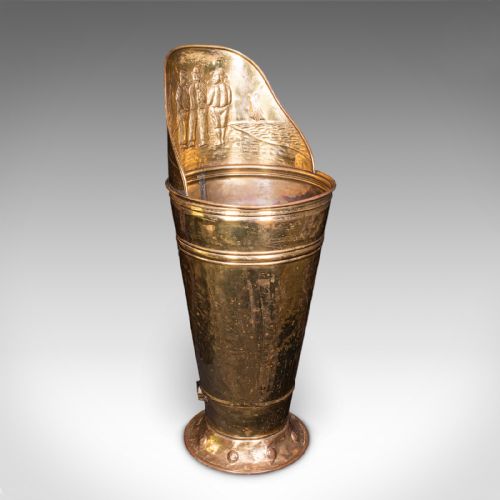
Origins stretch across European and international workshops, including French, Dutch, and East Asian styles. Collectors also find related items such as brass and faience stick stands designed to hold these accessories.
How they were made
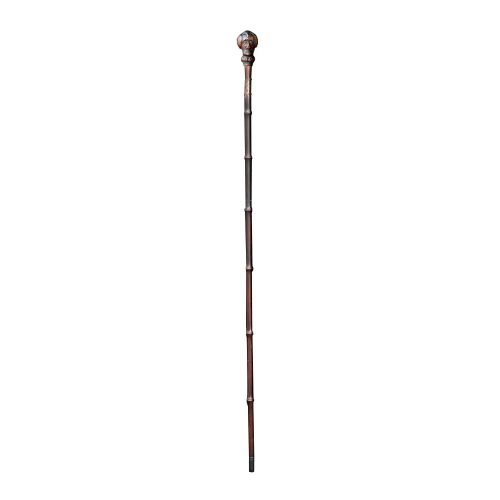
Makers utilised natural materials such as hardwood, malacca, bamboo, and ebony for the hafts, often covering shafts in snakeskin or shaping them from antler and bone. These sturdy foundations were paired with organic elements like horn to create balanced supports.
Metalwork played a central role, featuring cast brass, silver plating, gold plating, and steel components for mounts, collars, and concealed blades. Skilled artisans also incorporated ceramics, including Sevres porcelain and Burmantofts faience, into handles and associated stick stands.
Current listings feature nineteenth-century and early twentieth-century pieces, spanning Victorian, Art Nouveau, and Art Deco styles.
What varies in quality
The refinement of the handle carving and the choice of precious metals set finer examples apart from simpler utilitarian items. Detailed embossing on silver mounts and the inclusion of painted porcelain demonstrate higher artisan skill.
Material selection dictates longevity and prestige, with dense hardwoods, genuine horn, and silver outlasting basic metal and soft wood. The integration of functional elements, such as neatly concealed sword blades, also influences the standing of a piece.
Sevres·Burmantofts
The Decorative Walking Stick Glossary
- Sword stick
- A walking cane with a concealed blade hidden inside the haft. These items combine the appearance of a standard gentleman's cane with a hidden defensive weapon.
- Crook handled
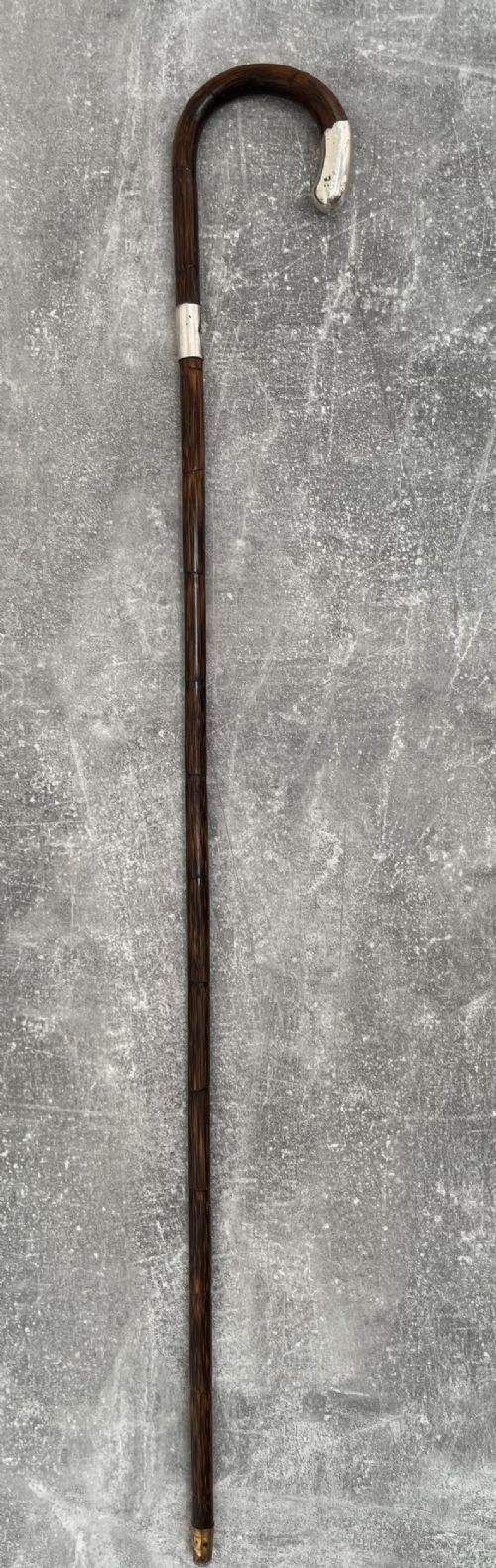
- A walking stick featuring a curved handle shaped like a shepherd's crook. This traditional shape allows the cane to be hooked over a forearm when not in hand.
- Stick stand
- A freestanding holder or piece of furniture designed to store walking sticks, canes, and umbrellas upright. They appear in materials like brass and ceramic faience.
- Sevres porcelain
- Fine ceramic produced by the French factory, utilised here for decorative handle sections. Pieces marked by this provenance display high-status manufacturing.
- Burmantofts faience
- English art pottery known for glazed architectural tiles and decorative vessels, occasionally producing ceramic stick stands. It represents the Arts and Crafts interest in glazed earthenware.
Decorative Walking Stick: Frequently Asked Questions
How were sword sticks used?
Sword sticks functioned as standard walking aids while secretly housing a metal blade within the haft for personal protection.
Gentlemen carried them as part of their daily attire during the Victorian era and subsequent decades.
What materials are common?
Common materials include hardwoods like ebony and malacca, alongside bamboo, horn, bone, and antler.
Handles frequently incorporate silver, brass, gold plating, and porcelain, while shafts sometimes feature coverings such as snakeskin.
How do I identify Art Nouveau styles?
Art Nouveau pieces display characteristic flowing, organic lines inspired by natural forms, distinct from the geometric patterns of later Art Deco design.
These stylistic markers appear primarily on the metalwork and carved handles of the canes.
What is a stick stand?
A stick stand is a vessel or piece of furniture designed to organise and display walking sticks and umbrellas in a hallway or country house.
They are commonly found in materials like brass and ceramic faience.