



Decorative Small Table
A decorative small table solves the perennial problem of finding a surface that commands attention without dominating a room.

Decorative Small Table
When searching for a decorative small table, you are looking at compact furniture designed to hold objects or serve specific domestic tasks in tight spaces. The selections here span the nineteenth and twentieth centuries, taking the form of side tables, occasional pieces, desks, and small cabinets.
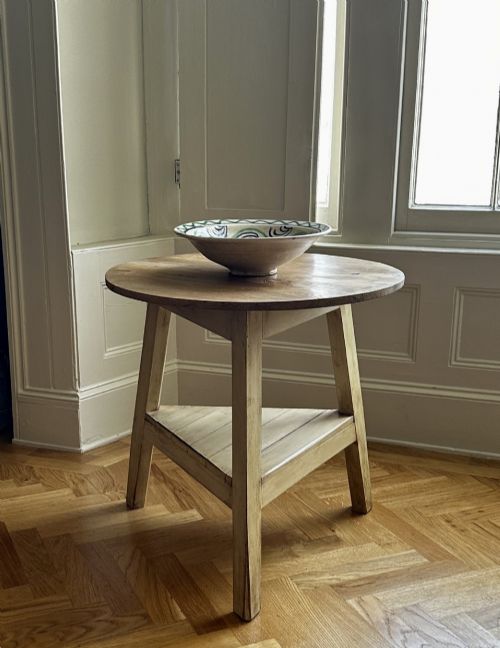
Victorian and Edwardian examples in mahogany, oak, and walnut predominate, alongside pieces influenced by French Rococo revival and Art Deco styles. You will find items ranging from simple cricket tables to elaborate writing desks and wine tables.
Many of these pieces double as miniature cabinets or table boxes, demonstrating that small proportions did not restrict makers from applying intricate detail. They served boudoirs, drawing rooms, and hallways where larger furniture would obstruct movement.
How they were made
Makers utilised dense timbers such as mahogany, oak, walnut, and satinwood, often pairing them with decorative veneers and marquetry inlay. Brass and ormolu mounts added structural emphasis and visual contrast to wooden frames.
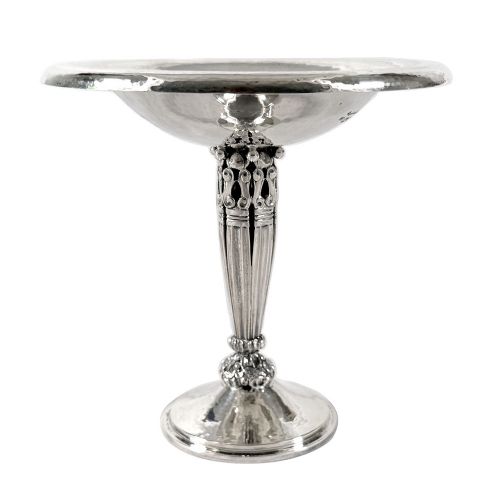
Surface ornamentation involved carving, japanning, lacquer work, and hand-painted elements, particularly on French and English pieces. Glass, bronze, and enamel also appear as primary components in clock cases, tazzas, and tabletop vitrines.
A shell grotto sits quietly among the tables, proving that small spaces invite peculiar decorative fancies.
What varies in quality
Quality rests in the crispness of the timber carving, the precision of the joinery, and the integrity of the surface finish. Pieces with uncompromised patination and original mounts stand apart from those with later replacements.
The sophistication of secondary materials, such as fire-gilt ormolu versus basic plated metal, marks the distinction between standard production and top-tier workshop output.
Charles Boyton·Tiffany
The Decorative Small Table Glossary
- Bonheur de jour
- A light lady's writing desk featuring a small cabinet or tiers of drawers on the upper surface. This French form became popular during the nineteenth century for drawing rooms.
- Ormolu
- Gilded bronze mounts applied to furniture and clocks for decorative effect. The technique involves creating an amalgam of gold and mercury.
- Tazza
- An ornate shallow cup or vase mounted on a pedestal, often used for display. These metal or glass objects sit upon tables as decorative centerpieces.
- Gueridon
- A small occasional table supported by one or more columns, originating in France. They frequently feature circular tops and tripod bases.
- Apprentice piece
- A small-scale model constructed by a craftsman to demonstrate skill for guild admission or training completion. These miniature items exhibit the same joinery as full-size furniture.
Decorative Small Table: Frequently Asked Questions
Where should I place a small table?
These pieces suit spots where full-sized furniture feels too heavy, such as beside a reading chair or in an entrance hallway. They provide a resting place for a lamp or small objects without crowding the floor.
Because they take up minimal space, you can move them easily between rooms as your layout changes.
How do I care for polished wood?
Keep wooden surfaces away from direct sunlight and heat sources to prevent the timber and veneers from drying out. Regular dusting with a soft cloth maintains the finish without needing heavy polishes.
Wax can be applied sparingly once or twice a year to nourish older mahogany and walnut surfaces.
What is an apprentice piece?
An apprentice piece is a miniature version of furniture made by a craftsman to prove proficiency in specific woodworking techniques. These items display the exact proportions and joinery methods of larger furniture.
Collectors prize them for their fine detail and the insight they provide into historical training standards.
How do I date a Victorian table?
Dating relies on examining the timber species, construction joints, and decorative style markers recorded in the evidence. Victorian pieces often use solid mahogany or walnut with hand-cut dovetails in the drawer construction.
Stylistic hints, such as Gothic revival motifs or ormolu mounts, help narrow the manufacture window down to specific decades.